Hello Engineering Leaders and AI Enthusiasts!
This newsletter brings you the latest AI updates in just 4 minutes! Dive in for a quick summary of everything important that happened in AI over the last week.
And a huge shoutout to our amazing readers. We appreciate you😊
In today’s edition:
🤖 Anthropic drops Mythos-class AI for everyone
🖼️ New image models make AI design more controllable
🧠 Anthropic maps the road to self-improving AI
🚀 Microsoft doubles down on models, agents, and qubits at Build
💡 Knowledge Nugget: How much AI should your team actually use: introducing The AI Bowtie by Marco
Let’s go!
Anthropic drops Mythos-class AI for everyone
Anthropic has launched Claude Fable 5, bringing its most advanced AI capabilities to the public for the first time. The model is derived from Mythos, a system previously limited to a small group of trusted partners through Project Glasswing, where it was used to uncover serious security flaws across major software platforms.
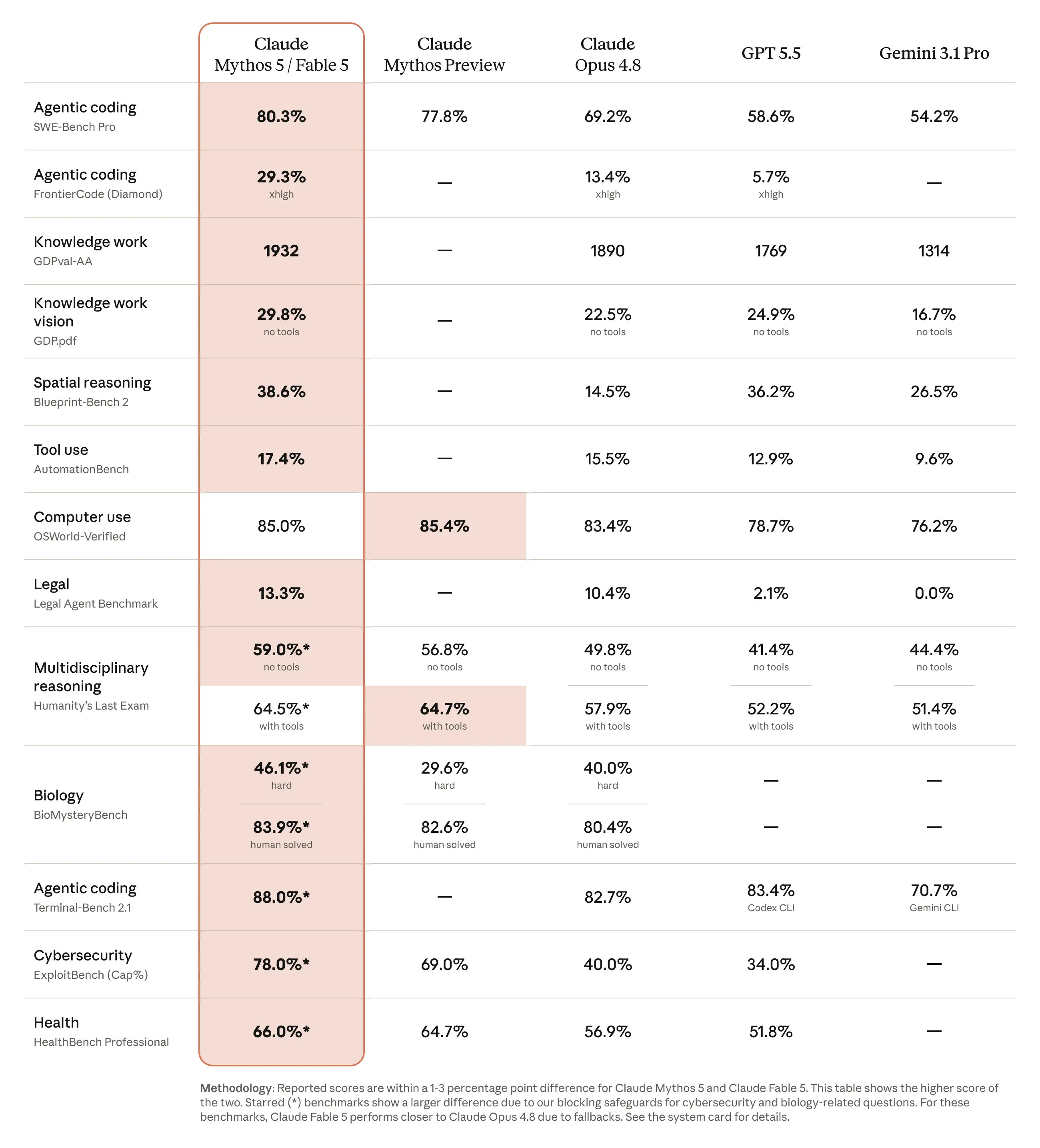
While Fable includes additional safeguards that restrict certain cybersecurity, biology, and chemistry requests, it still delivers state-of-the-art performance across major benchmarks. Anthropic says the model surpasses both GPT-5.5 and Opus 4.8 on coding, reasoning, and knowledge-intensive tasks, positioning it among the strongest AI systems currently available. However, just days after launch, Anthropic suspended access to both Fable and Mythos worldwide following a U.S. export-control directive tied to reported security concerns and fears of foreign access to the models.
Why does it matter?
Every AI lab claims its newest model is state-of-the-art. What’s unusual is when the benchmarks back it up. Fable appears to be one of those releases, but the bigger story may be Anthropic’s willingness to bring Mythos-class capabilities to the public, even if it’s doing so behind layers of safeguards, usage limits, and soon, premium pricing.
New image models make AI design more controllable
Two image-generation labs unveiled major upgrades this week. Ideogram open-sourced Ideogram 4.0, which now ranks among the strongest open image models, while Reve launched Reve 2.0, climbing to the No. 2 spot on the Text-to-Image Arena leaderboard behind GPT-image-2.
The bigger change is how these models create images. Both systems focus on layouts, typography, and structured editing, allowing users to modify specific elements instead of regenerating entire images. Reve edits images through labeled visual components, while Ideogram uses a similar approach through structured JSON-based controls, giving creators far more precision than traditional prompt-based workflows.
Why does it matter?
The early era of image AI was all about getting the prompt right. The next era may be about barely needing prompts at all. As models become more structured and editable, the focus shifts from generating images to directing them and open-source players like Ideogram are proving they can keep pace with the frontier.
Anthropic maps the road to self-improving AI
Anthropic has published a new report exploring recursive self-improvement (RSI), the idea that AI systems could eventually help build more capable versions of themselves. While the company says fully self-improving AI is not here yet, it believes current systems are already accelerating AI development faster than expected.
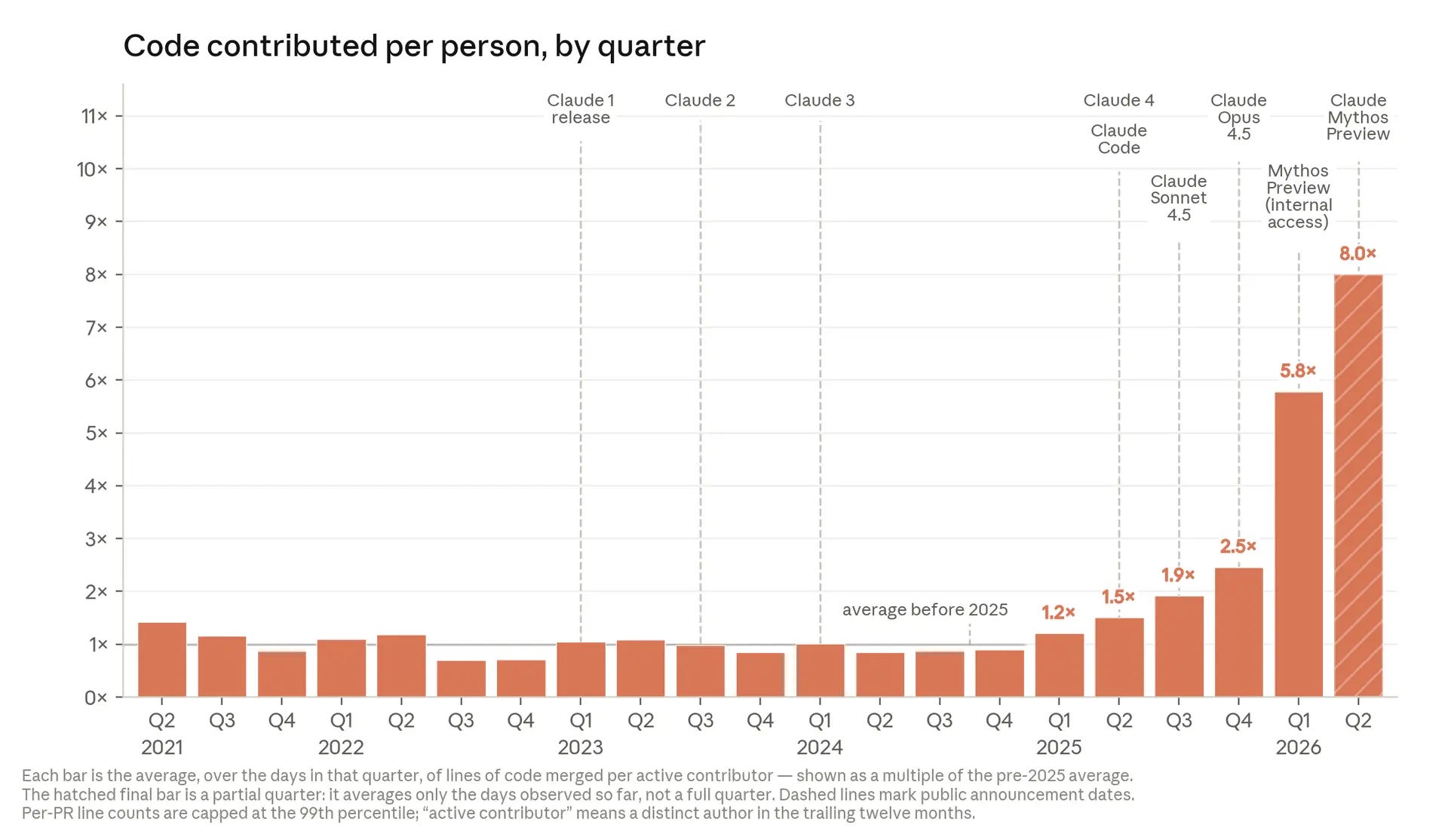
The report points to Claude’s growing role inside Anthropic, with the model now contributing more than 80% of merged code and helping engineers ship eight times more code per day than they did in 2024. Anthropic and OpenAI both suggest these early feedback loops could become increasingly important as future AI systems contribute more directly to their own development.
Why does it matter?
Anthropic isn’t the only lab seeing early signs of recursive self-improvement. OpenAI, MiniMax, and others are reporting similar feedback loops, where AI increasingly contributes to its own development. The idea still sounds futuristic, but if multiple labs are observing the same pattern, the bigger question may no longer be if it happens, but how quickly it scales.
Microsoft doubles down on models, agents, and qubits at Build
Microsoft used Build 2026 to unveil a sweeping AI strategy, launching seven new in-house models, its first always-on autonomous agent, and a series of hardware and platform announcements aimed at an agent-first future. The releases span reasoning, coding, image generation, voice, and transcription, all accessible through Microsoft Foundry.
The centerpiece is Scout, a proactive AI agent that can schedule meetings, prepare materials, and take actions inside Teams without waiting for instructions. Microsoft also showcased its Majorana 2 quantum chip, previewed Project Solara for agent-focused devices, and introduced a new AI development PC signaling ambitions that extend well beyond chatbots and copilots.
Why does it matter?
Build was Microsoft’s clearest signal yet that it’s building an AI stack of its own. With in-house models, an autonomous agent, agent-focused hardware, and even quantum ambitions, the company is increasingly positioning itself as more than just OpenAI’s biggest partner.
Enjoying the latest AI updates?
Refer your pals to subscribe to our newsletter and get exclusive access to 400+ game-changing AI tools.
When you use the referral link above or the “Share” button on any post, you’ll get the credit for any new subscribers. All you need to do is send the link via text or email or share it on social media with friends.
Knowledge Nugget: How much AI should your team actually use: introducing The AI Bowtie
In this article, Marco introduces the “AI Bowtie,” a simple framework for deciding how much AI should be involved at different stages of work. The idea is that AI usage shouldn’t be constant. Instead, it should expand and contract depending on the task.
The framework encourages heavy AI use during research, brainstorming, and execution, where speed and scale matter most. But as teams move toward decision-making, prioritization, and defining strategy, AI involvement should decrease. At the center of the bowtie is what Hofman calls the “soul of the work”- the critical thinking, judgment, and commitment that only humans can provide. AI can generate options, but it cannot decide which direction is worth betting on.
Why does it matter?
Right now, most AI discussions focus on whether teams should use AI more. That’s the wrong question. The real challenge is deciding where human judgment remains irreplaceable. As AI becomes increasingly capable, the highest-performing teams may not be the ones that automate everything, but the ones that protect the few decisions that actually require conviction, taste, and accountability.
What Else Is Happening❗
🛰️ SpaceX previewed AI1, a solar-powered satellite designed to run AI chips in orbit, aiming to provide compute capacity without the energy constraints facing terrestrial data centers.
🤖 A Perplexity–Harvard Business School study found AI agents drive users toward more complex, creation-focused work, completing tasks far faster than traditional search-based workflows.
📋 UC Berkeley launched Agents’ Last Exam (ALE), a benchmark for real-world professional workflows across 55 industries, with GPT-5.5 leading the leaderboard.
🧠 OpenAI rolled out a new “dreaming” memory system in ChatGPT, creating evolving user profiles from past conversations to improve personalization and long-term context.
💼 Meta launched Business Agent globally, bringing AI-powered customer support, appointment booking, lead qualification, and sales capabilities to WhatsApp, Instagram, and Messenger.
⚙️ Nvidia unveiled new AI chips, robotics models, and open-source systems at COMPUTEX 2026, all built around its vision of AI agents becoming the next major compute consumers.
💻 MiniMax released M3, an open-weight AI model that claims to outperform GPT-5.5 and Gemini 3.1 Pro on coding benchmarks while nearing Claude Opus 4.7’s performance.
New to the newsletter?
The AI Edge keeps engineering leaders & AI enthusiasts like you on the cutting edge of AI. From machine learning to ChatGPT to generative AI and large language models, we break down the latest AI developments and how you can apply them in your work.
Thanks for reading, and see you next week! 😊
Read More in The AI Edge