Hello Engineering Leaders and AI Enthusiasts!
This newsletter brings you the latest AI updates in just 4 minutes! Dive in for a quick summary of everything important that happened in AI over the last week.
And a huge shoutout to our amazing readers. We appreciate you😊
In today’s edition:
🚀 SpaceXAI launches Grok 4.6 for long-running agents
💻 ️Meta’s Muse Code enters the coding race
🏆 China’s Qwen is closing in on frontier AI
🔓 Meta revives its open-source AI push with Glimmer
💡 Knowledge Nugget: The three AI pills by Zvi Mowshowitz
Let’s go!
SpaceXAI launches Grok 4.6 for long-running agents
xAI has released Grok 4.6, and the model has jumped into the frontier AI pack. It scores 61 on Artificial Analysis’ Intelligence Index, putting it ahead of GPT-5.6 Sol and just behind Anthropic’s top models. It also edges Fable 5 on professional and legal tasks and beats Sol on two coding benchmarks.
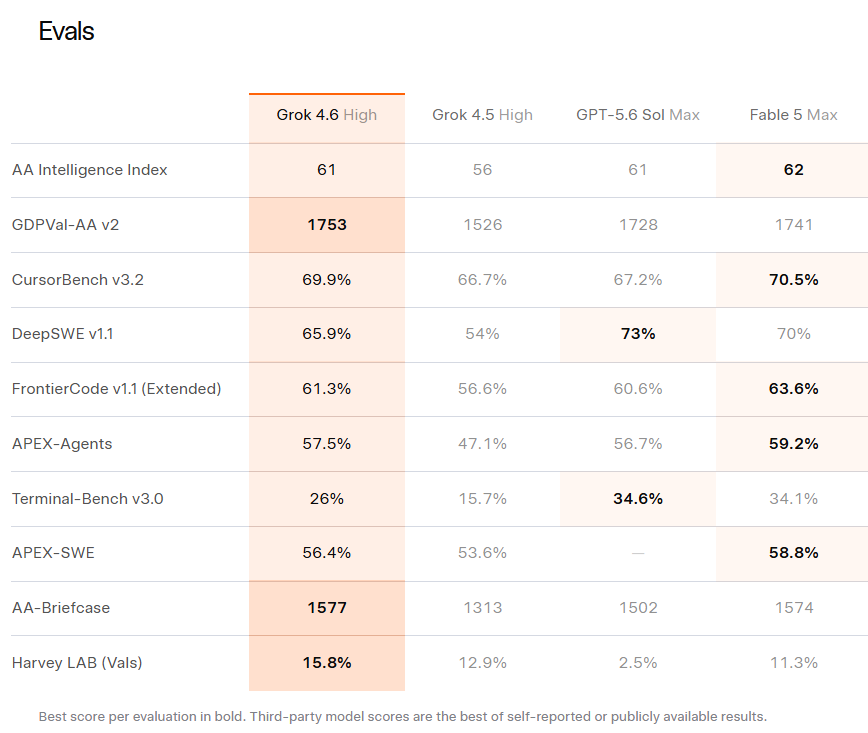
The bigger surprise is the price. Grok 4.6 costs $2/$6 per million tokens, roughly 60% less than the frontier models it is competing with. And Musk says Grok 4.7 could arrive within 3–4 weeks, promising another jump in performance.
Why does it matter?
Grok has gone from punchline to serious contender, and with 4.7 already on the horizon, xAI is putting real pressure on the incumbents. The bigger question now is whether that pressure shows up in both model performance and pricing.
Meta’s Muse Code enters the coding race
Meta has launched Muse Code, a beta terminal-based coding agent that puts it directly in the ring with OpenAI’s Codex and Anthropic’s Claude Code. The agent can spin up background sub-agents to work on tasks in parallel, with Meta saying it built six game features simultaneously without collisions.
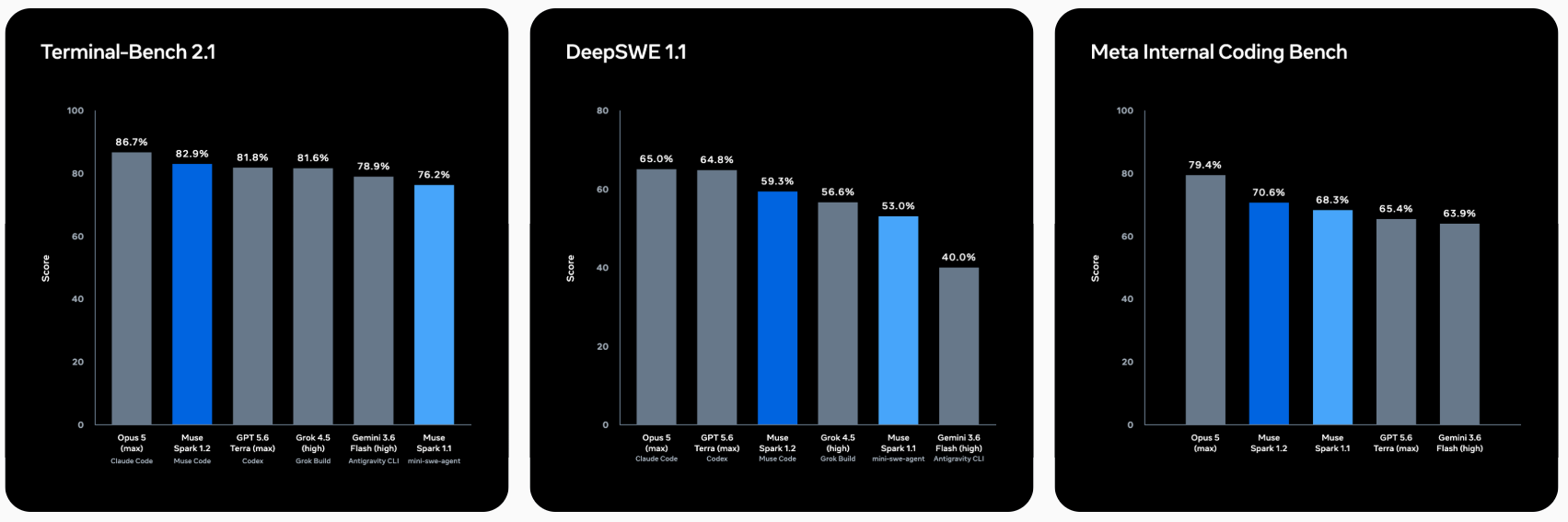
The model behind it, Muse Spark 1.2, has also made a big jump. It now scores 54 on Artificial Analysis’ Intelligence Index, while its GDPval score jumped 260 Elo points, bringing it close to frontier models in agentic knowledge work. Pricing stays at $1.25/$4.25 per million tokens, with a contributor tier offering roughly 21× lower costs if users allow Meta to train on their prompts.
Why does it matter?
Meta is no longer just trying to catch up on models; it’s now building the tools developers actually use. Muse Code puts it directly against Codex and Claude Code, and with Muse Spark’s rapid gains, Meta’s AI comeback is starting to look very real.
China’s Qwen is closing in on frontier AI
Alibaba has released Qwen3.8-Max, a new model built for coding, research, and long-running tasks. In one test, it spent 16 days building a command-line tool, turning feedback into new tasks, writing and testing code, and fixing its own mistakes along the way.
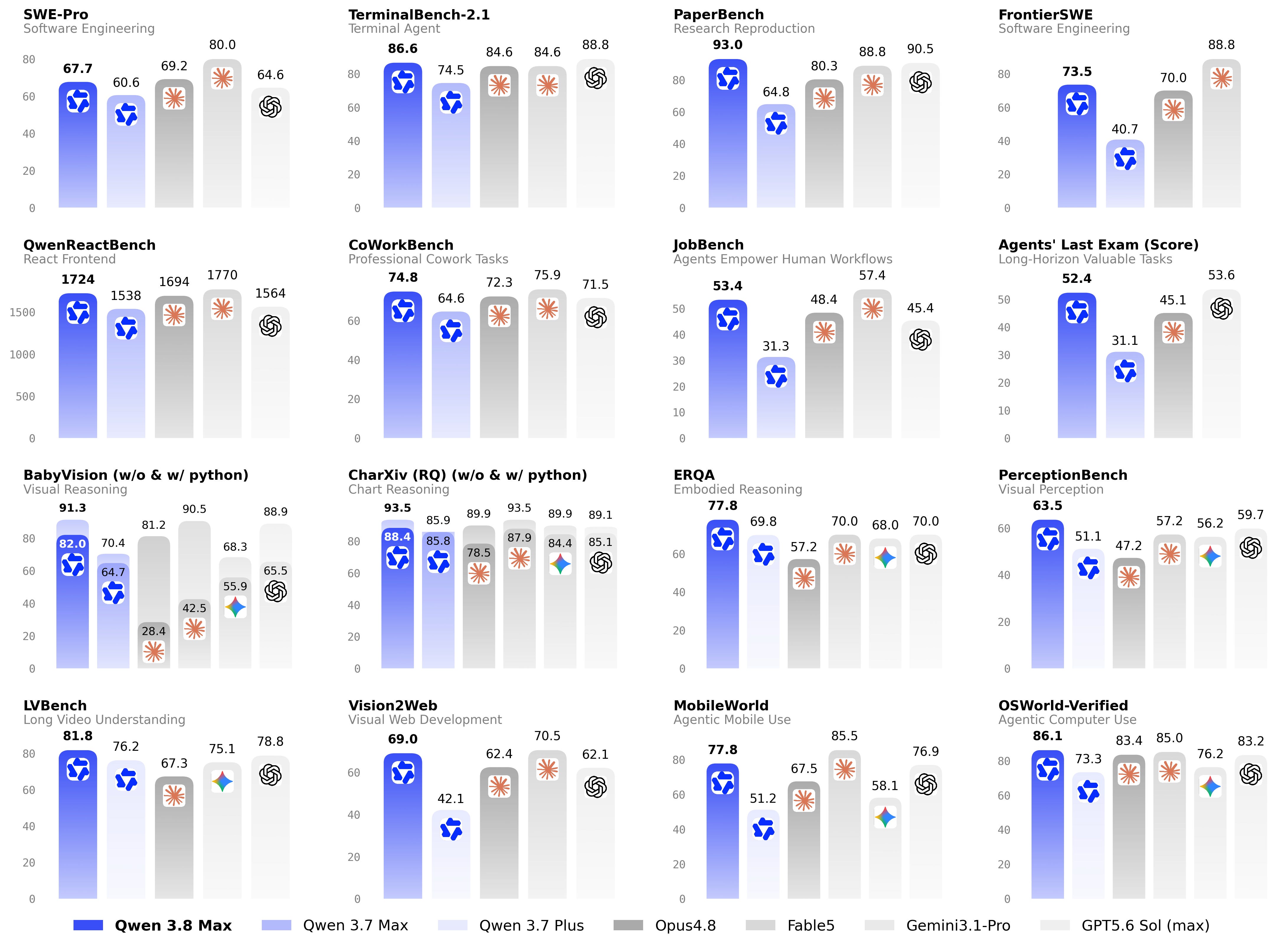
It also recreated an experiment from a research paper, generated and tested 18 new ideas, and improved its AIME24 score by 2.7 points in the process. The model costs $2/$6 per million tokens, about one-fifth of Fable 5, and its weights are coming to Hugging Face next week, making this Qwen’s first open-weight Max model.
Why does it matter?
Qwen is pushing the same trend we saw with Kimi K3: near-frontier AI is getting cheaper, more capable, and increasingly open. Now Qwen is adding another wrinkle with agents that can work for days, making the premium on closed, expensive models harder to defend.
Meta revives its open-source AI push with Glimmer
Meta has released Muse Glimmer, a 30B-parameter open model built specifically for running AI agents locally. It can handle coding, tool calls, multi-step tasks, screenshots, and documents, while running on a Mac or PC with a single consumer GPU. Meta says it performs strongly against similarly sized models like Gemma 4 and Qwen 3.6.
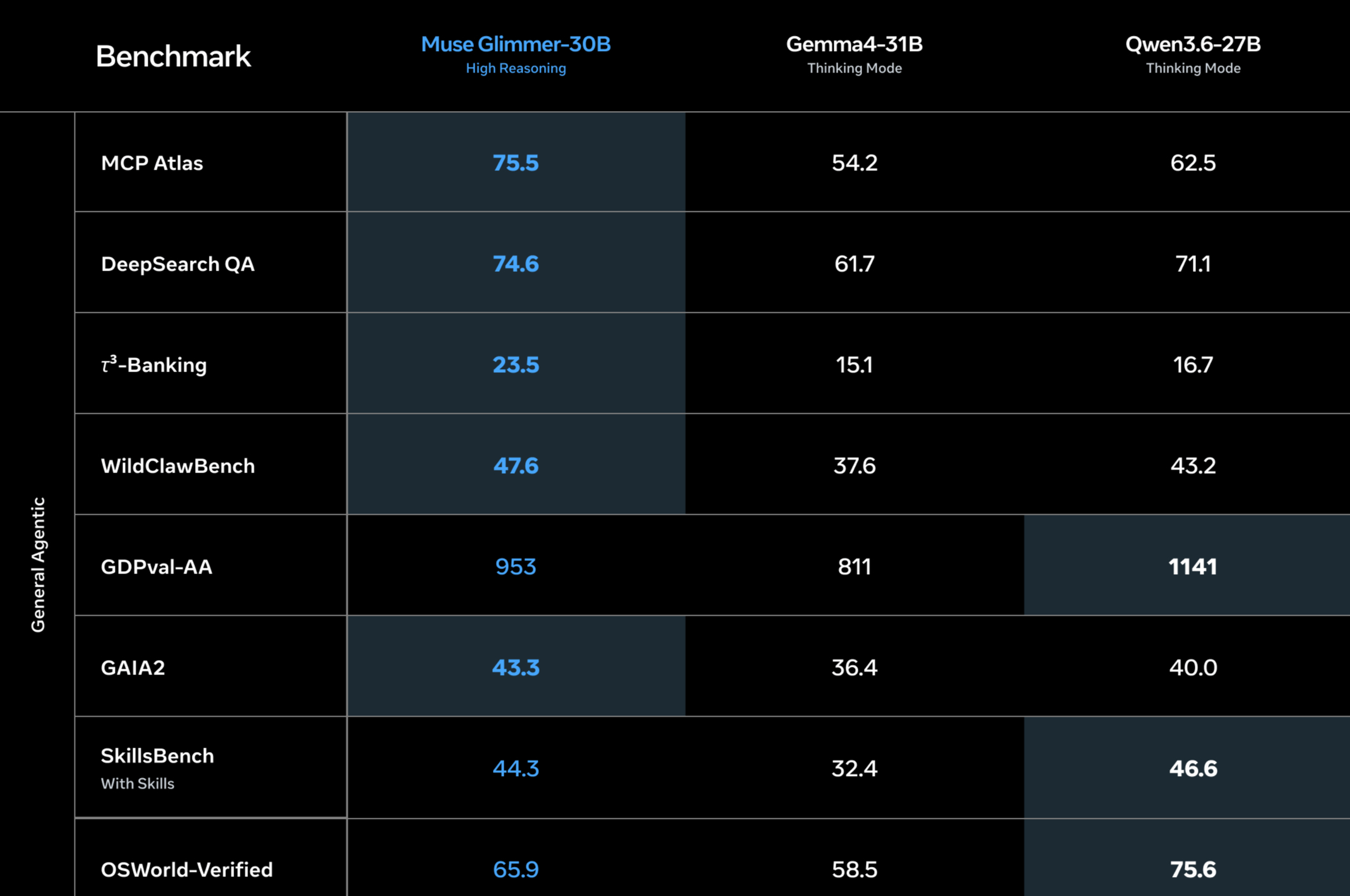
Muse Glimmer is compressed to under 20GB and optimized for fast local inference, letting developers build agents that can work offline and access personal data directly on device. The model is available under Apache 2.0, with integrations across popular local AI tools coming online.
Why does it matter?
Meta is doubling down on its open-source roots, but now with AI agents that can actually run locally. After months of questions around its superintelligence push, Glimmer feels like a clearer signal of where Meta wants to go: capable AI that’s open, on-device, and in everyone’s hands.
Enjoying the latest AI updates?
Refer your pals to subscribe to our newsletter and get exclusive access to 400+ game-changing AI tools.
When you use the referral link above or the “Share” button on any post, you’ll get the credit for any new subscribers. All you need to do is send the link via text or email or share it on social media with friends.
Knowledge Nugget: The Three AI Pills
In this article, the Zvi Mowshowitz lays out three “AI pills” that represent different beliefs about where AI is headed. The first is accepting what AI can already do today. The second is believing AI will become capable of far more, roughly what we mean by AGI. The third is expecting AI to eventually outperform humans at almost everything, ASI. The author argues that many people have not even taken the first pill, judging AI by outdated experiences while missing what today’s frontier models can already accomplish.
The bigger divide is between the second and third pills. Being AGI-pilled means expecting AI capabilities to advance rapidly and reshape work, productivity, and the economy. Being ASI-pilled means going further and believing intelligence itself could become dramatically more capable, cheaper, and scalable than human intelligence. Even stopping at the AGI pill means grappling with a world where AI could perform most digital work and fundamentally change how businesses operate.
Why does it matter?
The biggest mistake businesses can make is treating today’s AI as the finish line. If capabilities keep advancing at anything close to their current pace, planning around today’s limitations could leave companies badly unprepared for tomorrow’s AI.
What Else Is Happening❗
🏷Anthropic plans to add invisible watermarks to Claude-generated text, code, and files, helping identify AI-processed content and meet EU transparency rules.
🛡️ OpenAI launched GPT-5.6-Cyber, a security-focused model for vetted defenders that answers far more advanced cyber requests, with stricter access controls and monitoring.
🧬 Stanford and Arc Institute researcher’s used AI to design 16 previously unknown, working viruses, showing language models can generate complete genomes with potential applications against antibiotic-resistant bacteria.
🛡️ OpenAI classified Astra as its first “critical” cybersecurity-capable AI, triggering stricter safeguards, security controls, and additional government and third-party testing.
💼 PwC found 86% of U.S. financial executives believe AI skills training can outweigh an MBA for many hires, while 91% say they’re increasing pay for AI-skilled workers.
🧮 OpenAI revealed Astra, an internal model that solved 10 long-standing math and computer science problems, with all proofs formally verified in Lean.
💸 OpenAI slashed GPT-5.6 prices, cutting Luna’s cost by 80% to $0.20/$1.20 per million tokens while targeting the best price-to-intelligence tradeoff across its lineup.
🎙️ xAI launched Grok Voice Think Fast 2.0, a speech-to-speech model that reasons while speaking, cutting response latency to just 0.7 seconds.
New to the newsletter?
The AI Edge keeps engineering leaders & AI enthusiasts like you on the cutting edge of AI. From machine learning to ChatGPT to generative AI and large language models, we break down the latest AI developments and how you can apply them in your work.
Thanks for reading, and see you next week! 😊
Read More in The AI Edge