
Top News
Elon Musk Loses $150 Billion Suit Against OpenAI and Sam Altman – The New York Times
Related:
-
All of the updates from Elon Musk and Sam Altman’s battle over OpenAI
-
Elon Musk said Sam Altman ‘stole’ a non-profit — but the trial showed he had similar aims
-
Five Takeaways From the Blockbuster Trial Pitting Elon Musk Against OpenAI
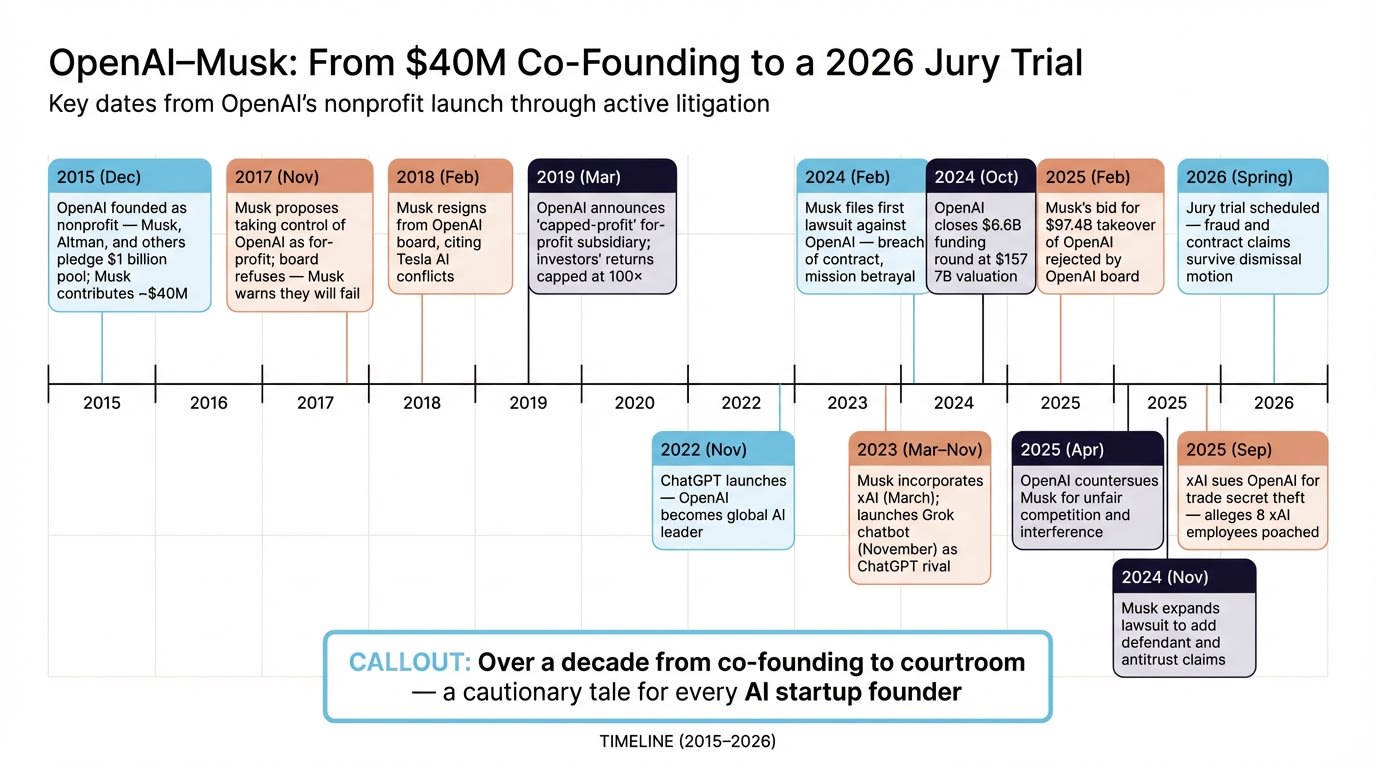
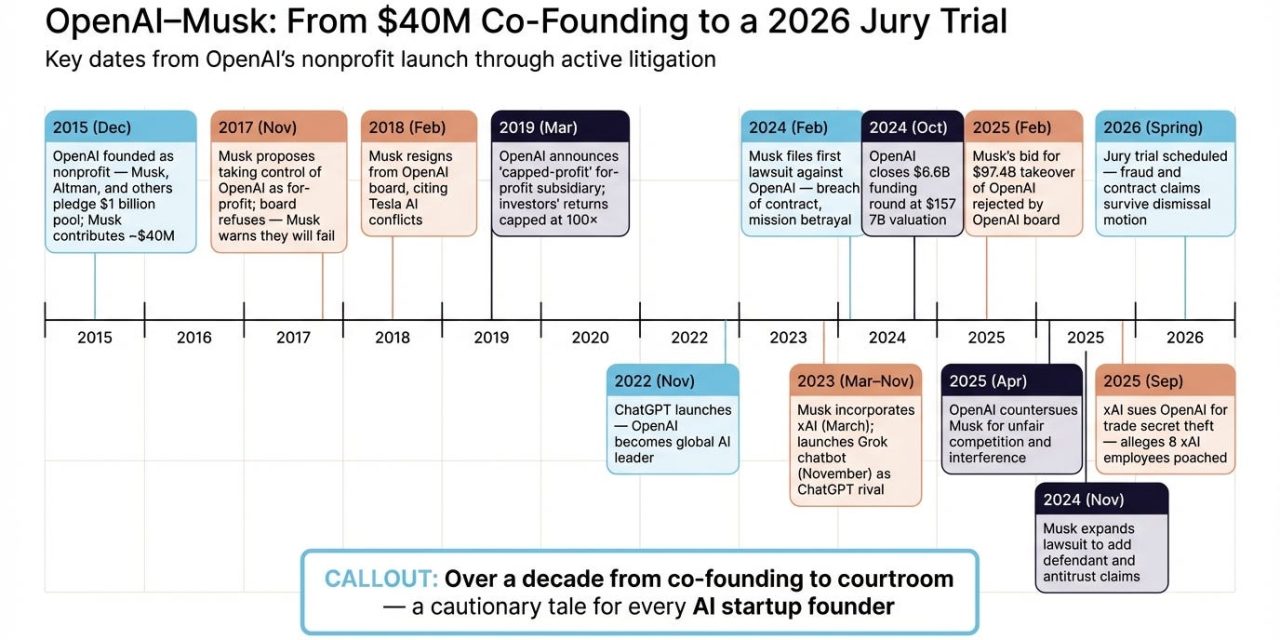
A federal jury in Oakland, California unanimously rejected Elon Musk’s $150 billion lawsuit against OpenAI, Sam Altman, and Greg Brockman on May 18, 2026, after less than two hours of deliberation. The nine-member jury found that Musk’s claims of breach of charitable trust and unjust enrichment were barred by statutes of limitations of two and three years respectively, as Musk filed his suit in 2024 despite being aware of the alleged misconduct — OpenAI’s transition to a for-profit structure — as early as 2021. Presiding Judge Yvonne Gonzalez Rogers agreed, dismissing the case entirely.
Musk had accused Altman and Brockman of “stealing a charity” by attaching a commercial entity to OpenAI’s nonprofit foundation and accepting billions in investment from Microsoft, and had sought damages of up to $150 billion, the removal of Altman and Brockman, and the dismantling of the for-profit arm. The three-week trial featured testimony from over 20 witnesses including Microsoft CEO Satya Nadella and OpenAI co-founder Ilya Sutskever, and surfaced damaging revelations about Musk himself — including that he had OpenAI researchers, including Andrej Karpathy and Ilya Sutskever, work for free at Tesla without reimbursement, and that he had aggressively sought sole control of any OpenAI for-profit structure in 2017 before leaving the board in 2018.
The verdict clears the path for what could be one of the largest IPOs in history: just two days after the ruling, OpenAI confirmed it is preparing to confidentially file an IPO prospectus with the SEC, targeting a fall 2026 public debut. The company is working with Goldman Sachs and Morgan Stanley, is currently valued at $852 billion by private investors, and could reach a $1 trillion valuation at IPO. OpenAI reported $30 billion in annualized revenue as of April 2026 and has raised more than $180 billion from investors, though it continues to burn cash at a historic pace and has missed internal revenue and user-growth targets.
CEO Sam Altman reportedly hopes the company will be ready to list by September, though CFO Sarah Friar stressed the company would not go public until it is ready.
Google updates its Gemini app to take on ChatGPT and Claude at IO 2026
Related:
-
Google debuts new AI models, personal AI agents in effort to keep pace with OpenAI and Anthropic
-
Google’s Gemini Omni turns images, audio, and text into video — and that’s just the start
-
Google launches Antigravity 2.0 with an updated desktop app and CLI tool at IO 2026
-
Google’s Genie world model can now simulate real streets with Street View
-
Google introduces Gemini Spark, a 24/7 agentic assistant with Gmail integration, at IO 2026
-
You can now talk to your Gmail inbox, as seen at Google IO 2026
-
Google just declared itself a contender in AI design at IO 2026
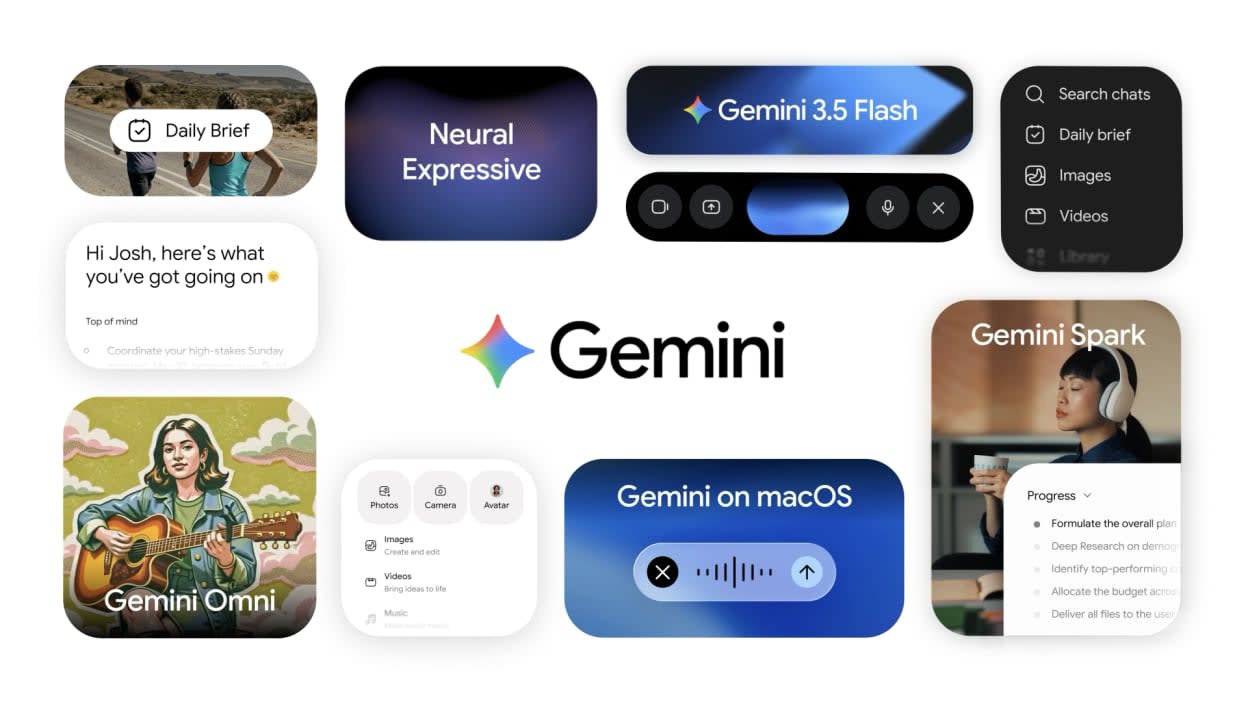
At Google I/O 2026, Google unveiled a sweeping set of AI updates across its product lineup aimed at competing with OpenAI and Anthropic. Here’s the highlights:
-
A rebuilt Gemini app with a new “Neural Expressive” design language featuring fluid animations and haptic feedback
-
Gemini 3.5 Flash, a lightweight frontier model that costs half to one-third the price of comparable models and is now the default model for the Gemini app and Search globally, while the heavier Gemini 3.5 Pro remains internal until next month.
-
Gemini Spark, a 24/7 cloud-based personal AI agent built on Gemini base models and the Antigravity agentic harness. Spark runs on dedicated virtual machines so it continues working when your phone is locked, integrates natively with Gmail, Google Docs, and Workspace via MCP, and lets users email it directly through a dedicated Gmail address.
-
Gemini Omni, a new family of models designed to take any input — images, video, audio, text — and generate video output grounded in real-world knowledge; the first release, Omni Flash, renders 10-second clips and is rolling out to the Gemini app, YouTube Shorts, and Google Flow, with an API coming in weeks and a more powerful Omni Pro to follow.
-
Gmail Live adds conversational AI to inbox search, allowing natural-language voice queries with follow-up questions.
-
Google Antigravity 2.0 debuts a desktop app, CLI, and SDK for orchestrating multi-agent coding workflows, with a new $100 AI Ultra plan (5x limits) and a price cut on the top tier from $250 to $200. Additional launches include
-
Pics, an AI design app for Workspace powered by Nano Banana 2 to compete with Canva and Claude Design, and
-
Street View integration with Genie 3, Google’s world model, which can now simulate real-world environments with weather and lighting changes for robotics training and consumer use, currently rolling out to Ultra subscribers in the U.S.
AI just solved an 80-year-old ‘Erdős problem,’ and mathematicians are amazed
Related:
-
OpenAI claims it solved an 80-year-old math problem — for real this time
-
https://openai.com/index/model-disproves-discrete-geometry-conjecture/
-
Google Deepmind’s AlphaProof Nexus solves decades-old math problems for a few hundred dollars
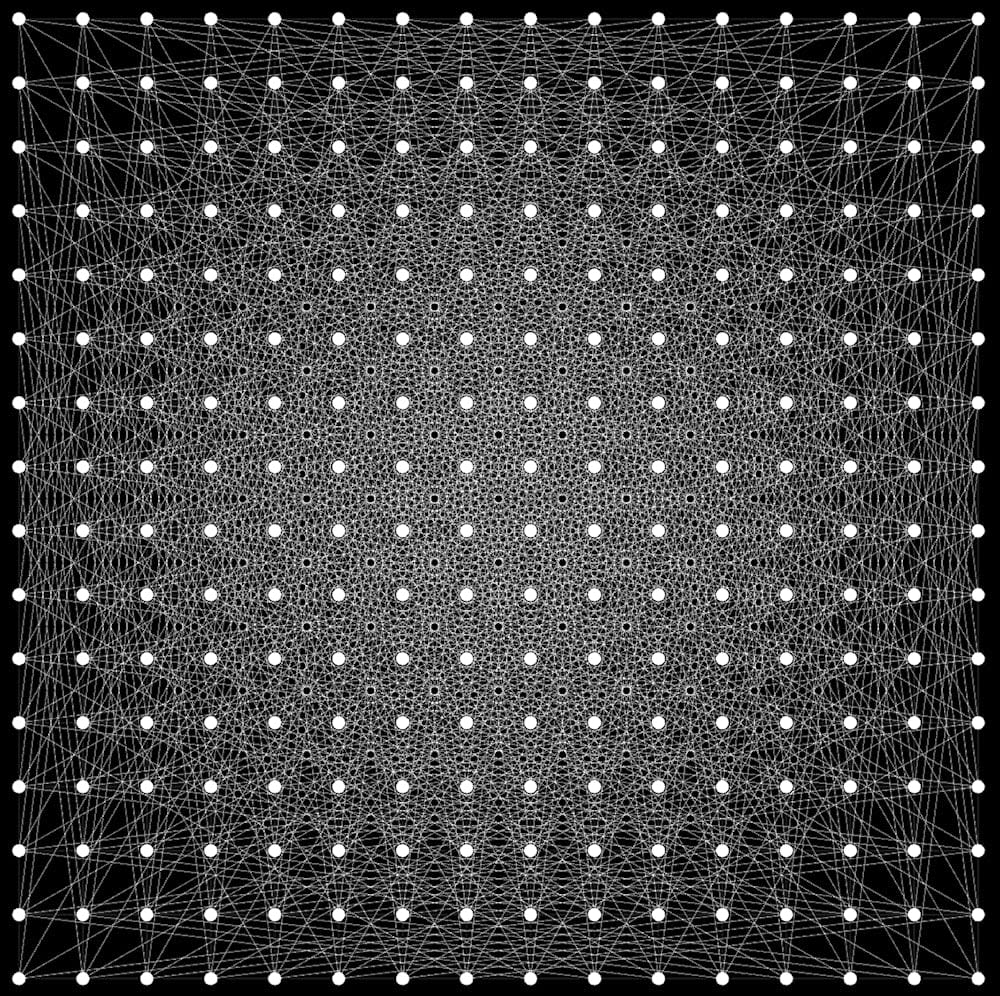
OpenAI announced on May 20, 2026 that an internal general-purpose reasoning model disproved a central conjecture in the planar unit distance problem, one of combinatorial geometry’s most famous open questions first posed by Paul Erdős in 1946. For 80 years, the best known constructions for maximizing unit-distance pairs among n points were based on square grid arrangements, and it was conjectured it is not possible to do better than that. ChatGPT proved that it is. Fields Medalist Timothy Gowers called it “a milestone in AI-driven mathematics,” and mathematician Daniel Litt confirmed it would merit publication in a top math journal — something no prior AI proof had achieved.
Meanwhile, Google DeepMind released AlphaProof Nexus, a complementary framework that combines Gemini 3.1 Pro with Lean formal verification, where compiler error messages feed back into successive proof attempts. The system autonomously solved 9 out of 353 open Erdős problems, proved 44 out of 492 OEIS conjectures, and settled a 15-year-old question in algebraic geometry — all at inference costs of just a few hundred dollars per problem. Unlike OpenAI’s purely natural-language approach, AlphaProof Nexus grounds LLM reasoning with symbolic feedback, though a post-hoc analysis found that even its simplest agent (just LLM + compiler loop) could solve all nine Erdős problems.
Both efforts collectively signal a new phase in AI-assisted mathematics, though Terence Tao cautioned that AI’s overall success rate on Erdős problems remains around 1–2%, concentrated on easier tasks, and experts note that genuinely new groundbreaking mathematical theory remains beyond current models. Human mathematicians also flagged concerns about AI failing to credit prior literature — what Melanie Wood called potential “professional malpractice” — as a cultural norm the community urgently needs to address.
America’s dangerous, messy deepfakes crackdown is here
Related:
-
Google is trying to make deepfake detection more accessible for everyone
-
OpenAI is making it easier to check if an image was made by their models

The Take It Down Act, signed by President Trump last May and fully in force as of May 19th, 2026, requires online platforms to remove nonconsensual intimate imagery (NCII) — including AI-generated sexual deepfakes — within 48 hours or face civil penalties exceeding $53,000 per violation. The FTC, tasked with enforcement, sent letters to over a dozen major platforms including Meta, Google, Amazon, TikTok, X, Snapchat, and Microsoft, requiring them to offer easy takedown request processes and remove “known identical copies.” Major platforms have expressed support and claimed compliance, with Meta citing existing anti-NCII tools and TikTok pointing to partnerships with NCMEC and StopNCII.org. In its first year, the law’s criminal provision was used in just one conviction — an Ohio man who produced AI deepfakes to harass victims.
Despite broad platform support, experts are raising serious concerns. The Electronic Frontier Foundation, the Cato Institute, and Public Knowledge warn the takedown provision could enable censorship and over-moderation. Mary Anne Franks of the Cyber Civil Rights Initiative fears the law will be a “paper tiger” against major offenders while being weaponized against disfavored platforms, noting Trump’s own State of the Union quip that he’d use the bill “for myself.” The law also has technical gaps — it’s unclear whether AI tools like Grok qualify as “creators” of NCII or whether privately generated images fall under the takedown provision.
On the detection front, Google is expanding SynthID watermark verification to Chrome and Search via Gemini, and adding support for C2PA content credentials, while OpenAI is adopting both C2PA metadata and SynthID watermarking for its image generators.
SpaceX Is Said to Plan to Buy Startup Cursor 30 Days After IPO – Bloomberg
Related:
-
SpaceX faces talent drain as 50+ xAI staff reportedly exit for Meta, Thinking Machines
-
Musk’s xAI is being sued over its data center generators — now it’s buying $2.8B more
-
Musk’s xAI Warns Staffers to Limit Contact With Cursor Employees
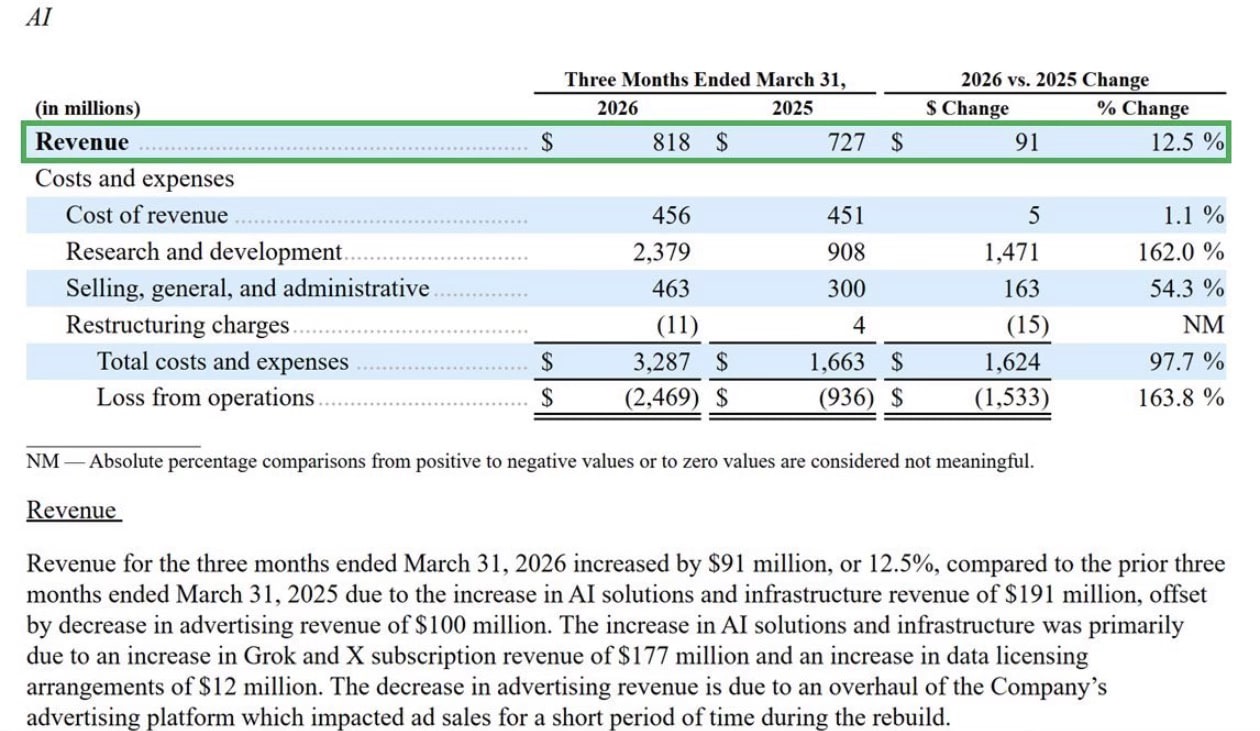
SpaceX filed its S-1 IPO prospectus on May 20, 2026, targeting a $1.75–$2 trillion valuation and seeking to raise $75 billion on the Nasdaq under ticker SPCX. The filing reveals 2025 revenue of $18.7 billion (up 33% YoY) but a net loss of $4.9 billion, with Q1 2026 showing $4.7 billion in revenue alongside $4.3 billion in net losses. The losses are in significant part due to the capital expenditures associated with the construction of xAI’s data centers (xAI is now part of SpaceX).
According to “people familiar with the matter”, SpaceX also plans to acquire AI coding startup Cursor for $60 billion approximately 30 days after the IPO. SpaceX and Cursor already confirmed having made a deal last month that would give SpaceX the right to do this aquisition, but this is the first reporting suggested that SpaceX is planning to go through with it.
This acquisition appears driven by the poor performance of xAI’s own products: Grok has roughly $270 million in annualized subscription revenue versus OpenAI’s $24 billion and Anthropic’s $30 billion, appeared in only 3 of 400+ government AI use cases reviewed by Reuters, and xAI posted a $6.4 billion operating loss in 2025. The internal situation is also dire: all 11 original xAI co-founders have departed, 50+ researchers and engineers have left for Meta and Thinking Machines Lab, the pre-training team has shrunk to a handful of people, and Musk ordered layoffs in March after Grok lagged behind Claude Code and OpenAI Codex — even as SpaceX launched a competing coding agent, Grok Build, now in early beta at $300/month.
Additional controversies include xAI’s Memphis data center operating 46 unregulated gas turbines despite permits for only 15, facing an NAACP lawsuit, while SpaceX’s IPO filing reveals plans to spend another $2.8 billion on turbines over three years.
Pope Leo Uses First Major Papal Text to Warn About Dangers of AI
Related:
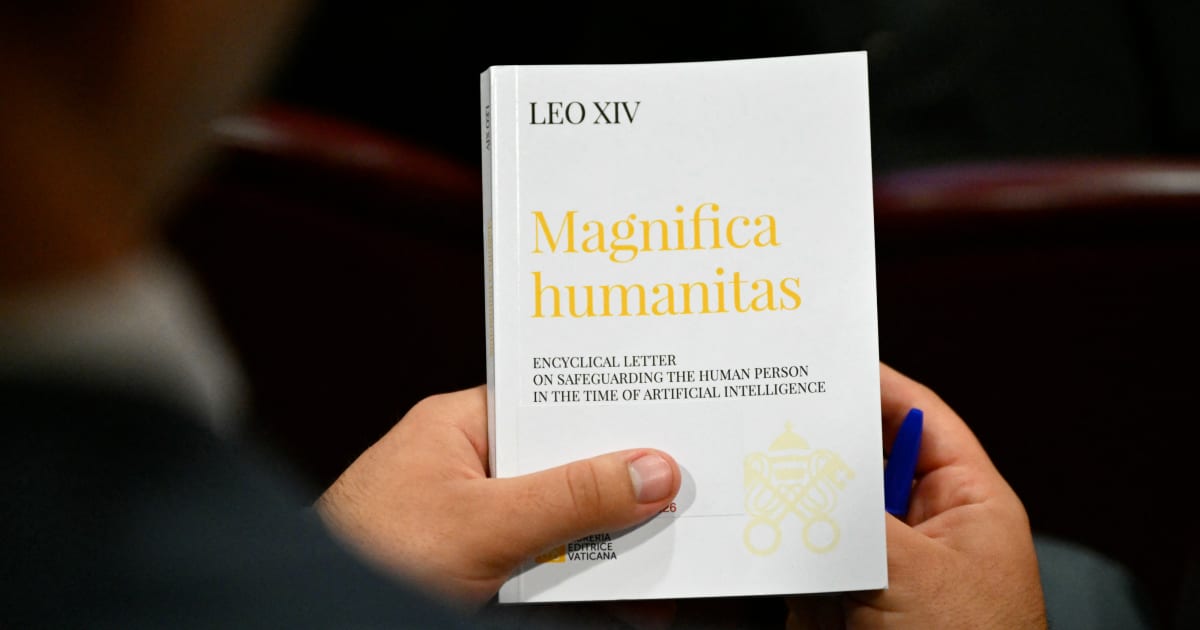
Pope Leo XIV released his first encyclical, Magnifica Humanitas: On Safeguarding the Human Person in the Time of Artificial Intelligence, on May 25, 2026 — a 42,300-word document representing the Catholic Church’s most comprehensive theological statement on AI to date. Signed on May 15 (the 135th anniversary of Leo XIII’s Rerum Novarum), the text frames AI as a “new industrial revolution” and calls for AI to be “disarmed, freed from logics that turn it into an instrument of domination, exclusion, and death.” The encyclical demands robust legal frameworks, independent oversight, and international regulation of AI companies, while condemning the concentration of data and power in Big Tech’s hands. Pope Leo also declared the Catholic “just war” theory “outdated” given AI-driven warfare, stating it is “not permissible to entrust lethal decisions” to AI systems — a direct clash with the Trump administration’s push to deregulate AI.
In a break with tradition, Pope Leo personally presented the encyclical alongside Anthropic co-founder Christopher Olah, who acknowledged that “every frontier AI lab operates inside a set of incentives and constraints that can sometimes conflict with doing the right thing,” and warned of AI displacing human labor “at very large scale.”
Other News
Tools
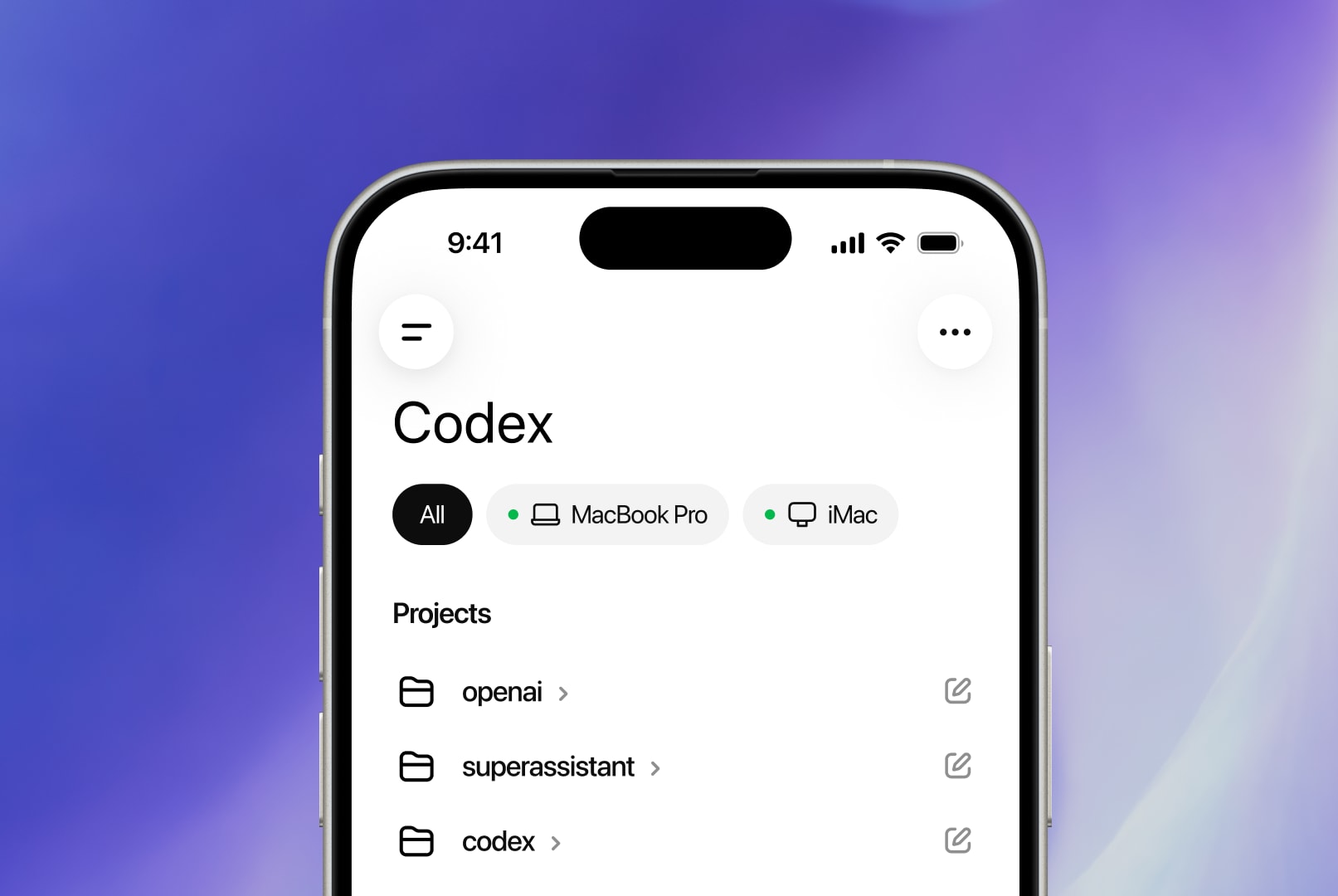
OpenAI’s Codex is now in the ChatGPT mobile app. Users can now control Codex, OpenAI’s desktop tool for writing code and automating computer tasks, remotely from the ChatGPT mobile app, with real-time updates and command approvals flowing back to their phone.
xAI introduces its coding agent called Grok Build. The tool is currently available only to SuperGrok Heavy subscribers for $300 per month as xAI attempts to compete with competitors like Anthropic’s Claude Code and improve its coding capabilities.
Cursor’s Composer 2.5 matches Opus 4.7 and GPT-5.5 benchmarks at a fraction of the cost. The model achieves comparable performance to Anthropic’s and OpenAI’s flagship models on coding benchmarks while costing significantly less per token.
Google debuts AI-powered tools to optimize scientific research workflows. The suite includes tools for generating research hypotheses backed by citations, running computational experiments at scale, and summarizing scientific literature in multiple formats, with access rolling out through Google Labs and Google Cloud.
ChatGPT for PowerPoint generates presentations with prompts.. Users can create or edit slides by providing text prompts and uploading supporting documents, images, and other materials through a new sidebar interface.
You can now remix other people’s YouTube Shorts with AI. The feature uses Gemini Omni to let creators stylize videos with effects like pixel art or anime, alter video contents, and insert themselves into clips, while original creators can disable remixing for their videos.
Spotify is launching AI-generated remixes. Users will be able to create AI remixes and covers of songs through a paid Premium add-on, with artists able to opt out and those who participate earning royalties from the generated content.
Spotify takes on Google’s NotebookLM with its new app. The app lets users generate personalized podcasts from their emails, calendar, and web browsing, which are saved privately to their Spotify library and synced across devices.
Figma adds an AI assistant to its collaborative canvas. The agent accepts natural language prompts to generate new designs, modify existing ones, or automate repetitive tasks, with support for running multiple agents simultaneously on the shared canvas.
Stability AI releases a new audio model that can create 6-minute songs. The three smaller open-weight models can generate up to two minutes of audio, while the larger models create full compositions of over six minutes, with the largest available only through paid API and enterprise services.
Business
Greg Brockman Officially Takes Control of OpenAI’s Products in Latest Shake-Up. The reorganization consolidates ChatGPT, Codex, and the company’s developer API into a single product team as OpenAI prepares to launch a unified “super app” combining its major offerings.
OpenAI-Apple Partnership Frays, Setting Up Possible Legal Fight – Bloomberg. OpenAI is preparing potential legal action against Apple, claiming the integration has underperformed financially and that Apple hasn’t adequately promoted ChatGPT features within its operating systems, while Apple disputes the complaints and is exploring partnerships with other AI providers like Google and Anthropic.
AI chipmaker Cerebras soars 90% in year’s biggest IPO so far. The AI chipmaker’s debut marks strong investor appetite for artificial intelligence-related companies, though it will likely be surpassed later this year when SpaceX goes public.
OpenAI co-founder Andrej Karpathy joins Anthropic’s pre-training team. He will lead a new team focused on using Claude to accelerate pre-training research, joining Anthropic’s pre-training group under Nick Joseph.
Another ‘DeepSeek moment’? Huawei milestone alters China trajectory in chip race: analysts. Huawei introduced a new scaling law that could enable it to produce chips with performance matching 1.4-nanometre processes by 2031 without relying on US-restricted advanced chipmaking equipment.
Chinese AI startup DeepSeek slashes price of flagship model. The permanent price cut makes DeepSeek’s model over 10 times cheaper than OpenAI’s offering, as Chinese AI companies compete on cost rather than capabilities to gain market share.
Anthropic is paying $15 billion a year for access to Elon Musk’s data centers. According to SpaceX’s IPO filing, Anthropic will pay $1.25 billion monthly through May 2029 for access to SpaceX’s Colossus data centers, with an exit clause allowing either party to terminate with 90 days’ notice.
Meta Lays Off 8,000 Employees, as A.I. Casualties Mount – The New York Times. The cuts, which affect 10 percent of Meta’s workforce while reassigning 7,000 others to AI initiatives, are part of the company’s pivot toward artificial intelligence as it aims to develop “superintelligence” and compete with rivals like OpenAI.
Universal Music Group and TikTok renew agreement to combat unauthorized AI music. The renewed agreement includes commitments to remove unauthorized AI-generated music from the platform and improve how artists and songwriters are credited, following a 2024 dispute that led UMG to temporarily pull its catalog from TikTok.
Nvidia posts another record quarter, reveals $43B of holdings in startups. The company nearly doubled its private equity holdings to $43 billion in the quarter, acquiring $18.5 billion in stakes across startups while forecasting slower growth ahead.
Hark raises $700M Series A for its secretive ‘universal’ AI interface. The company, founded by Brett Adcock, plans to launch multimodal AI models this summer followed by custom hardware devices, positioning itself to build a consumer-facing AI assistant distinct from competitors focused on coding tools.
Policy
Trump Cancels Signing of Executive Order Granting Oversight of A.I. Models – The New York Times. Trump canceled the order because he worried it could hinder U.S. competitiveness with China by imposing restrictions on AI model development, despite the measure having been designed to allow the government to pre-evaluate new AI systems for security vulnerabilities on a voluntary basis.
Gov. Gavin Newsom to Sign Executive Order Aimed at A.I. Job Loss – The New York Times. The executive order directs state agencies to study AI’s potential workforce impact and develop recommendations on worker support policies, job training modernization, and early-warning systems for layoffs, responding to over 114,000 tech-sector job losses already recorded in 2026.
Concerns
AI warfare is already here. Military forces are increasingly embedding AI into weapons systems and targeting processes, with the US Pentagon actively pursuing greater autonomy in lethal decision-making despite pushback from companies like Anthropic and international efforts to establish restrictions.
Waymo Suspends Service in Six Cities After Cars Drove Into Flooded Roads – The New York Times. The company paused service after its autonomous vehicles drove into flooded roads during heavy storms, revealing gaps in the software’s ability to detect standing water on streets and highways.
Research
Research repository ArXiv will ban authors for a year if they let AI do all the work | TechCrunch. ArXiv will prohibit researchers who use AI to write their entire papers without human contribution from submitting for 12 months, marking a shift toward enforcing human authorship standards in academic publishing.
Language Models Need Sleep. Researchers propose a “sleep” mechanism where language models pause to consolidate context into persistent memory through multiple forward passes, enabling improved reasoning over information that has been removed from the active context window.
Delta Attention Residuals. This paper proposes routing attention over layer-wise differences (deltas) rather than cumulative states to prevent attention weights from becoming near-uniform in deep transformer networks, showing consistent improvements across model sizes from 220M to 7.6B parameters.
Gated DeltaNet-2: Decoupling Erase and Write in Linear Attention. The paper proposes decoupling the erase and write operations in linear attention’s delta rule by using separate channel-wise gates for each, rather than a single scalar gate, to better manage competing associations in fixed-size memory during long-context processing.
TerminalWorld: Benchmarking Agents on Real-World Terminal Tasks. The benchmark automatically converts real developer terminal session recordings from the asciinema platform into 1,530 validated evaluation tasks, addressing scalability limitations of manually-curated benchmarks while maintaining authenticity to actual workflows.
SANA-WM: Efficient Minute-Scale World Modeling with Hybrid Linear Diffusion Transformer. The model uses a hybrid linear diffusion transformer architecture to generate one-minute 720p videos from camera trajectories and text prompts while requiring only 64 H100 GPUs for training and supporting single-GPU inference on consumer hardware.
Test-Time Reasoners Are Strategic Multiple-Choice Test-Takers. Models with test-time reasoning capabilities can successfully answer multiple-choice questions even with incomplete information, indicating they use genuine logical inference rather than relying on surface-level patterns.
The MiniMax-M2 Series: Mini Activations Unleashing Max Real-World Intelligence. MiniMax introduces a family of mixture-of-experts language models with 9.8B activated parameters per token that achieve competitive performance on agentic coding, workplace automation, and reasoning tasks through specialized data pipelines and a reinforcement learning system designed for agent training.
Read More in Last Week in AI


