

Editor’s Note:
In the early 1960s, John F. Kennedy faced a technological anxiety remarkably similar to our own. Back then, the “threat” wasn’t Large Language Models, but the “Cybernation Revolution”—the first wave of industrial automation and computerization.
Jeremy Ney is the author of the American Inequality Substack and a professor at Columbia Business School.
American Inequality

In context:
-
The Great Generational Wealth Divide
-
How the Wealthy Game Disability Laws for Ivy League Gains
-
The Electricity Bills are Too Damn High
Jeremy Ney interviews a wide array of guests on Substack Live covering some of the most salient topics related to his publication and the state and future of America.
Author’s introduction and essay overview (31 seconds)
Video: Jeremy Ney describes his work in brief, May 4th, 2026.
Audio Version: (9 minutes 54 seconds).
In a special message to the Congress in the first year of his presidency, President John F. Kennedy told the legislators that “Large scale unemployment during a recession is bad enough, but large scale unemployment during a period of prosperity would be intolerable.” Four days later, he sent a bill to Congress called “The Manpower Development and Training Act of 1962” that endeavored to train and retrain thousands of workers unemployed because of automation and technological change. A core part of JFK’s message was that innovation without inclusion is not progress; it is a slow-motion eviction of the American worker from their own economy.
The MDTA was hailed as the first major piece of workforce training legislation in nearly 2 decades and it arrived during a time of rising automation and exploding unemployment. From February 1960 to May 1961, the national unemployment rate rose from 4.8% to 7.1%. In 1961, General Motors installed one of the world’s first industrial robots, Unimate, which was a 4,000-pound hydraulic arm that could perform repetitive, dangerous tasks like die-casting and spot welding. In the late 1950s, telcos automated much of their switching processes with Direct Distance Dialing that allowed callers to bypass operators for long-distance calls. In 1961 the U.S. set a standard for shipping containerization which wiped out thousands of jobs for longshoremen. Mainframes like the IBM System/360 began automating high-volume clerical tasks like payroll, inventory management, and accounting, leaving tens of thousands of specialized clerks and bookkeepers with obsolete skills.
A 60-Year Echo
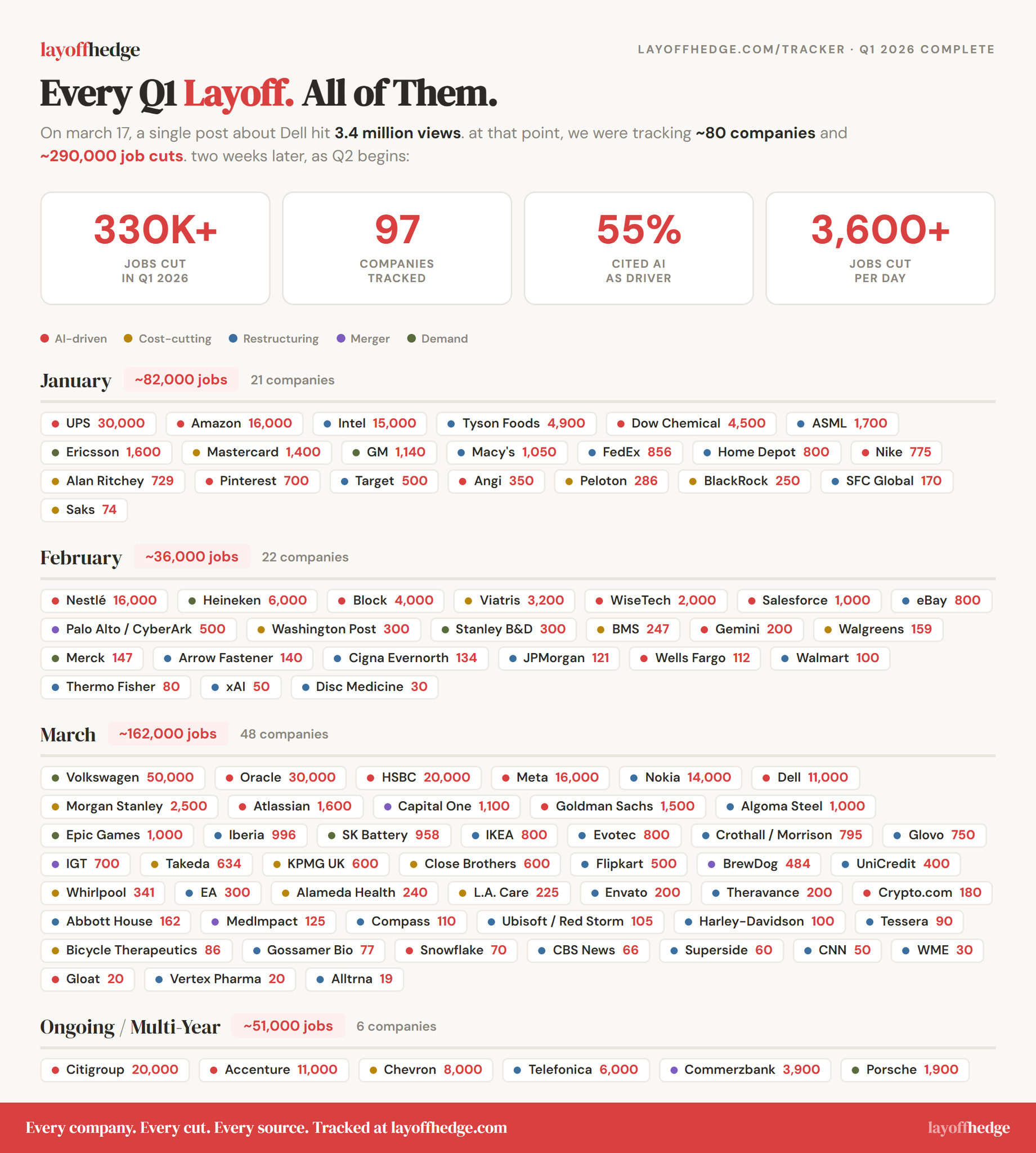
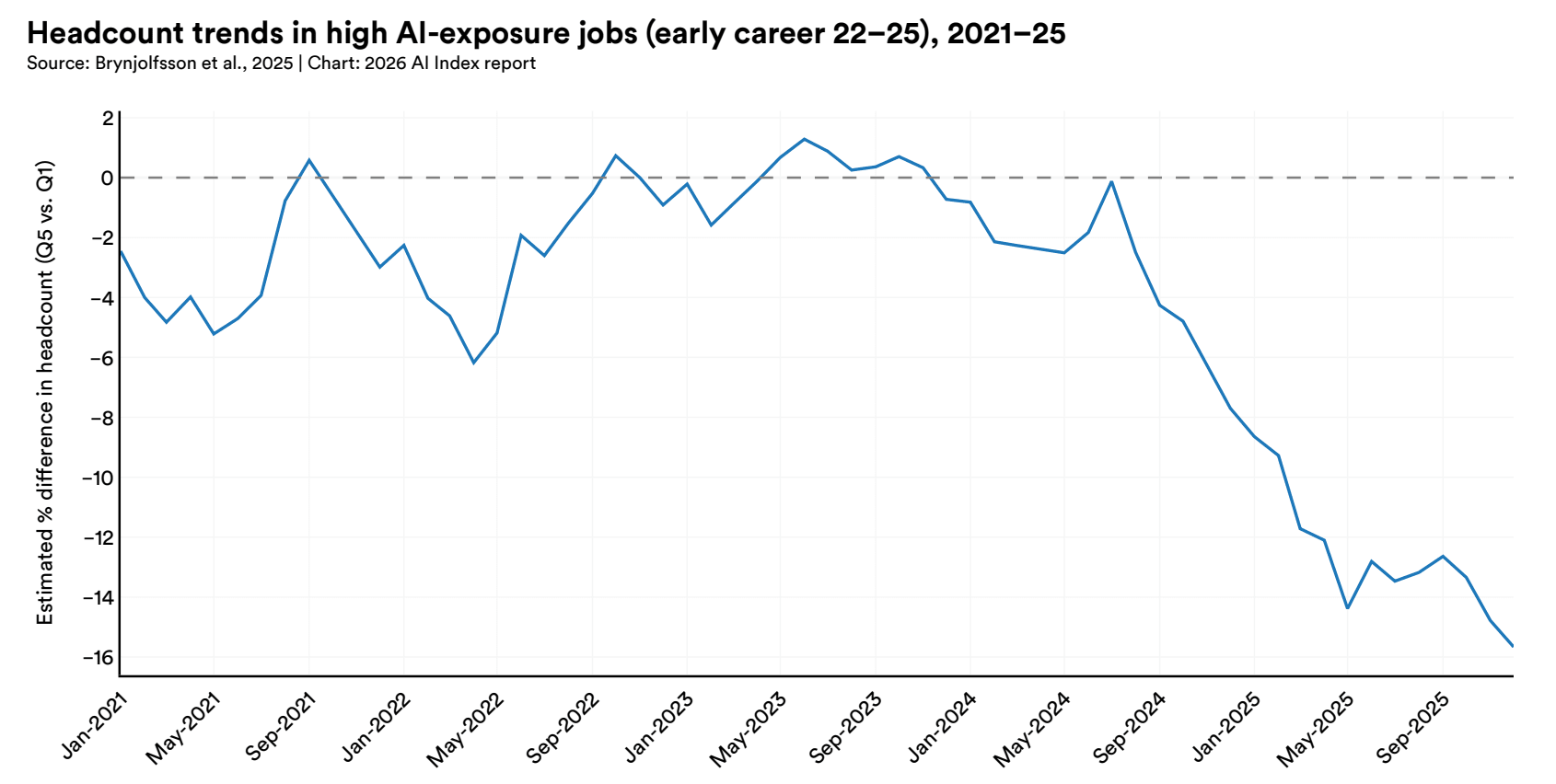
America is now enduring much the same crisis. We face a pending wave of automation from artificial intelligence. More than half of all companies announcing layoffs are citing AI as a core driver. Stanford economists found that young workers aged 22–25 in “highly AI-exposed” jobs, such as software developers and data analytics experienced a 13% decline in employment since the advent of ChatGPT.
In a new report from Goldman Sachs based on four decades of federal data—which captured the lives of over 20,000 Americans from the 1950s to 1980s—economists found that workers who lose their jobs from technological shifts take one month longer to find a job, have 3% lower earnings when they do find a job, and 10 years after a job loss, those workers had still not caught up and had incomes there were 10 percentage points below that of their peers. Technology-displaced workers also had slower wealth accumulation, delayed homeownership and delayed household formation.
The goal of the MDTA was to ensure no worker was left behind in the machine age; if we don’t modernize that mission, the AI age is going to leave millions of Americans behind, forcing them to struggle with a toolkit that may never help them catch up.
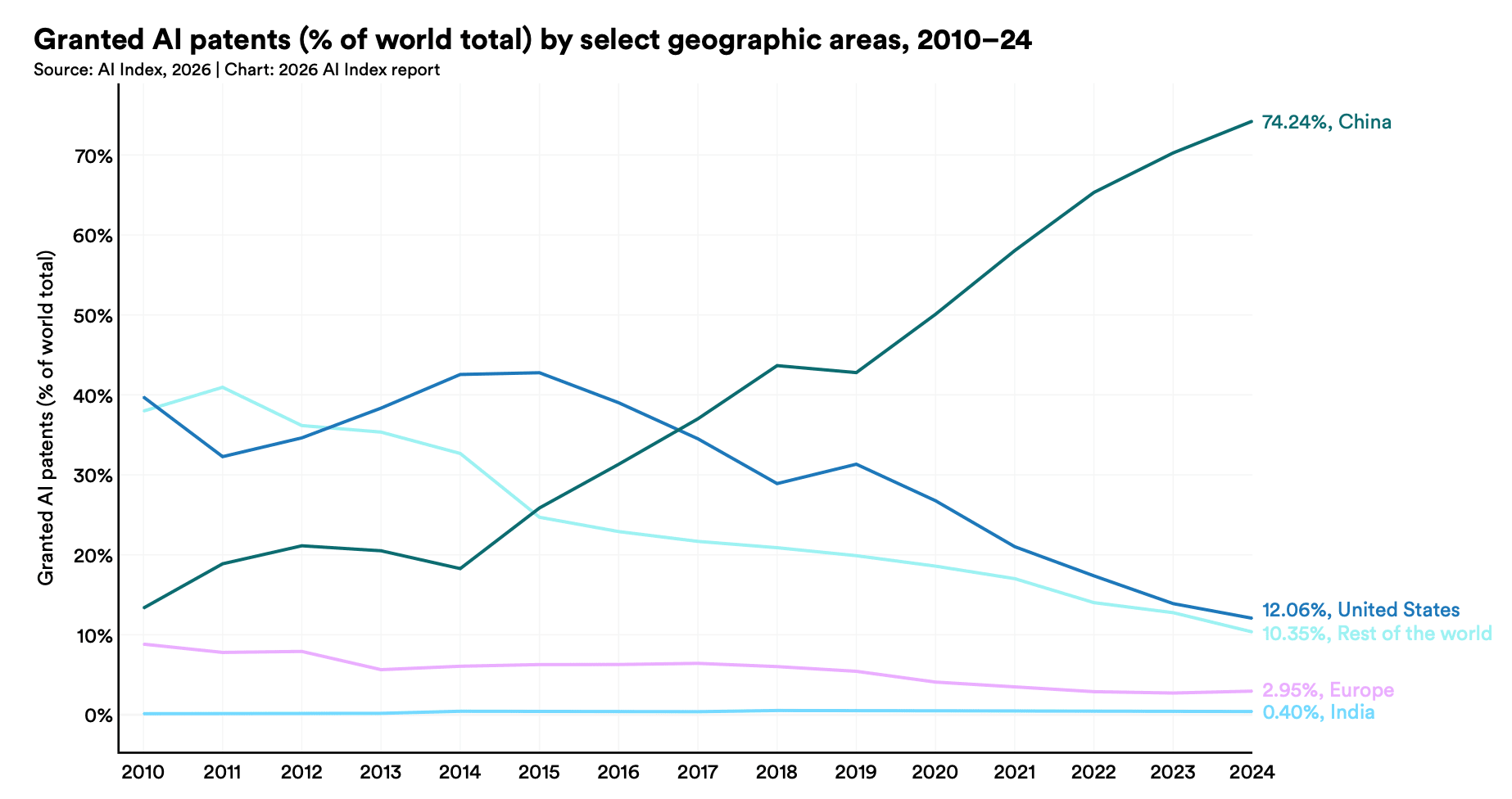
In the face of massive technological change, workers need to be prepared for the future, but America is not throwing them a lifeline. Over the next two to three years, experts estimate that 50-55% of jobs in the US will be reshaped by AI. For many employees, this will mean that they retain the same or a similar role but face radically new expectations for how they work and what they produce. 10-15% of jobs will be eliminated as new jobs emerge. This is not only bad for the U.S. workforce, but it disadvantages America on a global stage as China pulls further and further ahead. Just 10 years ago the U.S. was granted more AI patents than any other nation, but now China’s share of AI patents is more than 6-times higher than America’s.
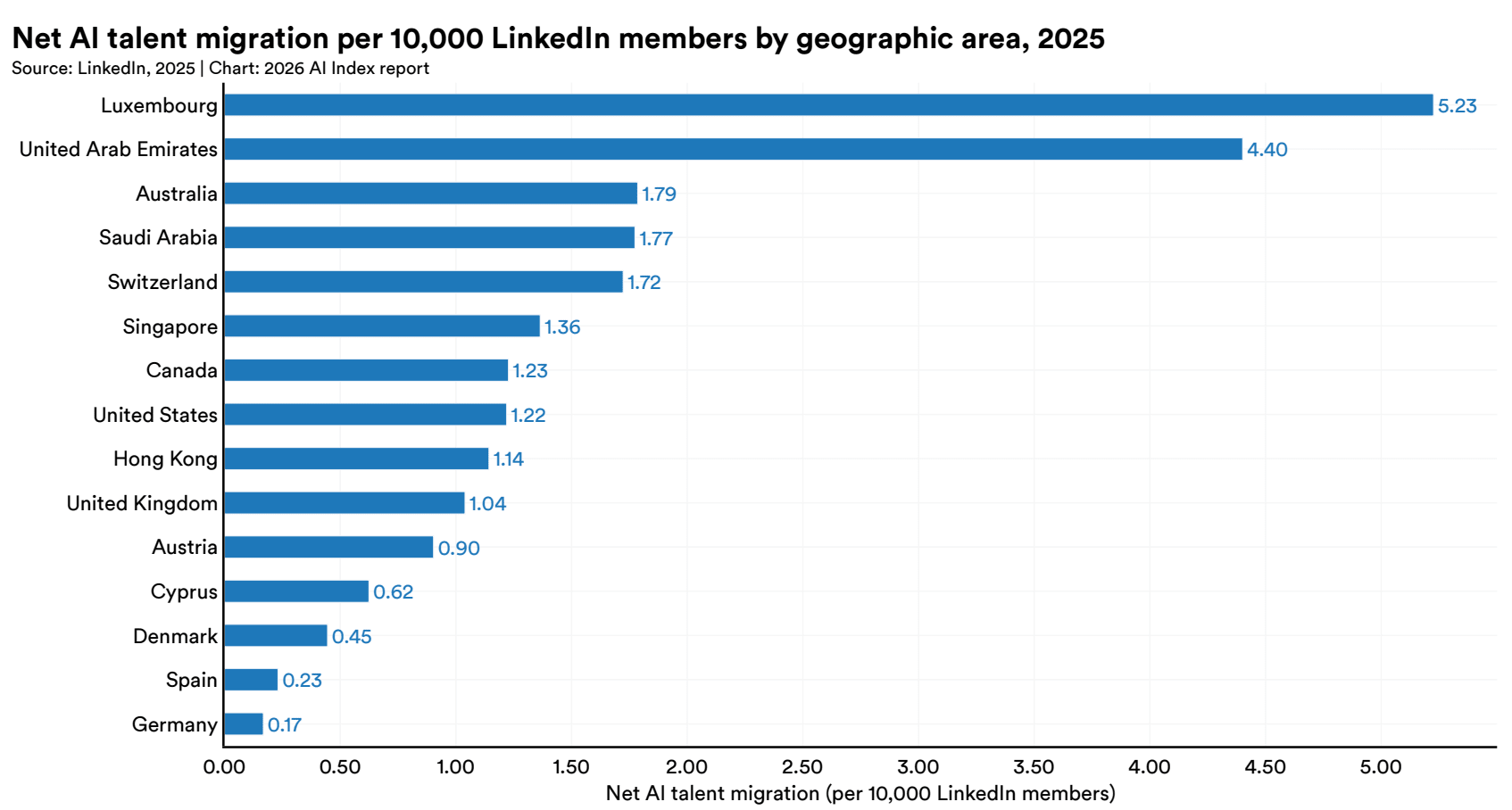
Certain workers are most at risk because their skills are the most exposed to AI. For the first time, economists at the Federal Reserve have now used federal labor market data to confirm what researchers had been observing in payroll data. The economists found that around half a million fewer coders are working today than would have been if pre-LLM-era employment trends had continued. For some workers, this technological shift can open up new doors to productivity, but for others, it holds a painful downfall to unemployment. At a time when America is also limiting immigration, America needs to focus on improving the talent of the workers that it is allowing to be in America, particularly as other nations like Luxembourg, the UAE, and Australia are vacuuming up AI talent.
A Public and Private Disregard
To combat these massive shifts, the AI companies themselves have begun writing their own great New Deal manifestos. On April 6, OpenAI made a surprise announcement not for one of its product offerings but with a lofty public paper titled, “Industrial policy for the Intelligence Age.” OpenAI’s paper signals a notable shift in the company’s perspective, likely spurred by growing public anxiety over AI’s trajectory. Instead of placing the burden of survival solely on workers to “upskill” and keep pace with the machines, the paper pivots toward the idea of “building a resilience society” and asks policymakers to create guardrails on safe AI.
The paper also includes headline-grabbing suggestions like a four-day workweek and the establishment of a “public wealth fund” that would distribute AI-driven profits directly to the population—offering a corporate-backed take on the concept of universal basic income. The paper stresses the proposals shouldn’t be considered as firm answers on how to address AI’s impact on society, but rather “a starting point for a broader conversation about how to ensure that AI benefits everyone”.
Just weeks prior, OpenAI’s rival Anthropic announced its own thinktank, the Anthropic Institute, which similarly proclaimed an intention to explore how the growth of AI would disrupt society.
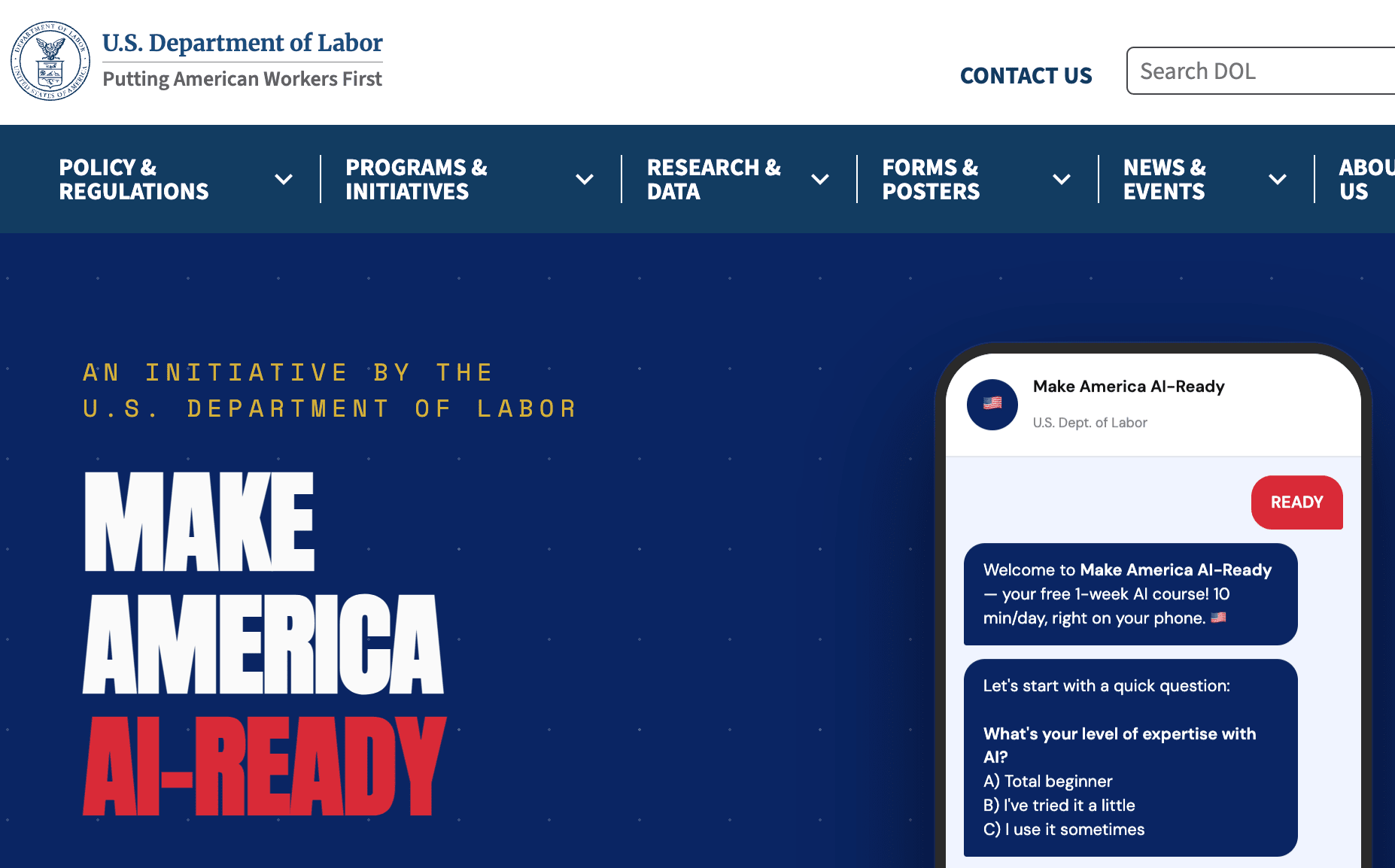
The Department of Labor seems to have taken a first step towards reskilling the American workforce for an AI era, but the reviews are; in that the first step looks more like a stumble. Late last month, the department launched the course titled “Make America AI-Ready” with a goal to, in the course’s own words and emojis, “make AI feel less like a mystery and more like a tool you actually want to use. 💪”. One NPR reporter found after taking the course that the modulesa “kept reminding students of the potential time-saving benefits of AI, which could allow them to do more things outside of work.” However, workers are not structurally prepared for the future after spending a few minutes on how to prompt LLMs. For many of them, there is already so little time outside of work and they just want to understand how to use the tools so they don’t lose their jobs.
Collision Course for Low-Wage Workers
Without new job training, inequality in American labor will continue to rise. Workers who have the skills for the future will pull further ahead whereas those who have continually been underinvested in will fall further behind.
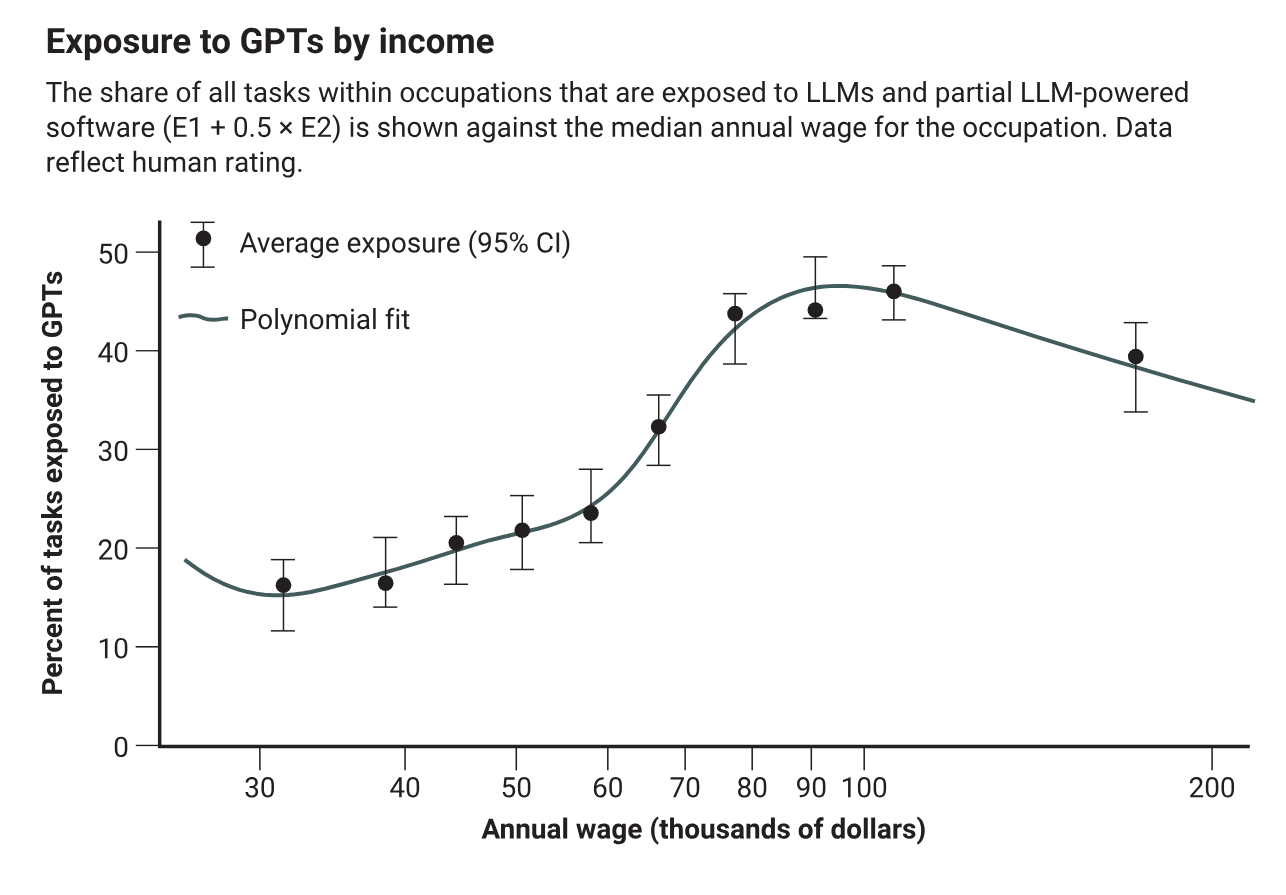
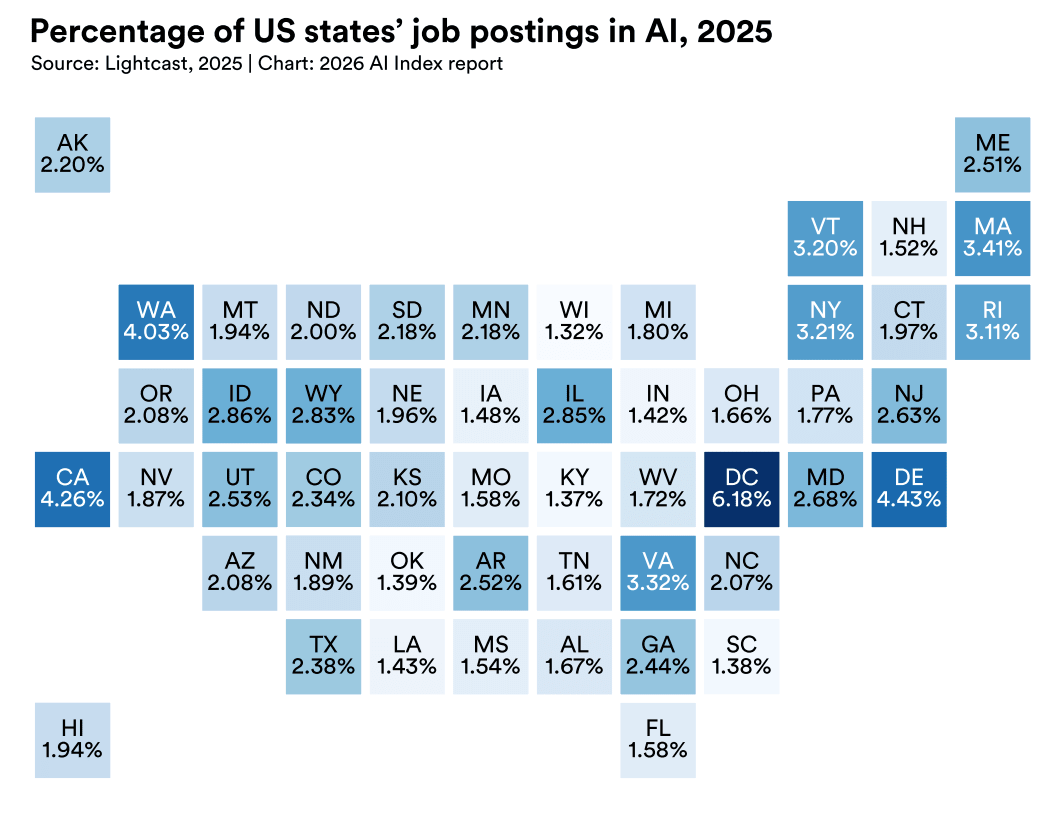
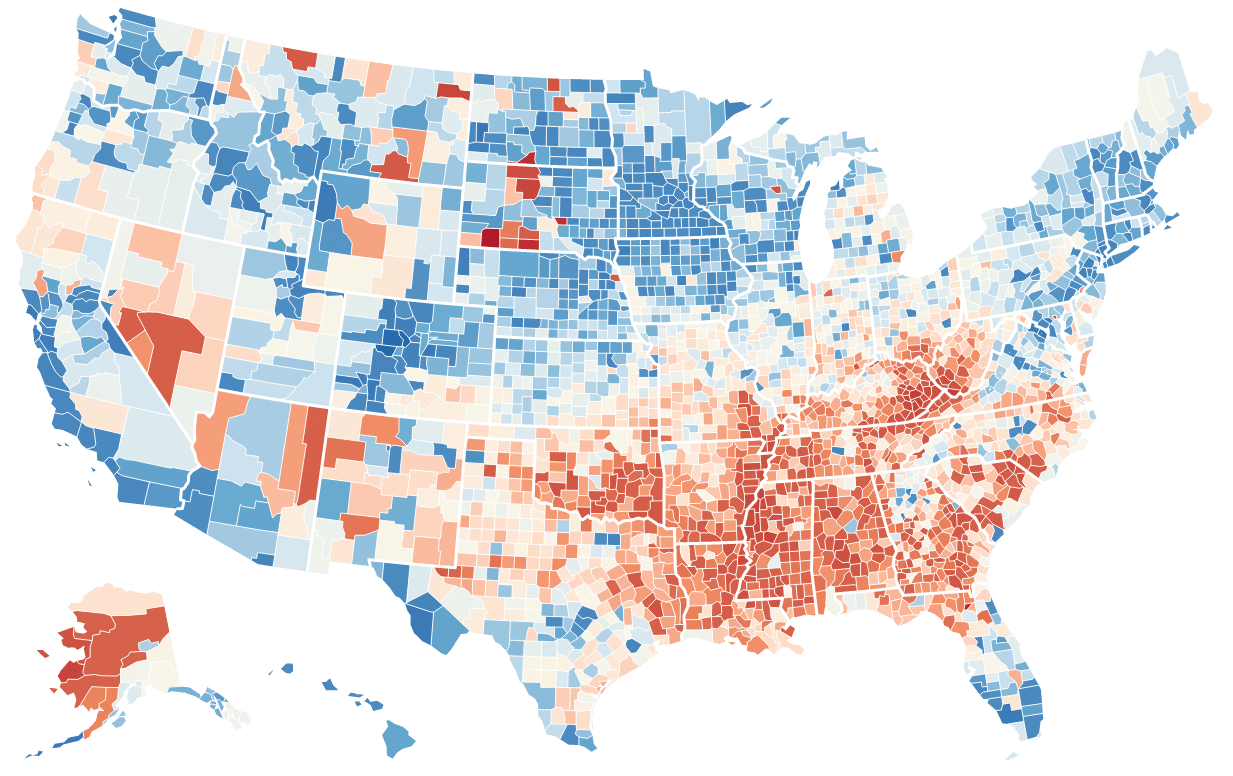
Analysis of 1.3 billion job postings revealed that roles requiring AI skills offer a 28% salary premium (averaging an additional $17,792 per year) compared to similar roles without those requirements. A Brookings analysis identified 6.1 million workers (86% of whom are women) in clerical and administrative roles with high AI exposure but low “adaptive capacity” (i.e. limited savings/transferable skills) who are at severe risk of losing their jobs in the coming years. These workers are heavily concentrated in college towns and state capitals, particularly in the Midwest and Mountain West.
Without federal intervention similar to the MDTA, we risk a “Great Divergence” where the top 1% of households—who already owned a record 31.7% of U.S. wealth by late 2025—capture the entirety of AI’s productivity gains, while underinvested workers in “exposed” industries see their bargaining power and wages systematically degraded.
To launch an AI MDTA and federal workforce training program, America needs to get far more serious about upskilling workers. The Department of Labor’s course exposes the tremendous gap in our capability to retrain workers and also how unseriously the government is taking this challenge. When Nixon came into office, he expanded JFK’s program with even more funding to help workers get a foothold in even more industries.
Despite the private sector’s promises to prepare America for a new industrial age, state and federal governments need to step in with a robust program that can focus on the most at-risk workers before inequality widens further. We are currently preparing for a 21st-century technological revolution with a mid-century bureaucratic mindset—and the bill for that negligence is coming due.
Editor’s Note:
JFK didn’t dismiss the public’s fear. In his 1962 State of the Union address, he described automation as the “major domestic challenge” of the decade. He famously noted that the goal of the economy should be to maintain full employment at a time when automation was replacing men.
JFK signed the Manpower Development and Training Act of 1962 (MDTA). It was the first major federal program designed specifically to retrain workers whose skills were made obsolete by automation.
We’ll be covering the future of jobs related to AI more in the near future. has been featured in TIME Magazine, The New York Times, Los Angeles Times, NPR, PBS, and on the TEDx stage. Learn more:
Check out American Inequality, one of the best Newsletters giving data based analysis, interviews and deep dives on some of America’s most pressing macroeconomic and demographic challenges.
Thanks for reading! Want to be a guest writer on this Newsletter? Pitch me our idea here.
Read More in AI Supremacy