[[{“value”:”
Hey AI Breakers 👋
Most marketing doesn’t fail because your copy is “bad”. It fails because you’re guessing.
Guessing:
-
what customers actually care about
-
why they buy
-
what words they use
-
what they hate about alternatives
-
what finally pushed them to purchase
Meanwhile, the answers are sitting in plain sight:
✅ reviews
✅ Reddit threads
✅ competitors’ testimonials
✅ app store comments
✅ G2/Capterra
✅ YouTube comments
✅ support tickets / chat logs
Today, you’ll build an AI Customer Research Engine that turns raw customer language into:
✅ clear pain points
✅ emotional triggers
✅ objections + rebuttals
✅ messaging pillars
✅ positioning statement
✅ headline and angle library
Let’s build it 👇

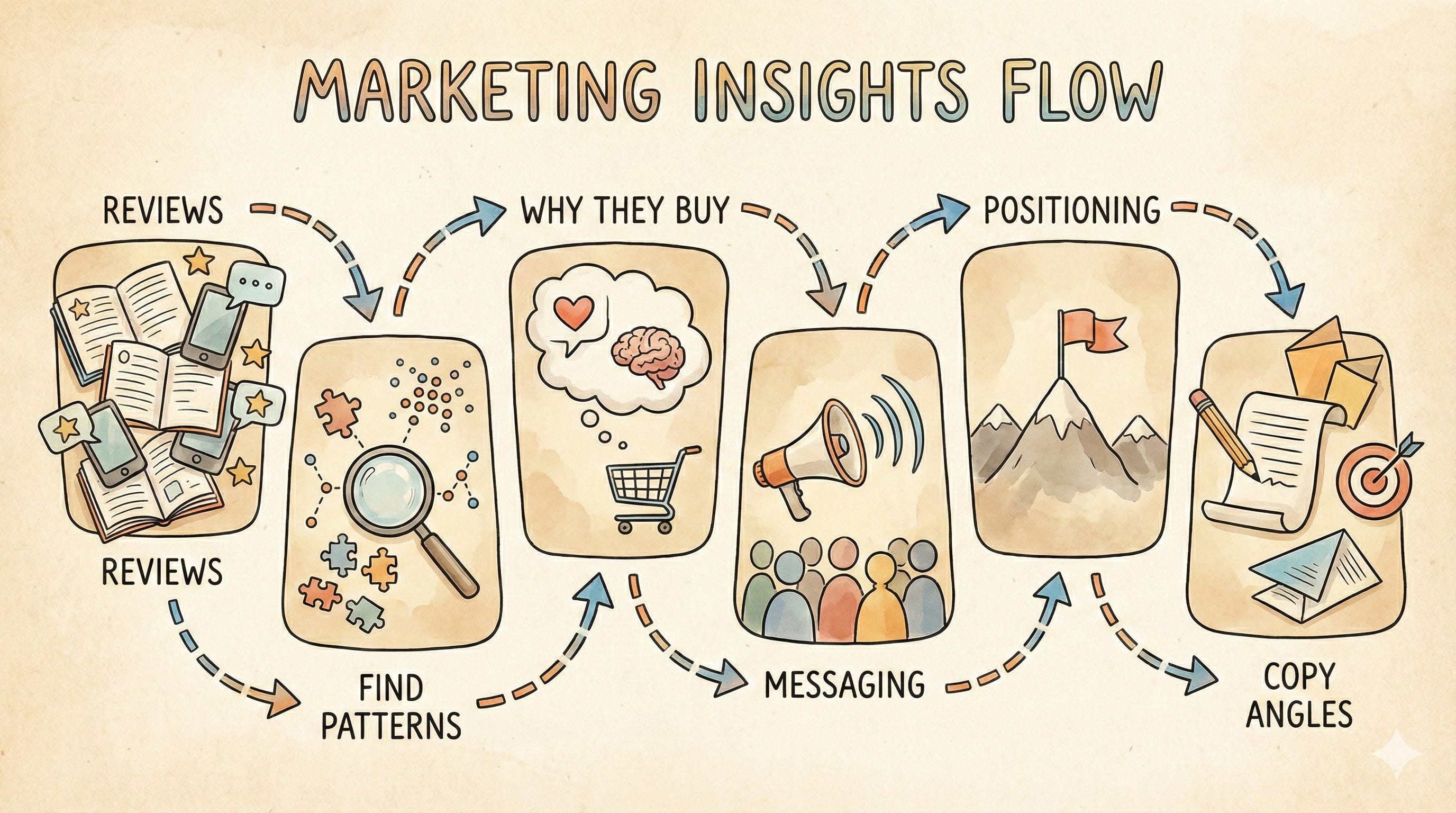
🧠 How the Engine Works
This is the flow:
Reviews → Find Patterns → Why They Buy → Messaging → Positioning → Copy angles
You’re basically doing what elite marketers do… but in 45 minutes instead of 2 weeks.
All you need is input data.
🧾 Step 0 → Collect the Raw Inputs (10–30 minutes)
Aim for 30–100 snippets total.
Mix sources if you can:
For your product
-
reviews (Shopify, Trustpilot, Amazon, App Store)
-
testimonials
-
sales call notes
-
support tickets
-
live chat logs
For competitors
-
G2 / Capterra / TrustRadius
-
Product Hunt comments
-
Reddit threads
-
YouTube comments
-
“alternative to X” blog comments
Format tip: paste as a simple list with:
-
Source
-
Star rating (if relevant)
-
Review text
Example:
-
(G2, 2-star) “The UI is clunky and onboarding took forever…”
-
(Amazon, 5-star) “Saved me 2 hours a day because…”
Once you have your raw dump, we run prompts 👇
🔎 Prompt #1 → The Review Cleaner (turn messy text into usable data)
If you paste reviews directly, you’ll often get noise:
-
off-topic comments
-
vague praise
-
no clear “why”
This prompt cleans and structures everything into a dataset you can actually use.
✅ Run this first every time.
Prompt:
You are a customer research analyst.

I will paste raw reviews/comments.

Your task:
- Remove irrelevant or unusable lines (say why)
- Convert each remaining review into a structured row with:
1.sentiment (positive/neutral/negative)
2.customer type (guess if not explicit)
3.situation/context (what was happening in their life/business)
4.pain/problem they mention
5.desired outcome
6.feature or benefit referenced
7.emotional tone (frustrated, relieved, excited, etc.)
8.exact customer phrases worth saving (quotes)

Output as a clean table.

Here are the raw reviews:
[paste]
💡 Tip: If you have multiple sources, label them so you can compare (your product vs competitor).
🧠 Prompt #2 → The Pain Pattern Finder (find themes that actually matter)
Now we look for patterns. Not “people like it”.
We want:
-
repeated complaints
-
repeated outcomes
-
repeated switching triggers
-
hidden anxieties
This is where your messaging comes from.
✅ Use this to create your “research summary”.
Prompt:
You are a senior insights strategist.

Using this structured review table:
[paste output from Prompt #1]

Deliver:
- Top 10 pain points (ranked by frequency and intensity)
- Top 10 desired outcomes (ranked)
- Top 5 “switch triggers” (what made them change tools or finally act)
- Top 10 objections and fears (what almost stopped them)
- Top 10 moments of delight (what surprised them positively)
- The 10 most valuable customer phrases (verbatim) that should be used in marketing

Make it specific and written like a research debrief.
🎯 Prompt #3 → Jobs To Be Done Map (the real “why they buy”)
Most brands sell features. Customers “buy” products for a job.
This prompt turns your patterns/pains into a JTBD map you can build positioning around.
✅ This is where your offer becomes sharp.
Prompt:
“}]] Read More in The AI Break