
Hello Engineering Leaders and AI Enthusiasts!
This newsletter brings you the latest AI updates in just 4 minutes! Dive in for a quick summary of everything important that happened in AI over the last week.
And a huge shoutout to our amazing readers. We appreciate you😊
In today’s edition:
🧠 Z AI’s open model nears the frontier
💻 Study: Claude rewards expertise over coding
⚔️ Sakana’s AI model challenges frontier AI
📊 Pew research finds Americans use AI more but trust it less
💡 Knowledge Nugget: AI demands more engineering discipline. Not less by Charity Majors
Let’s go!
Z AI’s open model nears the frontier
Chinese AI lab Z AI has released GLM-5.2, an open-weights model that comes remarkably close to GPT-5.5 and Claude Opus 4.8 across coding, reasoning, and math benchmarks. The model also introduces a 1M-token context window and configurable reasoning modes for handling more complex, long-running tasks.
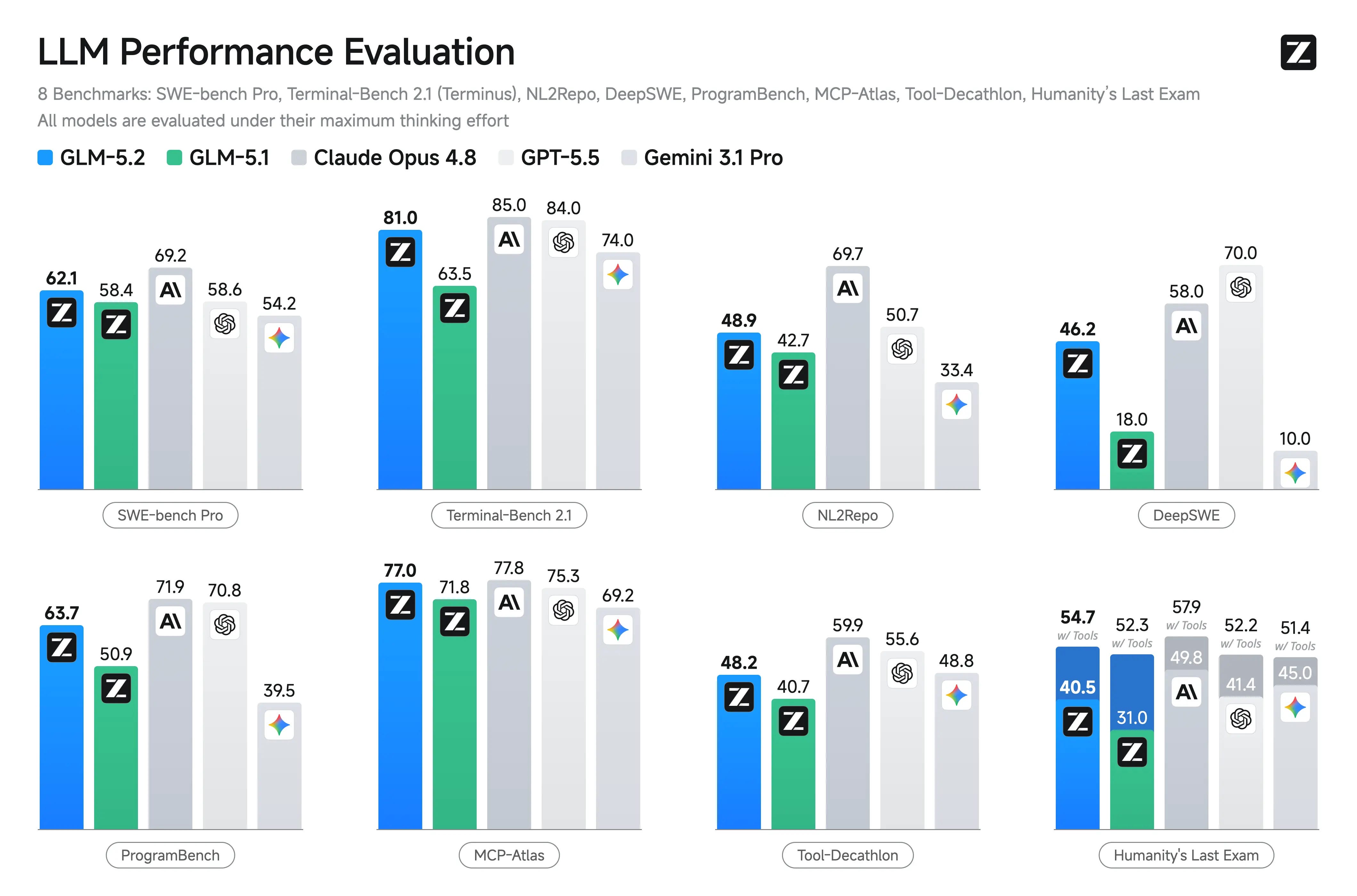
Beyond performance, GLM-5.2 is released under the MIT license and priced well below leading proprietary models, making frontier-level capabilities more accessible to developers and enterprises. It marks another step forward for open-weight models in closing the gap with their closed-source counterparts.
Why does it matter?
This is one of the most competitive open-weights releases to date, arriving as cost and deployment flexibility become bigger buying factors for enterprises. GLM-5.2’s benchmark results are impressive on their own, but combining them with an MIT license and frontier-level pricing makes it a strong signal of where the market is heading.
Study: Claude rewards expertise over coding
Anthropic analyzed 400,000 Claude Code sessions to understand how humans and AI collaborate during software development. The study found that users still led most planning decisions, while Claude handled the majority of execution tasks. More experienced users also got significantly more work out of every prompt, with higher success rates and richer AI responses.
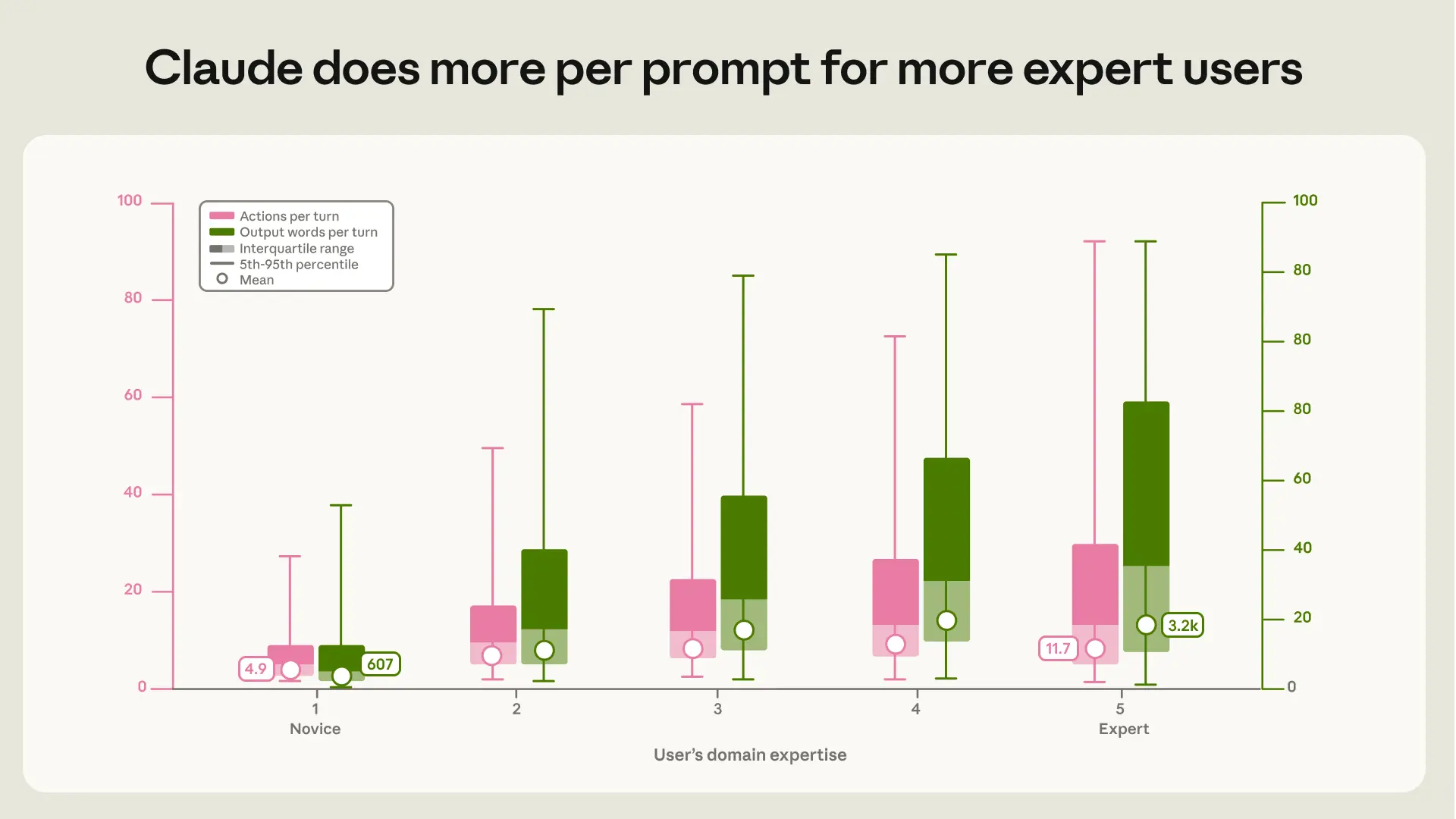
Perhaps the most surprising finding was that domain expertise mattered more than coding expertise. Lawyers, scientists, and managers came surprisingly close to software engineers on coding tasks, suggesting that deep knowledge of a problem may now matter more than knowing every programming language.
Why does it matter?
This study points to the same trend emerging across AI coding tools: models are getting better at implementation, while human expertise remains the limiting factor. The biggest gains may come not from becoming a better programmer, but from becoming better at framing and solving the right problems.
Sakana’s AI model challenges frontier AI
Japan’s Sakana AI introduced Fugu, an orchestration model that tackles a single request by distributing work across multiple AI models through one API. Instead of relying on a single frontier model, Fugu selects specialist models for different subtasks, validates their outputs, and combines them into a final response. It is available in two versions: Fugu for everyday coding and chat, and Fugu Ultra for more complex workloads like patent research and security testing.
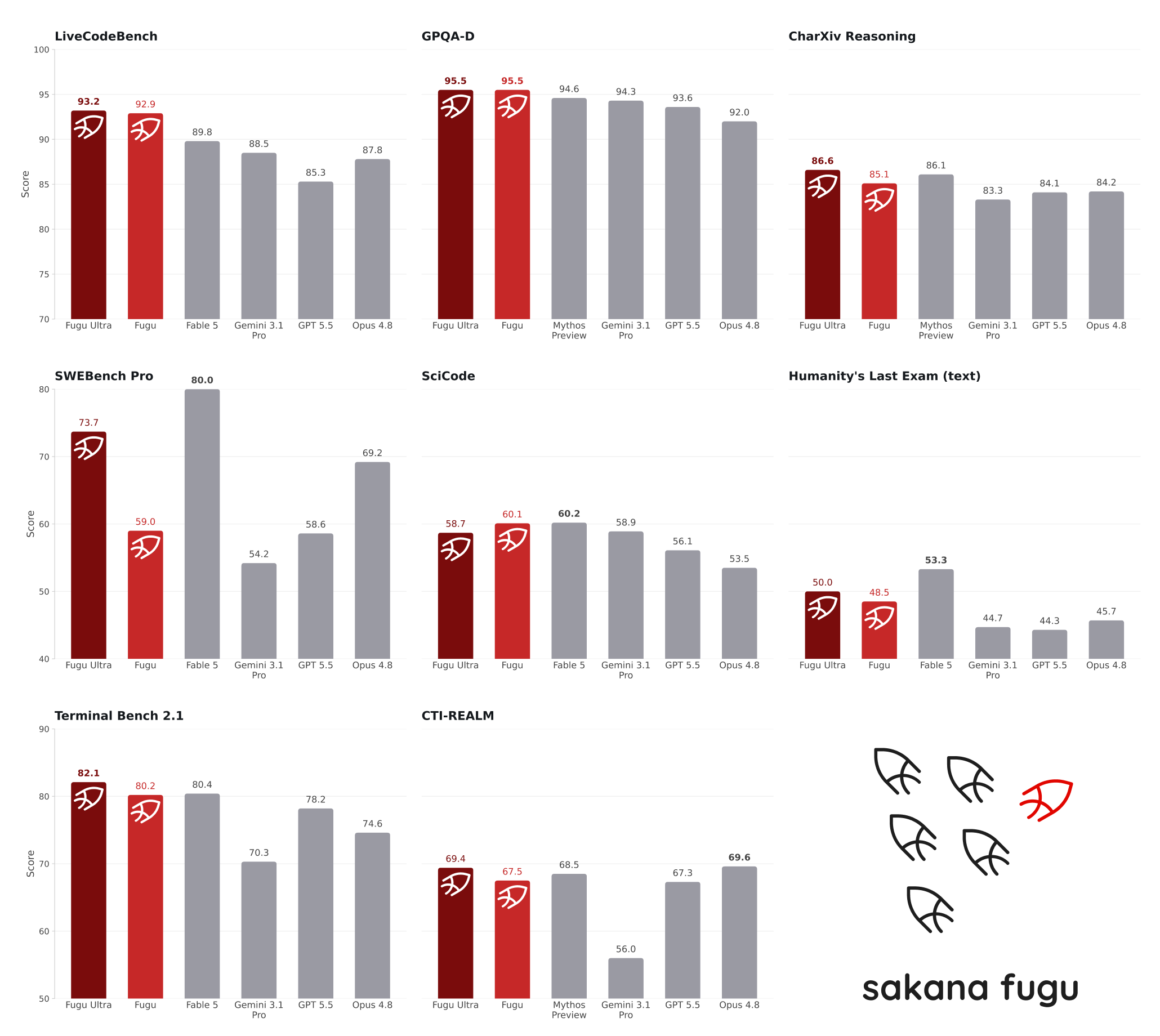
Sakana says this approach delivers performance near Anthropic’s Fable 5 and Mythos Preview across coding, reasoning, and scientific benchmarks. The company also positions Fugu to achieve frontier AI capabilities without depending on export-controlled models, though early users remain divided on whether its real-world performance matches those claims.
Why does it matter?
Multi-model orchestration is quickly becoming one of the most interesting trends in AI, especially as access to frontier models grows more restricted. But until independent testing catches up with benchmark claims, Fugu feels more like a promising experiment than a proven breakthrough.
Pew research finds Americans use AI more but trust it less
A new Pew Research survey of more than 5,000 U.S. adults shows AI adoption is accelerating, even as public confidence continues to decline. Nearly half of Americans now use AI chatbots up from just one-third in 2024 with one in four using them every day.
Despite that growth, skepticism remains widespread. Almost 40% believe AI will make society worse over the next two decades, while only 16% expect a positive impact. Younger adults, despite being the most frequent users, are among the least optimistic. Meanwhile, ChatGPT continues to dominate the market with 44% adoption, ahead of Gemini (24%) and Claude (6%).
Why does it matter?
This report echoes what we’ve been noticing outside the AI community: people are adopting AI faster than they’re warming up to it. The platform numbers tell a similar story ChatGPT dominates everyday usage, while Claude remains far more influential inside the industry than outside it.
Enjoying the latest AI updates?
Refer your pals to subscribe to our newsletter and get exclusive access to 400+ game-changing AI tools.
When you use the referral link above or the “Share” button on any post, you’ll get the credit for any new subscribers. All you need to do is send the link via text or email or share it on social media with friends.
Knowledge Nugget: AI demands more engineering discipline. Not less
In this article, Charity Majors argues that AI has fundamentally changed the economics of software development. Code generation has become fast, inexpensive, and increasingly commoditized. Instead, the real engineering challenge is validating behavior, preserving system knowledge, and ensuring software remains reliable in production. She compares this shift to the industry’s move from handcrafted servers to immutable infrastructure, where replacing systems became more effective than manually maintaining them.
The article suggests that code should increasingly be treated as a disposable artifact rather than the primary repository of engineering knowledge. As AI makes rewriting code easier, engineering teams must invest more heavily in architecture, testing, observability, evaluations, and production feedback loops that capture system behavior outside the code itself. The future advantage lies not in generating more code, but in building systems that can reliably validate and regenerate it.
Why does it matter?
2025 was about generating code. 2026 is shaping up to be about validating it. Teams that treat AI-generated code as “good enough” may move faster initially, but the winners will be those that invest in evaluation, observability, and rigorous engineering practices.
What Else Is Happening❗
📊 Anthropic’s latest Economic Index shows people are increasingly using Claude for both work and personal tasks, with growing optimism about AI’s role in their careers.
🧠 OpenAI unveiled GPT-5.6, its most advanced model family yet, featuring flagship Sol alongside lower-cost Terra and Luna variants, with access initially limited to vetted partners.
⚡ OpenAI revealed Jalapeño, its first custom AI chip built with Broadcom to run ChatGPT and future agents more efficiently while reducing reliance on Nvidia.
💬 Anthropic launched Claude Tag for Slack, letting teams assign tasks to Claude with @mentions as it builds context and works asynchronously across channels and tools.
👓 Meta launched Meta Glasses, a $299 AI-powered smart glasses lineup featuring Muse Spark AI for visual assistance, navigation, and live translation.
🧬 Stanford researcher Brian Hie launched Proto, an open framework that connects AI biology models into unified pipelines, streamlining research across DNA, RNA, proteins, and drug discovery.
🩺 Midjourney unveiled Scanner, an ultrasound-based full-body imaging system that aims to complete detailed scans in 60 seconds, with dedicated wellness spas planned for 2027.
🧬 Researchers found OpenAI’s o3 Deep Research helped uncover 18 new diagnoses in 376 previously unsolved pediatric genetic cases by identifying overlooked research and genetic evidence.
New to the newsletter?
The AI Edge keeps engineering leaders & AI enthusiasts like you on the cutting edge of AI. From machine learning to ChatGPT to generative AI and large language models, we break down the latest AI developments and how you can apply them in your work.
Thanks for reading, and see you next week! 😊
Read More in The AI Edge


