
[[{“value”:”

Good Morning,
I wanted to review some of the recent AI News in our continued theme for the month: State of AI in infographics. Good News, Bad News and well a lot of macro concern. There’s been significant model innovation on the open-source front lately.
📚 I’m running a limited time discount in case you want to support my work and financially anchor my ability to continue doing this, you can upgrade here. I am grateful for the support.
So my standards of coverage are not to hype the good news without talking about the difficulties and complex macro and social realities. The AI market needs to face its reality too and fundamentals. I will try to curate a bunch of data points to help you get a more holistic picture of the reality of BigTech, BigAI and financing risks, as well as the experience of consumers and the market.
Nvidia, Reflection AI and Meta just released New Open-Source Models
Reflection’s Beam scores second among US open weights models: Beam scores 30, behind only Meta’s Muse Spark Open (39) and ahead of yesterday’s NVIDIA Nemotron 3.5 Super VL (26) release. The numbers represent scores on AA. It’s less clear if this will protect from token marketshare gains for Chinese open-weight models:
Does Beam, Muse Spark Open and Nemotron 3.5 Super VL Protect?
WHAT DO YOU THINK? (Vote)
Reflection’s Beam is a nice addition.
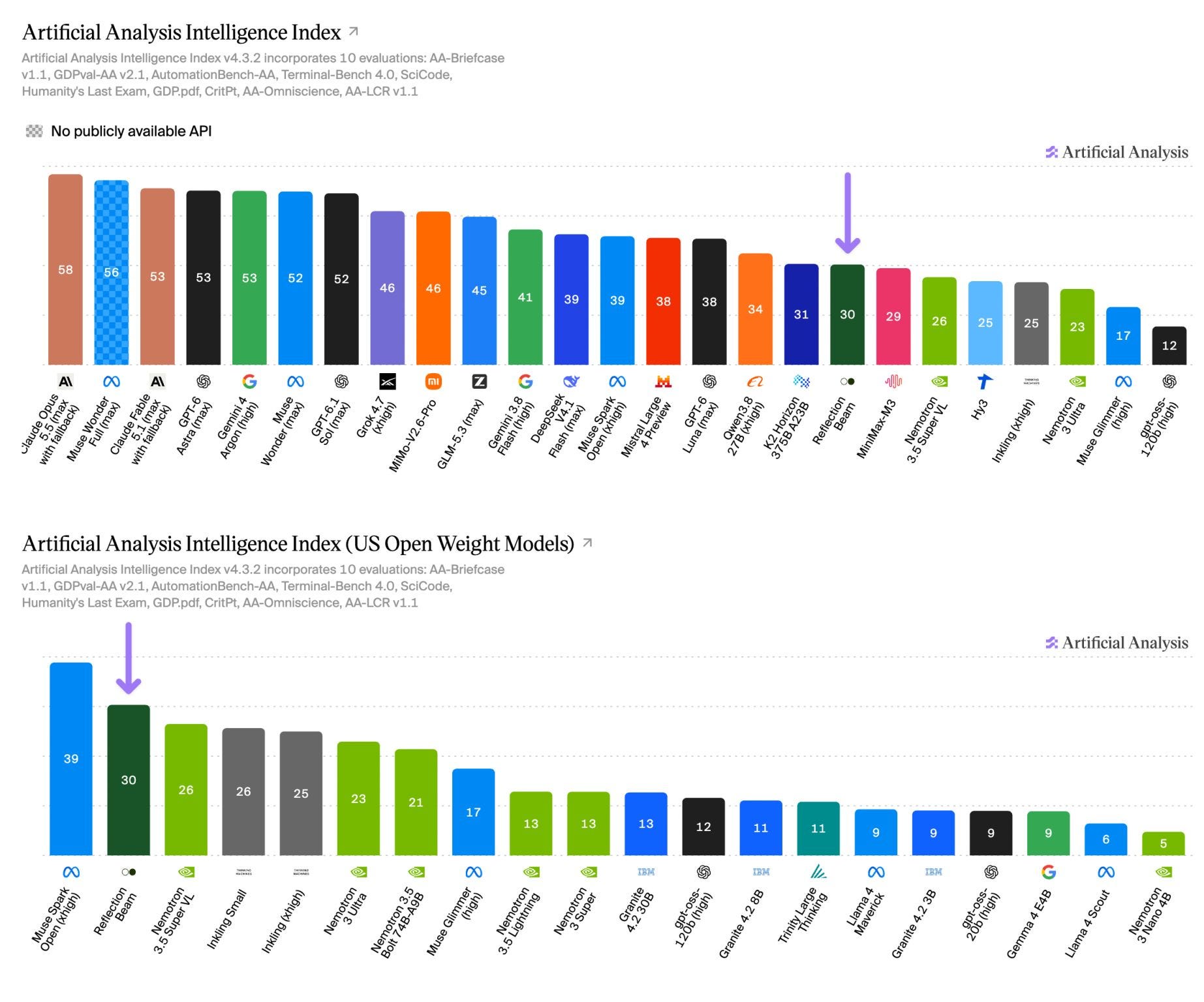
Muse partnered with Apple and claims that Muse Spark Open is optimized to run on Mac Studio with M5 Ultra, and together they’re the best way to run a powerful model on your own desktop.
The AI Financing Breakdown of Autumn, 2026
The gap between what it costs to build AI infrastructure and what companies are actually paying to use it is widening, even as, a massive gap is opening up between AI infrastructure spending and expected returns. The accelerating demand for compute is leading to sharper negative FCF Earnings by BigTech. According to Gartner and others, more than $4 trillion in AI infrastructure spending could be at risk of write-downs by the end of 2032 if companies maintain their current investment pace.

Neo Cloud volatility and coverage centered around Oracle, CoreWeave and Softbank are starting to get more attention. As we had mentioned earlier, Gartner predicts that more than 80% of specialized so-called Neo Clouds will likely cease operating independently by 2030. There’s an infographic for that! But not somehow the full realization yet in the market. By the end of 2026 and heading into 2027, it will get much harder to secure financing. That is, Global AI-related debt issuance plunged to $23 billion in September 2026, down sharply from $113 billion in June, per the Financial Times. A major financing crunch for AI could be right around the corner.
The Demand for Compute and Mismatch is going to get more Extreme
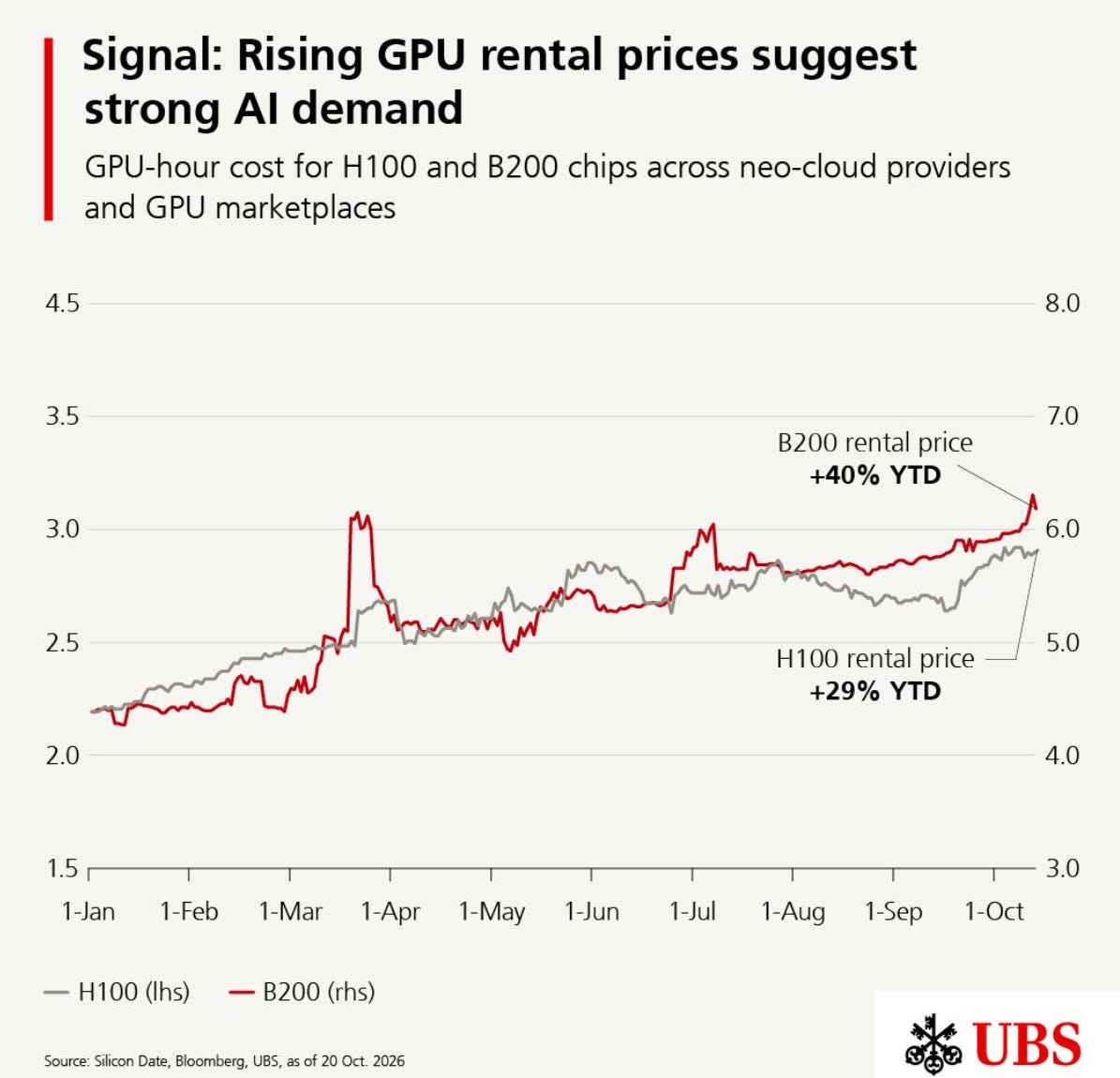
While AI sentiment continues to worsen with datacenter moratoriums, Banks are also actively pulling back to avoid concentration risk in 2026, with JPMorgan CEO Jamie Dimon confirming his bank is tightening up on credit. Approximately $18 billion in bank loans for an Oracle data center campus recently slid into stressed territory, while Nvidia-backed AI cloud provider Firmus shelved an IPO that sought a valuation north of $30 billion. Nscale luckily has Anthropic contract rumors. Anthropic and Nscale IPOs will be ones to watch.
In a nutshell, there is a massive gap between AI spending and AI revenue, one that won’t close for many, many years (if it ever does).
In a world where Anthropic is a Neo Cloud customer of SpaceX. Plainly? Anthropic is currently one of the “largest anchor customers” for SpaceX’s newly expanded “Neocloud” AI compute division, utilizing the full capacity of SpaceX’s Colossus 1 data center in Memphis.
Anthropic’s Balance Sheet Worse than we Thought
Anthropic brought in just $16.3 billion in revenue for the first half of 2026 (surpassing its full-year 2025 revenue of $4.6 billion). However, the company reported a massive net loss of $80.7 billion for the first half of 2026. But don’t worry, that’s other people’s money.
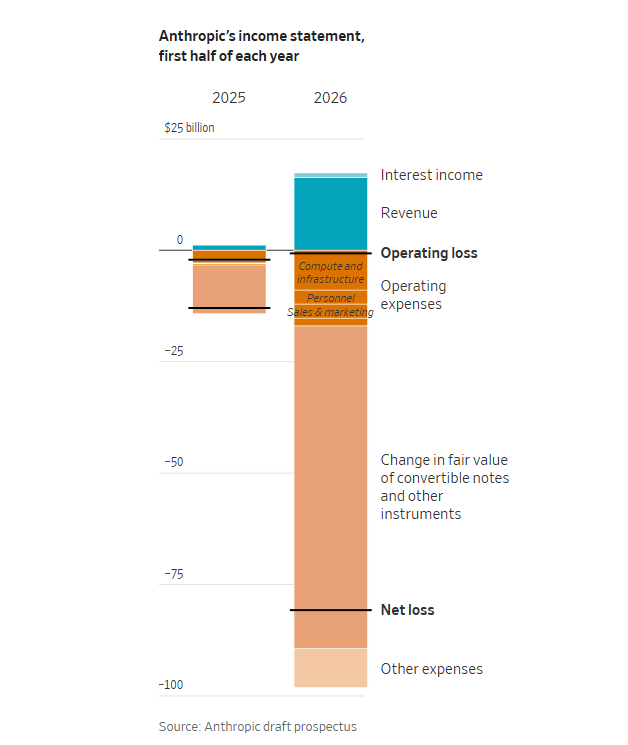
The general release of their S-1 to the public is soon, likely next week or 15 days before their IPO. The company logged a $42 billion net loss in 2025, which basically doubled.
SpaceX Squeezes Cursor made Grok Bot Growth and Neo Cloud Revenue
By the Numbers:
-
SpaceX reported Q3 2026 revenue of $14.58 billion and net income of $4.4 billion.
-
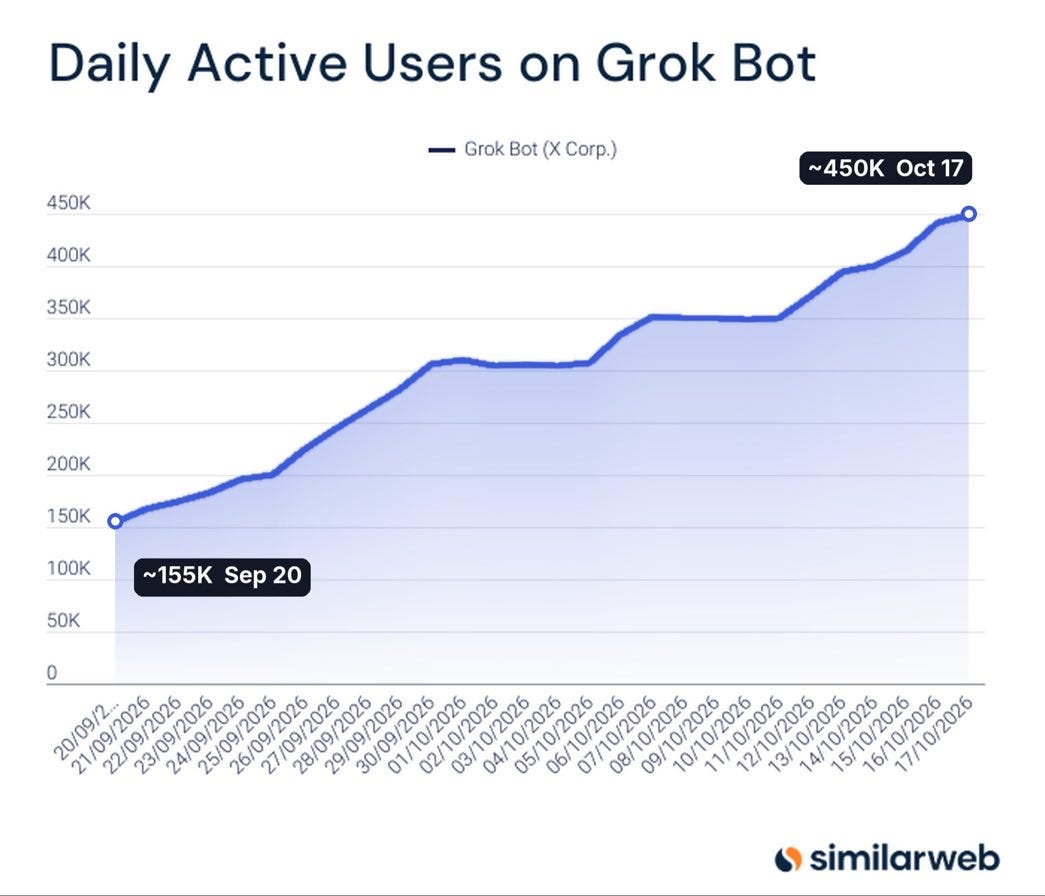
Super Intelligence (SI) / AI Infrastructure Segment makes up 52% of the revenue for SpaceX, which is officially no longer a rocket launch company, but something else entirely. A Neo Cloud with decent Grok Bot growth. The Cursor acquisition is paying off already.
-
Consumer Starlink subscribers grew by 1.6 million during the quarter to reach 13.6 million total users growing at a 69% YOY clip. Still one of the main drivers of the overall business.
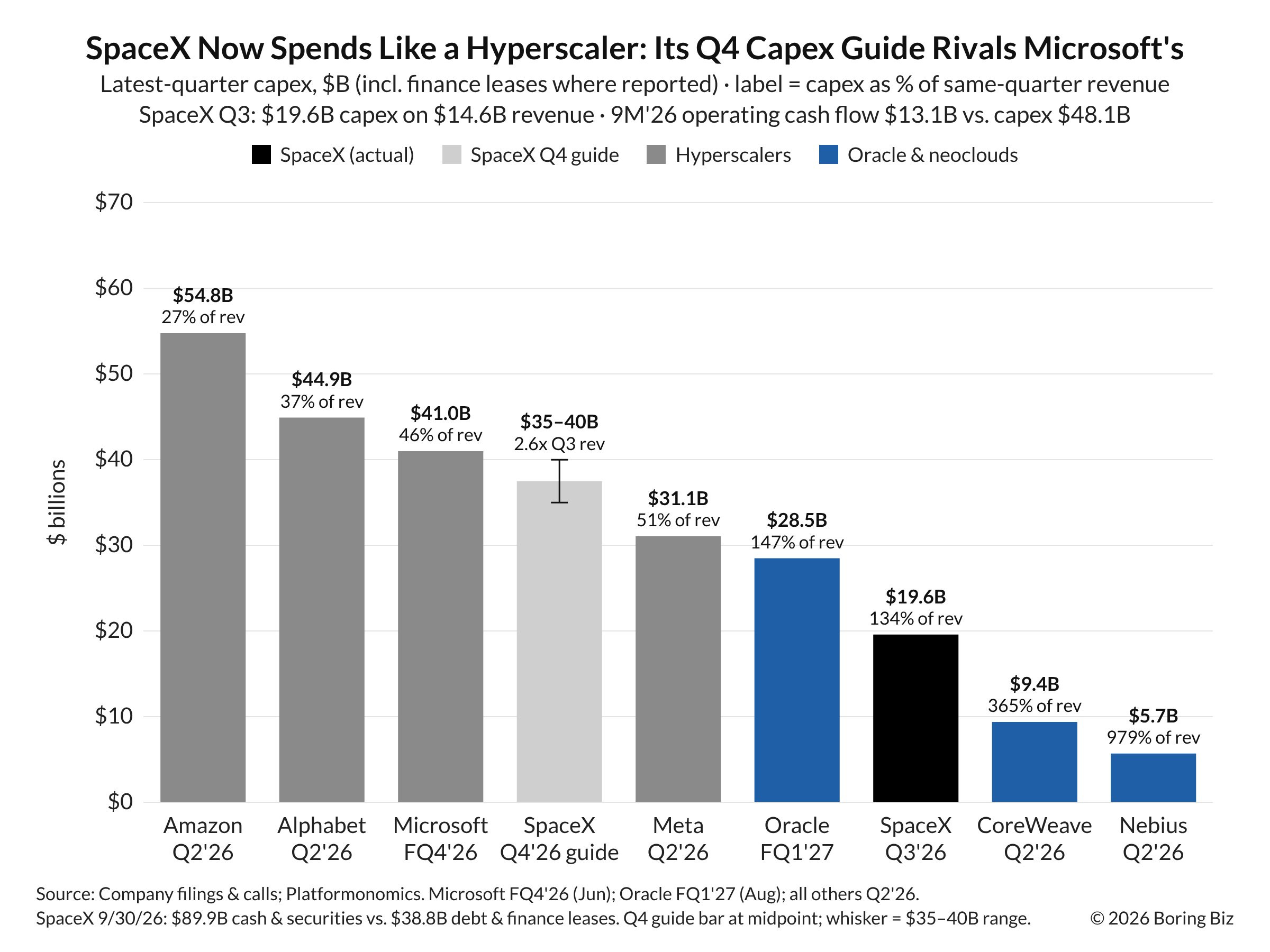
However in Q3 SpaceX is also spending big on Capex with a lot of debt. Q3 2026 Capex: $19.6 billion (a significant step up from $6.9 billion in Q3 2025 and $18.37 billion in Q2 2026). They have $38.8 billion in debt, with 78% inside ownership (mostly Elon Musk).
-
SpaceX’s launch business generated just $1.77 billion in revenue in the third quarter. They are now nearly totally dependent on the AI and Starlink narrative story.
SpaceX will do Capex as if its a Hyperscaler
-
Elon Musk guided to $35B to $40B of capex for the fourth quarter (Q4) of 2026, putting it in line with Microsoft’s capex spend in the most recent quarter.
-
The dream of orbital compute and Terafab aren’t going to come cheap.
AI is Inflationary Pushing the Affordability crisis to new highs in the U.S.
“}]] Read More in AI Supremacy


