

As SpaceX, OpenAI and Anthropic IPOs approach in the days and months ahead, how we define the narrative around the future of AI is also taking shape. With Anthropic expanding access to its new class of LLM called Mythos to more organizations, the U.S. Department of War appears to be using Mythos for Cybersecurity attacks, reports the FT.
In recent weeks several significant seed rounds have been given to AI labs in the U.S. working on various aspects of recursive self-improving AI capabilities, or RSI. We have to conclude that Mythos as an LLM step-up might represent the first RSI-native Model. If Anthropic’s framing is correct, we are heading into unchartered territory.
Claude 4.8 already seemed like solid advancements but the Mythos class appears relatively distinguished compared to its competitors at Google, OpenAI or China. This is giving Anthropic a feeling of grandeur heading to its landmark IPO that might end up being the highlight of these Mega IPOs of 2026. Now in a blog post on its website on Thursday, Anthropic wrote about the risks of AI progressing to a point where it could improve itself autonomously.
Anthropic reported a landmark blog titled When AI Builds Itself, while the U.S. Government is discussion about taking equity stakes in the biggest AI companies. That is for real, Senior U.S. officials held preliminary discussions with major AI companies about the potential for the government to buy some shares in their firms. These are unprecedented and gravely risky endeavors as Nation States seek to mould AI in their image.
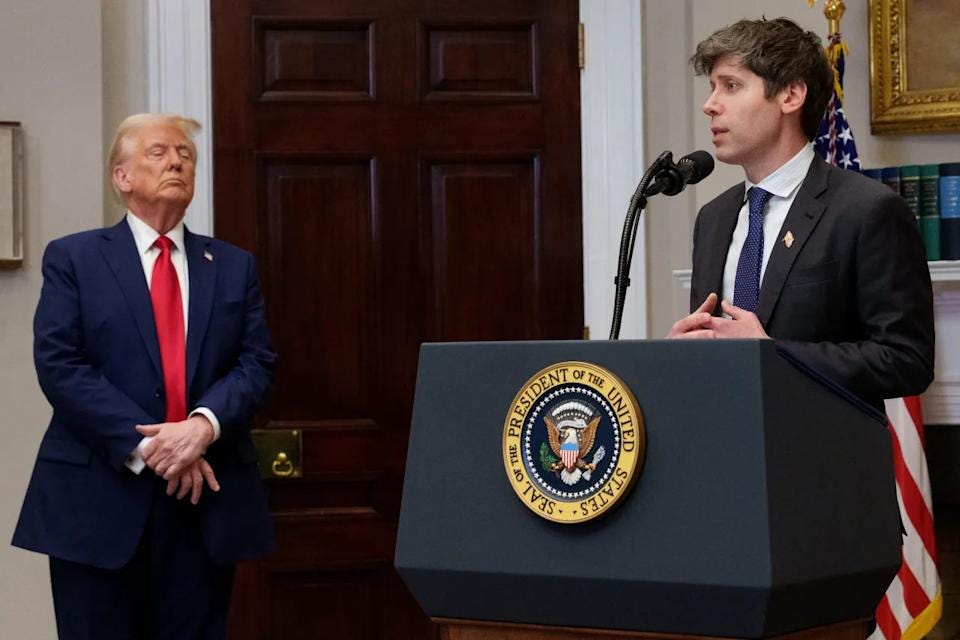
OpenAI CEO Sam Altman has discussed the idea with government officials since President Donald Trump began his second term, the report said. Sam Altman and Bernie Sanders have different ideas on how that could look. This is in sync with Trump and his financial elite friends to create a Sovereign Wealth Fund for the United States. Anthropic is not having conversations with the administration about providing equity to the government and it’s not clear what Sam Altman or OpenAI’s motives are to enter into such a deal.
A White House meeting is reportedly being set up with leading AI firms to explore the concept
Anthropic’s Mythos has raised concerns that new AI models might be capable of, including and especially in cybersecurity. Anthropic confidentially filed its IPO prospectus with the SEC and said it will offer Mythos to the European Union along with an additional 150 partners in 15 countries. Mythos is becoming more than just a frontier model however, it’s becoming part of a larger debate around what recursive self-improving AI might do if it’s real across industries.
Anthropic’s cryptic Tweets are also unsettling at a time when Anthropic is clearly working more closely with the Department of War while being held semi-hostage with a rather nefarious designation as a supply-chain risk.
Defense Secretary Pete Hegseth has denied Anthropic’s request to reconsider the AI startup’s designation as a national security risk, the Pentagon told the D.C. Circuit Court of Appeals on Thursday.
It appears like the Trump Administration has a special relationship with Sam Altman and OpenAI and is trying to supress whatever Anthropic represents. If Mythos is being used for cybersecurity offense (supposedly against China) then this is not a good sign of AI becoming a geopolitical risk in an era of more automated systems in National defense.
Anthropic, is Everything Alright?
According to the report by the FT, Anthropic has embedded a team of “forward-deployed” engineers directly inside the National Security Agency (NSA) to help the agency use its restricted Claude Mythos model for offensive cyber operations. We have to suppose that Anthropic is simultaneously locked in an aggressive legal battle against the Pentagon putting them in a difficult position, not unlike TSMC being forced to build more in Arizona while trade-tariffs could have decimated Taiwan’s economy where Trump has used a stick and carrot approach, but mostly a stick.
Meanwhile the public markets seem to be in the hands of the financial elite where significantly wealth centralization will occur. That is, SpaceX, OpenAI, and Anthropic will enter the Nasdaq 100 via fast-track rule in just over 15 trading sessions, potentially reaching well over $1+ trillion valuations. The S&P 500 decided not to follow the same route. With the Nasdaq’s special 15-day “fast-track entry” shift, the trio of mega AI IPOs to come (and the other heavyweight AI-native firms that could follow in their tracks) will be in the Nasdaq 100 after 15 trading sessions. That’s historically fast and means a lot of ETFs will artificially inflate their value.
As you may know, Trillions of dollars in passive capital globally track the Nasdaq 100 via major ETFs and mutual funds. When a $1.75+ trillion company enters the index on day 15, these passive funds are legally and mechanically obligated to buy billions of dollars of the new stock to accurately match the index weighting. Even though SpaceX and OpenAI are highly unprofitable companies with nefarious activities going on within in my observations and opinion. AI is reshaping capitalism and democracy, but not in the ways in which the media typically portrays. This might protect for example, OpenAI from obvious risks of failure while it burns enormous amounts of capital. It props up Elon Musk as the first potential Trillionaire even while serious analysts are questioning the SpaceX valuation.
The Trump Administration (on the advice of many Venture Capitalists and Tech Executives) are warping the rules of Capitalism with ideas of implementing a Sovereign Wealth Fund and intervening in AI companies in this manner. It’s not just highly unusual, it’s actually undemocratic and contrary to rule of law that the United States has historically adhered to. I believe it’s a step towards an AI Surveillance State of Authoritarianism that so many of us have feared.
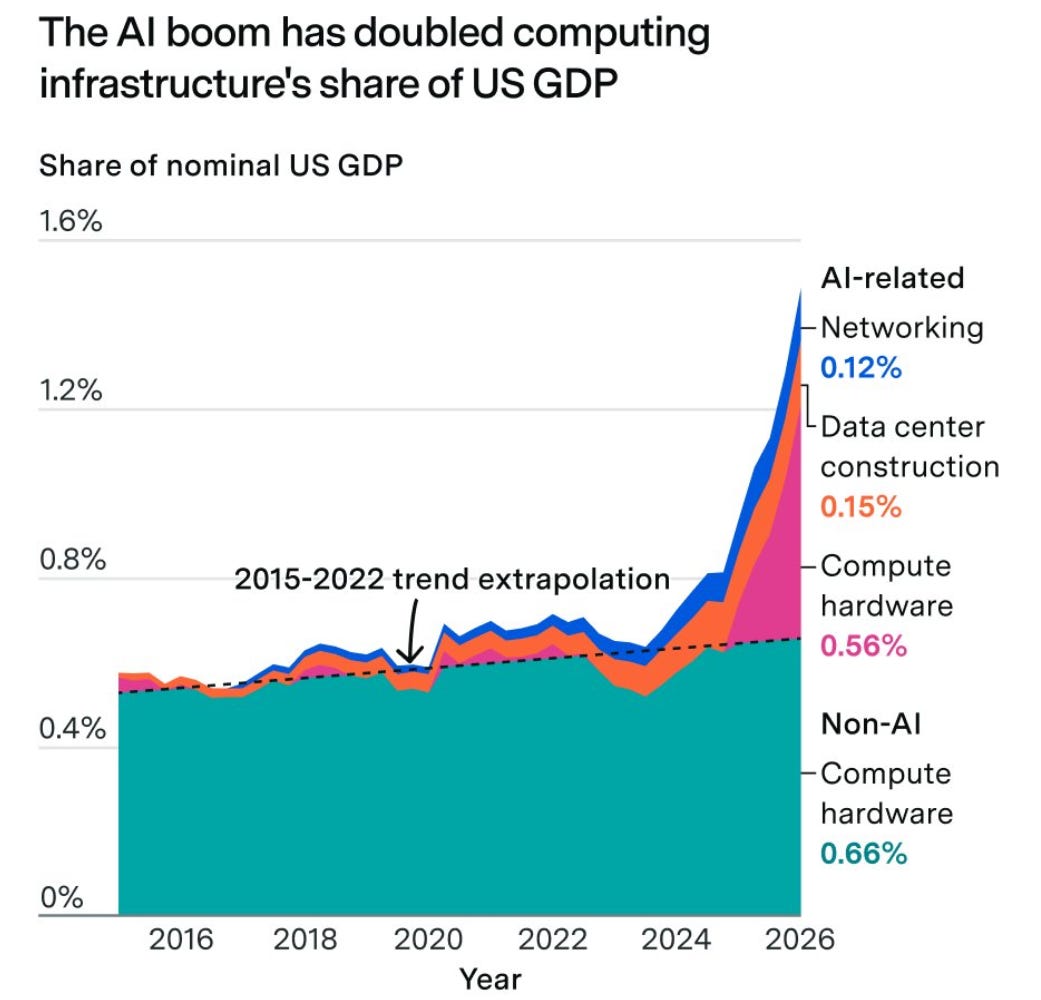
While India’s economy is booming, most of the U.S. GDP growth is mostly just from over-building datacenters and earnings tied to rampant circular funding and supply-chain bottlenecks that are increasing prices. While most Americans and global citizens aren’t seeing a meaningful benefit from Generative AI or the AI boom, unless they own considerable equity positions. These Mega AI IPOs and the activities of the Trump Administration feel more centralized than indeed the vibrant open-source AI ecosystem and labs flourishing right now in China where multiple winners are going public and not just a corporate Duopoly under the thumb of the U.S. Government. Something is very dark and foreboding in American power at the intersection of AI.
Anthropic’s blog around RSI equally feels very anxiety inducing and possibly dangerous. The question is can we trust this AI trust and safety lab to be providing accurate information mere months before their IPO? Now that their revenue is surging and they are working with the Department of War, it’s difficult to know what to believe. The Mafia capitalism at the service of the financial elite and VCs that the Trump Administration is normalizing could also change/damage the future of how AI is operated upon the world.
Recursive Self-Improving AI Scenarios
RSI is a theoretical scenario where an AI system designs, updates and improves its own source code, architecture and perhaps generalizing to other domains. But what happens this is no longer hypothetical? It’s one thing for code to be writing more of itself and quite another for this to occuring in other domains. So what is Anthropic saying exactly? Are they hyping up their IPO or is something else going on here?
“There is a bit of navel-gazing, some marketing, and a lot of very sincere beliefs about what Anthropic thinks is likely in the near future of AI that you probably want to be aware of.” – Ethan Mollick on Anthropic’s Blog about this.
Anthropic claims:
Our internal data shows Claude is accelerating AI development—a possible path to recursive self-improvement, or AI autonomously building a more capable successor. It’s happening faster than we thought, and the implications deserve greater attention. – Source.
“Today, Anthropic engineers on average ship 8x as much code per quarter as they did compared to 2021-2025.” – Anthropic
How does Anthropic Generalize Code writing to RSI in other domains? 🤔
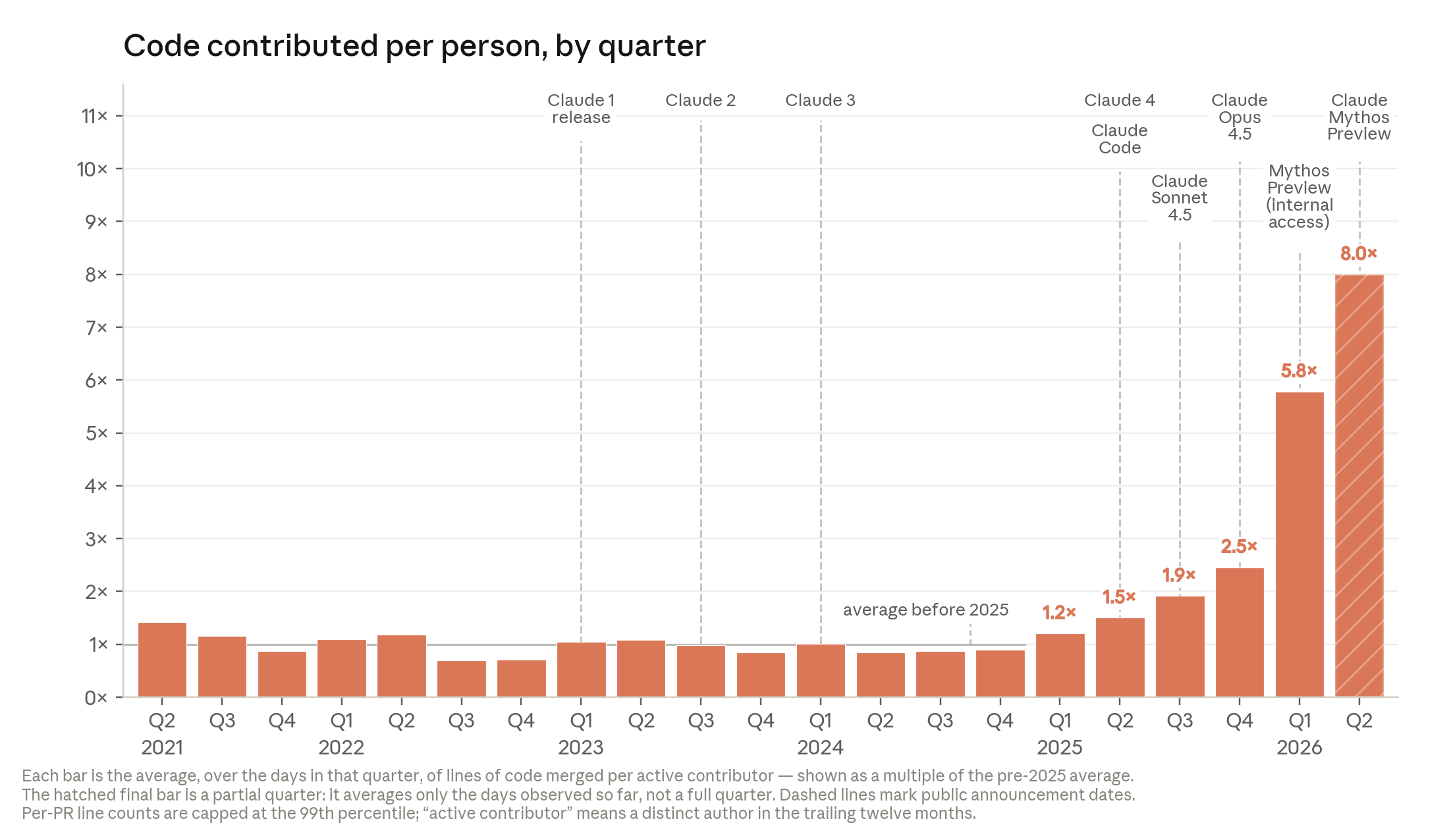
The speedup isn’t just in volume. On open-ended coding problems where answers are unclear, Claude’s success rate is now 76%—a 50 point jump in just 6 months.
Many engineers also say Claude’s code quality is now on par with human code; we expect it to be better within the year. – Anthropic
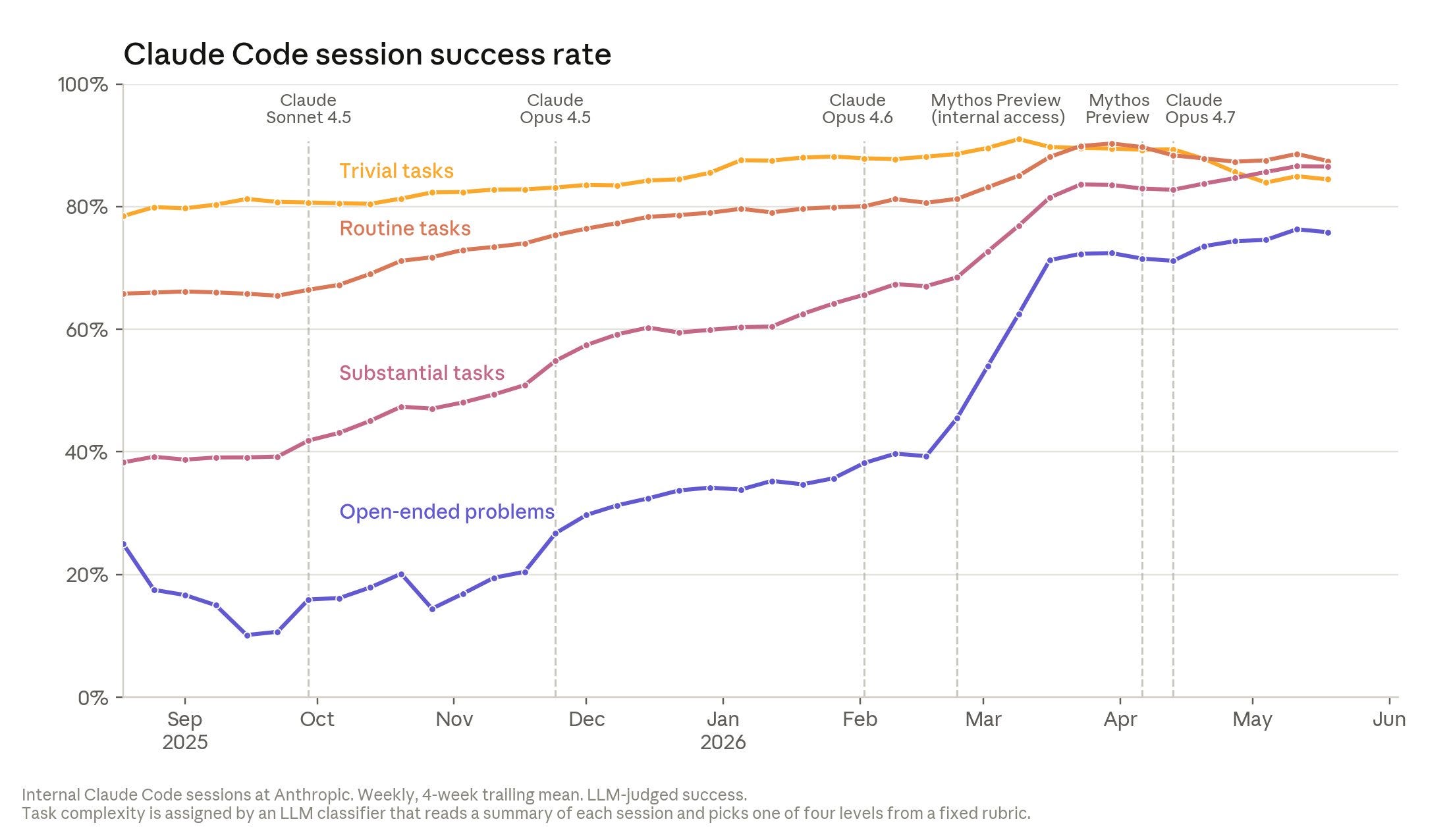
Each time we release a model, we run the same test: give it code that trains a small AI model, ask the new model to speed it up. It takes a skilled human 4-8 hours to reach 4x faster.
In May 2024, Claude Opus 4 averaged a ~3x speedup. This April, Mythos Preview achieved ~52x. – Anthropic.
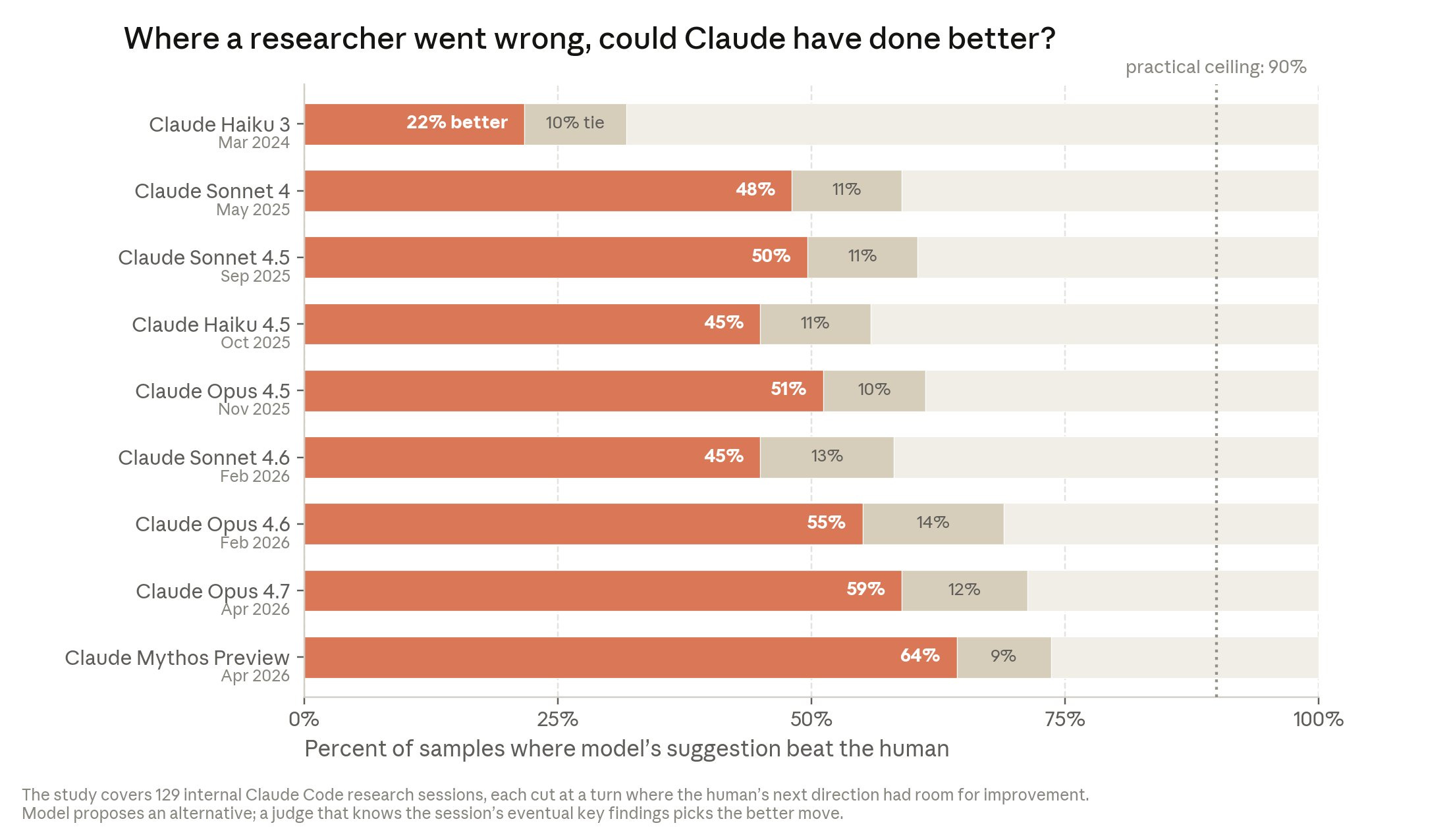
AI research is a series of next-step decisions. We looked at sessions where a human researcher took a wrong turn, showed Claude the session up to that point, and asked it what to do next. Mythos Preview improved on humans 64% of the time—up from 22% in 2024.
“On days where everything works well, I can’t help but think nothing I do matters, everything is automated and better and faster than I ever will be,” they said.” – Anonymous employee at Anthropic
The Era of Agent Orchestration Begins – not real Recursive Self-improving AI
Anthropic has an IPO on the horizon, and every data point illustrating the risks of recursive self-improvement simultaneously demonstrates how far ahead Anthropic is with its new Mythos class of model. But this is not a self-directed AI by any means: The blog post said that Anthropic’s frontier LLM, Claude, could handle engineering problems and research tasks, but “large performance gaps persist when it comes to Claude exercising judgment in choosing goals in both engineering and research.”
A lot of news reports on the blog post frame it as a warning to slow down. But Thursday’s blog post was written by staff from The Anthropic Institute, an arm of the company that publishes research and advisories on the impact and risks of powerful AI systems.
Anthropic continues:
None of this guarantees recursive self-improvement is on the horizon. It’s not yet clear that Claude is capable of research judgment—of choosing the right problems to work on.
But if these trends continue, AI systems designing and building their own successors is plausible. This could revolutionize society—medicine, technology, the economy—for the better. But it may also compound alignment issues and ultimately lead to loss of control.
The Anthropic Institute (in collaboration with external stakeholders) will conduct research to think through the implications of increasingly powerful, potentially self-improving systems—and how to create the ability for the world to make deliberate choices about the future development of the technology.

Grandfathers of AI Weigh In
“If leading AI companies are indeed approaching the point of recursive self-improvement, a coordinated, verifiable, and universally applied pause is probably the only responsible solution to mitigate several major AI risks; at least until safety guarantees are developed and demonstrated. Ensuring that such a moratorium is respected would require sincere collaboration between various countries and companies, but I definitely believe it is achievable if others follow in Anthropic’s footsteps.” – Yoshua Bengio
Nobody actually believes an AI pause will take place, for the record.
We are nowhere near RSI just like we are nowhere near AGI. Anthropic is trying to position itself as a good actor with the ability to monitor this trend. “If systems are capable of fully building their own successors, the ways we secure them, monitor them, and shape their behavior all grow much more important.” Most researchers don’t actually believe this is even possible.
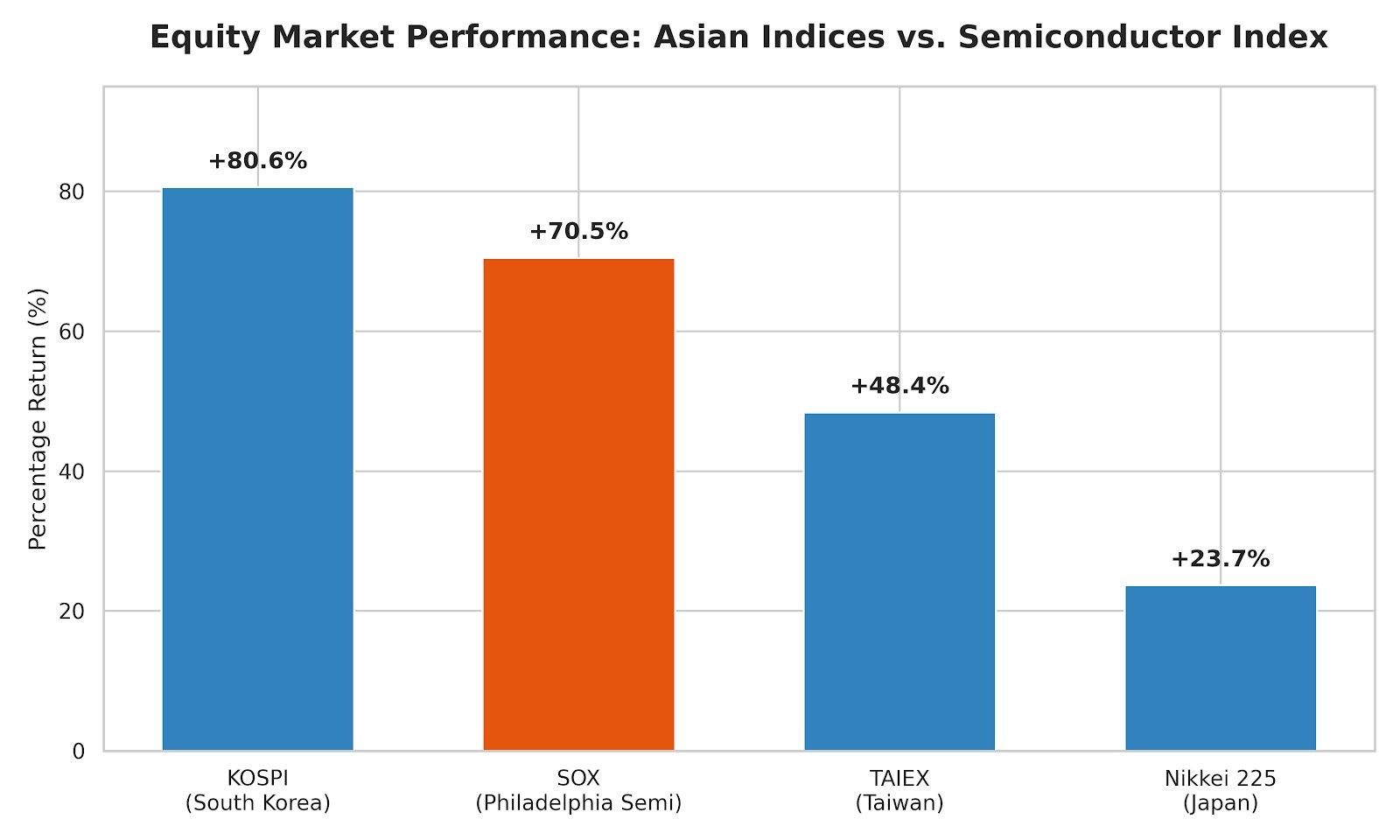
HBM Chip Boom of 2026
While incredible wealth centralization takes place with untold impacts on democracy and capitalism, are people going to have less of a say in an AI-native world? RSI in the limited context of Anthropic’s Claude case study is not a major concern relative to impact this Generative AI boom is having on society, the environment, rule of law and our institutions. Of course Anthropic doesn’t address these broad concerns, but rather the limited scope of their view of RSI as experienced in the case of code, among Anthropic engineers.
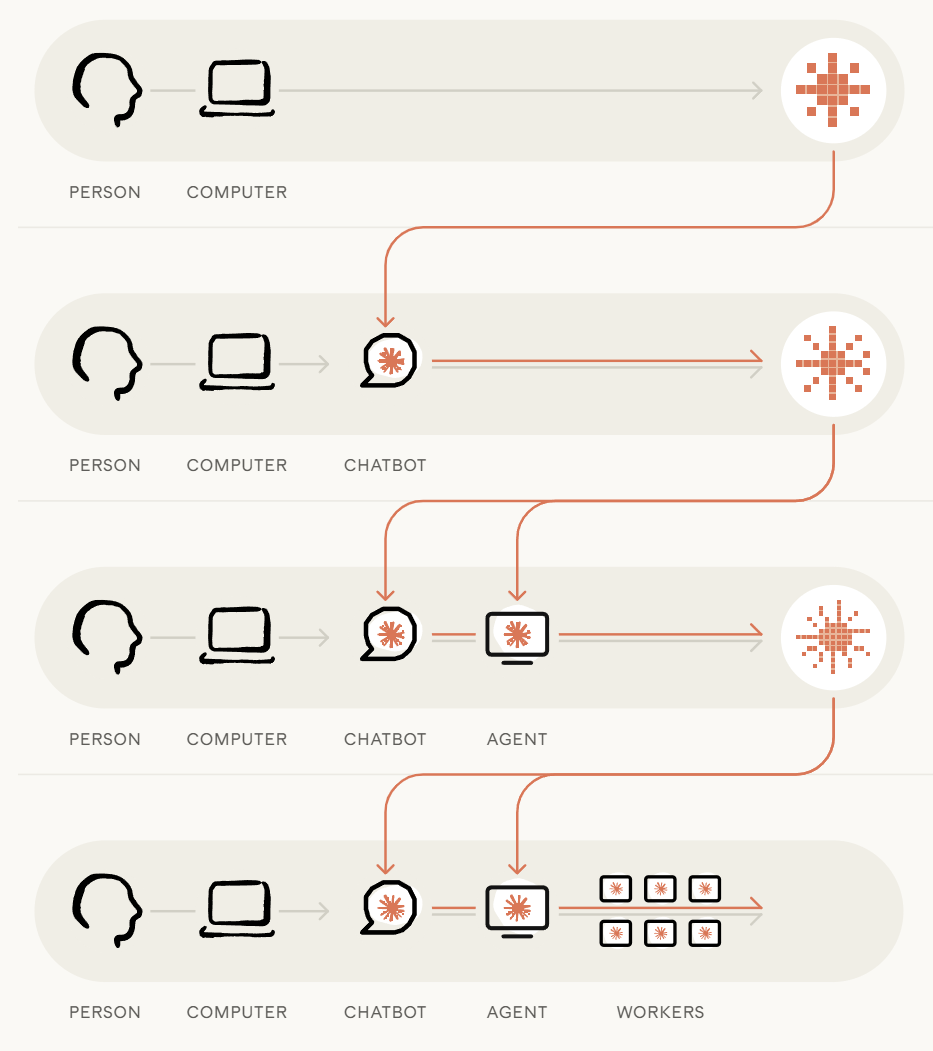
RSI in the 2020s is not Imminent
Although there are a lot of startups getting funded for AI to help build stuff. Startups like London based PhysicsX is using AI to transform engineering, compressing complex designs and simulation processes that once took months into seconds. Good for them, but this isn’t evidence that RSI is near.
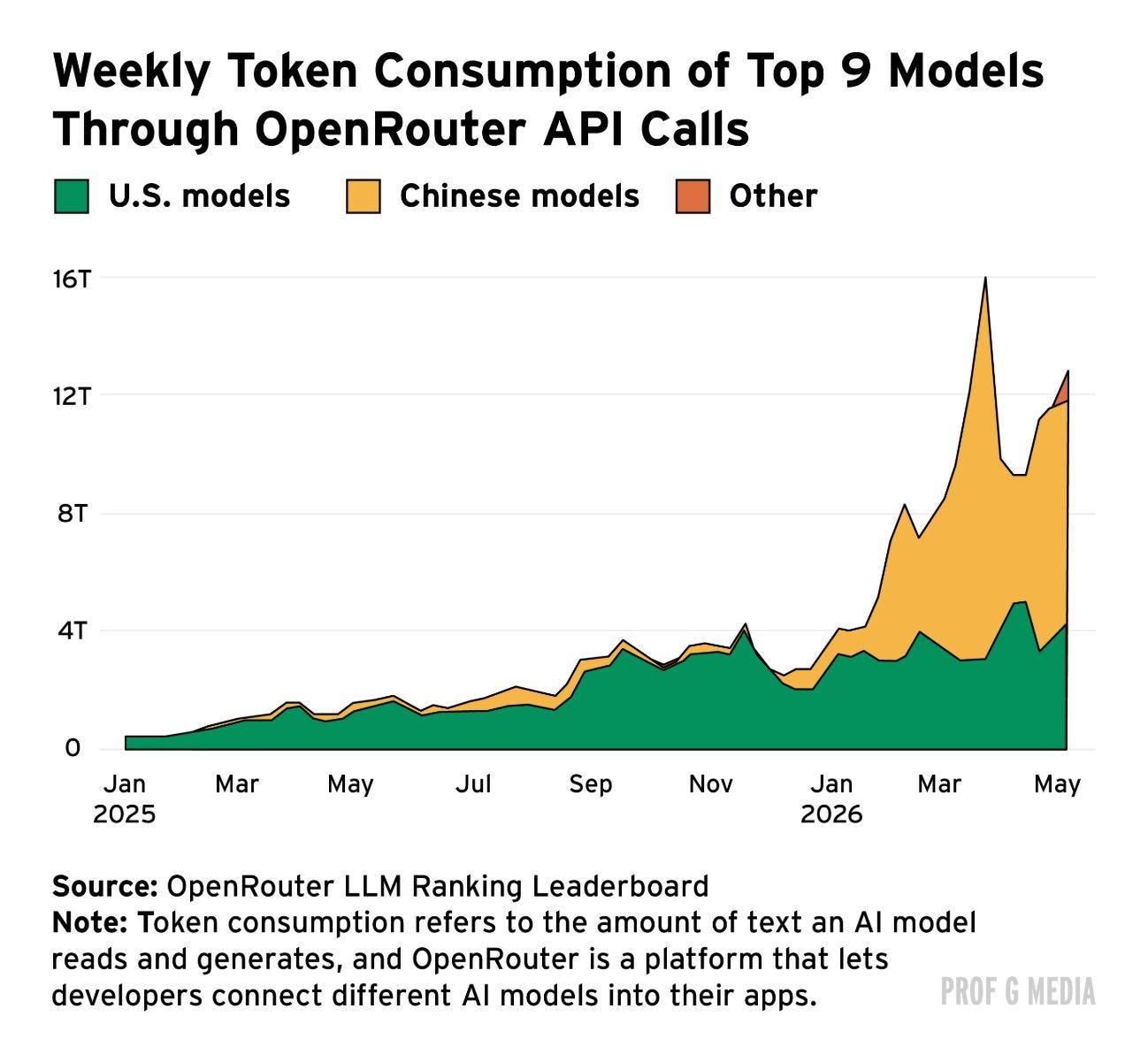
China’s API lead is Growing Tremendously in 2026
-
Chinese models are 10x to 30x cheaper than U.S. models and have good enough performance for most tasks.
-
Chinese models went from about 1% of developer usage in 2024 to more than 60% in May, and 80% of U.S. AI startups are now using Chinese open-source AI models.
-
OpenAI’s models are mostly just getting people addicted to inferior products. While Chinese models are helping developers build stuff according to OpenRouter’s API data. Despite being by far the most funded AI startup in the world, OpenAI’s models are basically not useful in the real world that matters – developers and Startups.
Trump Proposing Direct Stakes in BigAI Stocks is Dangerous
The U.S. Government taking stakes in BigAI could protect them from failure as Trump has connections via Peter Thiel with the people behind OpenAI. Meanwhile Trump is not necessarily in his right mind. President Trump stormed out of an interview with NBC airing June 7 after a heated exchange during ‘Meet the Press with Kristen Welker.’
The U.S. is creating a marketing mythology around its monopolistic AI companies. In many respects that’s disconnected from reality. This is for them to weaponize these companies for economic, military, technological and national dominance over other nations. While practicing an aggressive form of Surveillance Capitalism on their own citizens and the world at large in an organized manner. If Anthropic is collaborating with the NSA directly, we can only assume they are no longer in control of their own destiny.

We will hopefully get more information on Anthropic’s flagship Mythos models and their true capabilities. Not does Anthropic have an intention of “slowing down” for society or what’s best for civilization. But exaggerating the capabilities of the models behind their products? No problem. That’s fair game for Anthropic, about four months from an epic IPO.
“In 2027, AI systems could be capable of tasks that take a person weeks.” – Anthropic
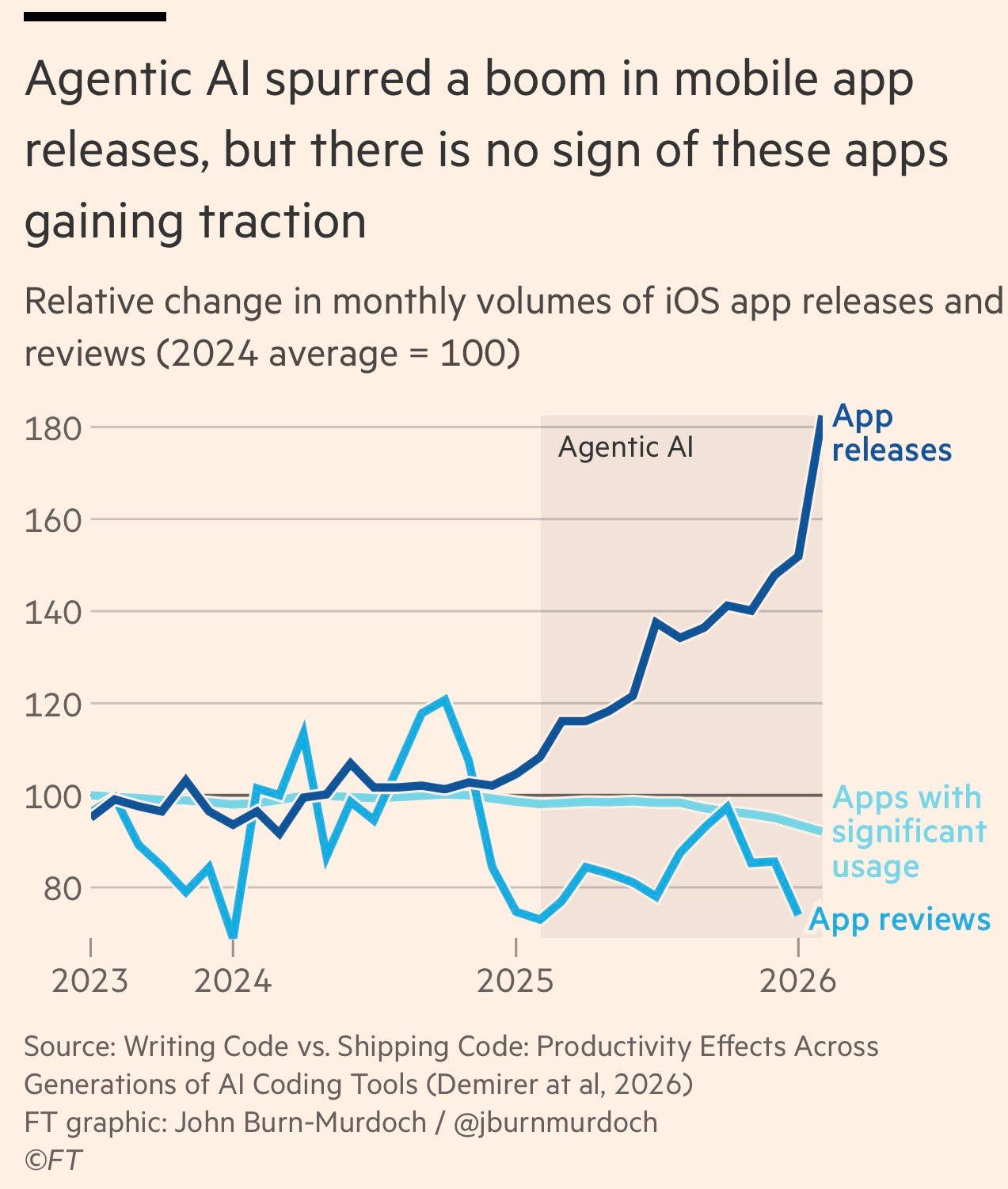
There exists the possibility that Generative AI, Agentic AI , Physical AI (e.g. humanoid robotics) and other deep tech industries don’t fulfill on their many promises.
-
Agentic AI spurred a boom (via vibe-coding) in mobile app releases, but adoption of said apps didn’t appear to take place.
-
Generative AI’s ROI and real value created is being openly questioned in 2026 as Enterprise adoption of even Agentic AI is much slower than is generally marketed on social media.
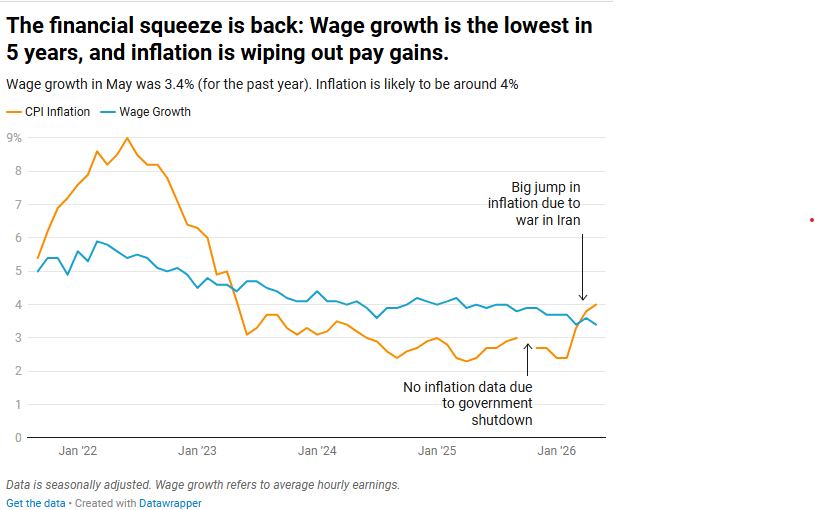
If Generative AI is Inflationary we have a Problem
Wage growth has been slowing in the U.S. even as inflation is likely to go higher in 2026. The Iran crisis, the Datacenter buildout and a tight labor market is making the affordability crisis more political in the U.S. in mid to late 2026.
-
For the first time since 2023, the average U.S. worker is technically losing purchasing power compared to last year.
Catch Apple’s Developers’ Conference WWDC 🍎
You can catch the WWDC keynote on Apple’s website, Apple TV, the Apple Developer app and Apple’s official YouTube channel on Monday, June 8, at 10 a.m. PT (1 p.m. ET, 6 p.m. BST).
The AI boom has doubled computing infrastructure’s share of US GDP
But most Americans aren’t reaping the gains. While holding the burden of higher electricity prices, more datacenter in their communities and more AI slop pollution online and pressure to use the workslop-tech at work.
Missing ROI from Generative AI, Mid 2026
Three years later there are not yet signs that AI is boosting revenues or profit margins outside the Mag 7. If AI was a General Purpose Technology and worthy of the AI capex you’d hope to see it impacting Earnings of regular companies, not just BigTech and BigAI firms.
If AI’s gains are not diffusing into regular companies and their Earnings what are we building datacenters at this rate for exactly?
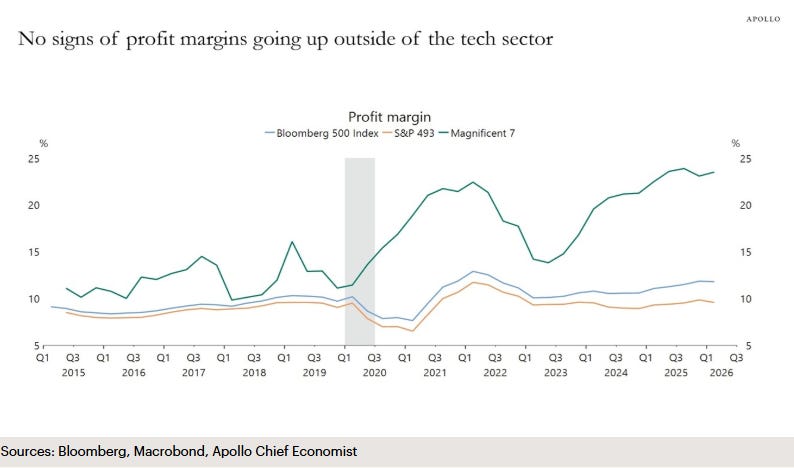
We are creating a mythology of AI to hide the real picture of the lack of business value this technology is generating so far. Given that this is creating a lot of wealth inequality and wealth centralization, more people are waking up to the fraudulent and slow-burn side to the promises vs. the reality and actual impact.
This makes Anthropic’s activities around claims of recursive self-learning AI all the most difficult to evaluate. Especially considering their rapidly increasing annual recurring revenue while companies mostly overspent on tokens in the first half of 2026.
For most of AI’s history, humans drove every step in its development cycle. It is possible that in the 2030s we’ll see more evidence of AI taking some aspects of our corporate and national R&D, the scientific process and innovation into more self-fulfilling recursive self-improving workflows of evolution.
Generative AI is fostering Rapid Wealth Centralization
Until then, powerful angel investors, AI executives, politicians, tycoons and Billionaires are going to have much more power than previously to shape the future of civilization. The U,S. system separates the marketplace from the state, for a reason. In 2026, we are no longer respecting basic tenets of democracy.
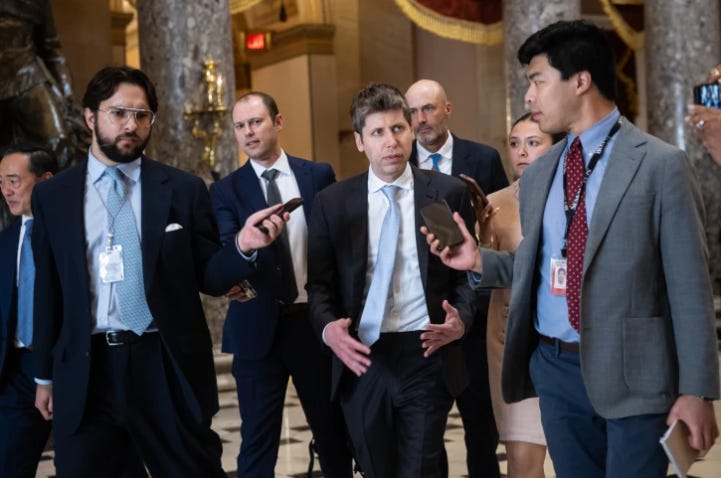
A dividend payment or other public benefit stemming from AI profits could help BigAI firms like OpenAI, create an unfair moat that actually protects them against financial failure. What separates the United States from places like China is the separation of the marketplace and the state. To cross these lines is most certainly a move towards an Authoritarian state that would hurt democracy, rather than uplift it. Sam Altman isn’t just wrong, I believe he’s part of a nefarious group of bad actors that could undermine aspects of capitalism (circular financing has already done that to some extent) and democracy for human civilization.
SpaceX will go public this week on Friday. Increasing wealth centralization at a faster rate in America than ever before. If the Trump Administration sets up a Sovereign Wealth Fund or any mockery of a dividend payment with major investments (financial stakes) in the likes of Nvidia, SpaceX, OpenAI and Anthropic, we’ll have to admit that was always part of the plan. That Sam Altman is leading the potential breakup of the separation of the State and the Marketplace isn’t by accident, surprising or unexpected if you understand his ties to Peter Thiel and their vision for our future.
Thanks for reading!
Read More in AI Supremacy

