
[[{“value”:”

Good Morning,
If Generative AI is a general purpose technology (GPT) we should be seeing massive job creation soon. AI is supposedly “hollowing out” of some entry level positions in some industries is while simultaneously revamping many roles within companies. Some areas like Software Engineering and customer service are on the front lines, creating new paradoxes of supply and demand.
This week crypto exchange Coinbase said it was laying off 14% of its staff because of you guessed it, AI.
Read the Message to his Coinbase Team
Tech companies doing AI washing due to less demand for their products isn’t anything new. Executives in silicon Valley are using the same arguments on a repeated basis to please shareholders:
“Second, AI is changing how we work. Over the past year, I’ve watched engineers use AI to ship in days what used to take a team weeks. Non-technical teams are now shipping production code and many of our workflows are being automated. The pace of what’s possible with a small, focused team has changed dramatically, and it’s accelerating every day.” – Brian Armstrong, CEO, Coinbase.
So where are all the new jobs this technology is supposed to be creating? How much should we be listening to Economists who know how technological shifts occur historically and what to expect in the near future?
Torsten Slok, the chief economist at Apollo Global Management, has been one of the loudest voices in the “AI is additive” camp. He’s been weighing in morelately on the labor impacts of AI. He recently oddly enough compared Chinese manufacturing automation of the early 2000s to Generative AI (which isn’t a good comparison at all) and said:
“The AI shock is following the same playbook. The displacement force is different this time, impacting cognitive and white-collar work rather than factory floors. But every other element of the structure is remarkably familiar: a powerful disruption, immediate job losses in exposed sectors, and a wave of offsetting gains that keep headline unemployment low, see chart below.”
Is the history of Technological automation repeating itself?
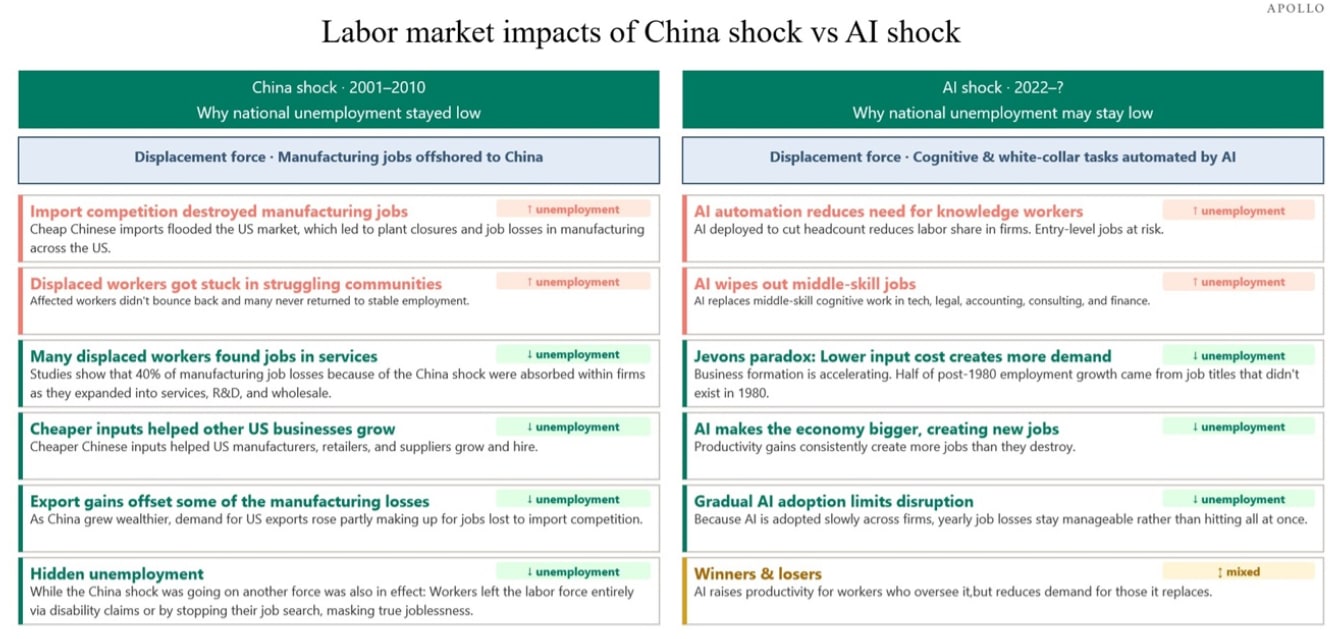
But if this is a Jevons paradox type situation how about wage gains and the quality of the new jobs created? More like increased demand for more efficient low cost jobs (like in this other case study he cited). But where are the entirely new jobs going to come from?
Is Jevons Paradox Implicated in demand for jobs made more efficient by AI?
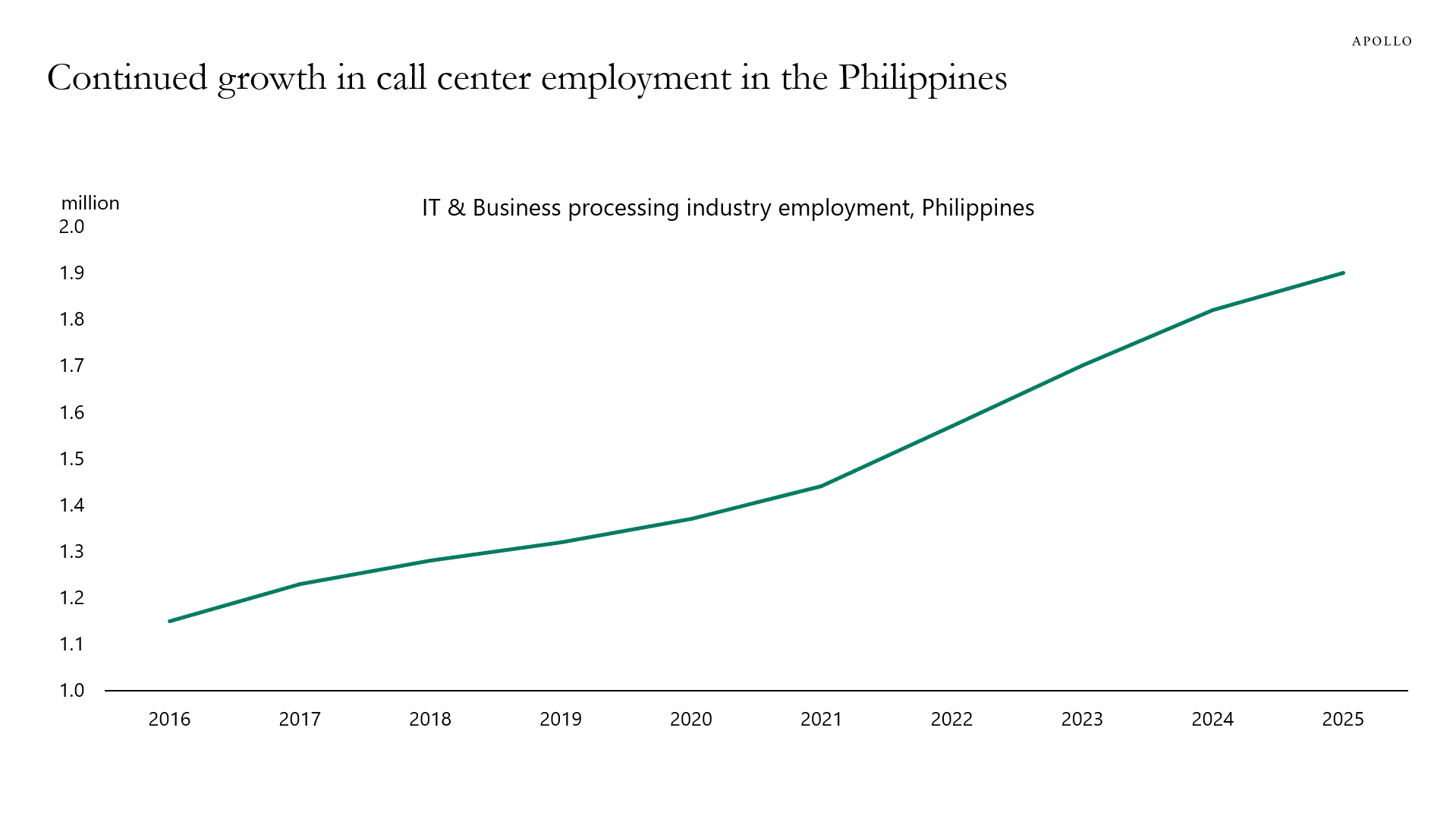
If the Generative AI era began in 2017 but functionally in 2023, we are still very early. The impact is still highly uncertain. If SWEs are more productive now with AI coding, you’d think demand for them would pick up again after the initial dip. If AI is transforming roles within tech companies, wouldn’t you expect they need more Product Managers?
-
Paradoxically, as AI makes software development faster and cheaper, the demand for PMs often increases. While demand for process orientated & focused roles in Product Managers has decreased, demand for strategy and creative type PMs has increased.
“}]] Read More in AI Supremacy