Good Morning, everyone
While I’m trying my best to post a bit less with AI news saturation happening, some days do feel more important than others. Two stories really caught my attention this early morning. The long-awaited DeepSeek release and Meta’s new internal Surveillance play. Layoffs and more surveillance, is that the new normal in the so-called AI revolution?
Is the price of Superintelligence a total lack of privacy and extraction of human talent? I’m going to be a bit tongue and cheeks about all of this. Help, my computer is turning against me. I have to admit I’m uncomfortable with this growing trend.
While Meta plans to shed 8,000 jobs and Microsoft tries to push a similar amount into early retirement, China’s Open-source AI community got a boost with DeepSeek finally releasing a preview the long-awaited V4 model. The release comes a stunning 484 days after V3. DeepSeeek V4 pro has 1.6T total / 49B active params with “performance rivaling” the world’s top closed-source models.
OK Computer 💻
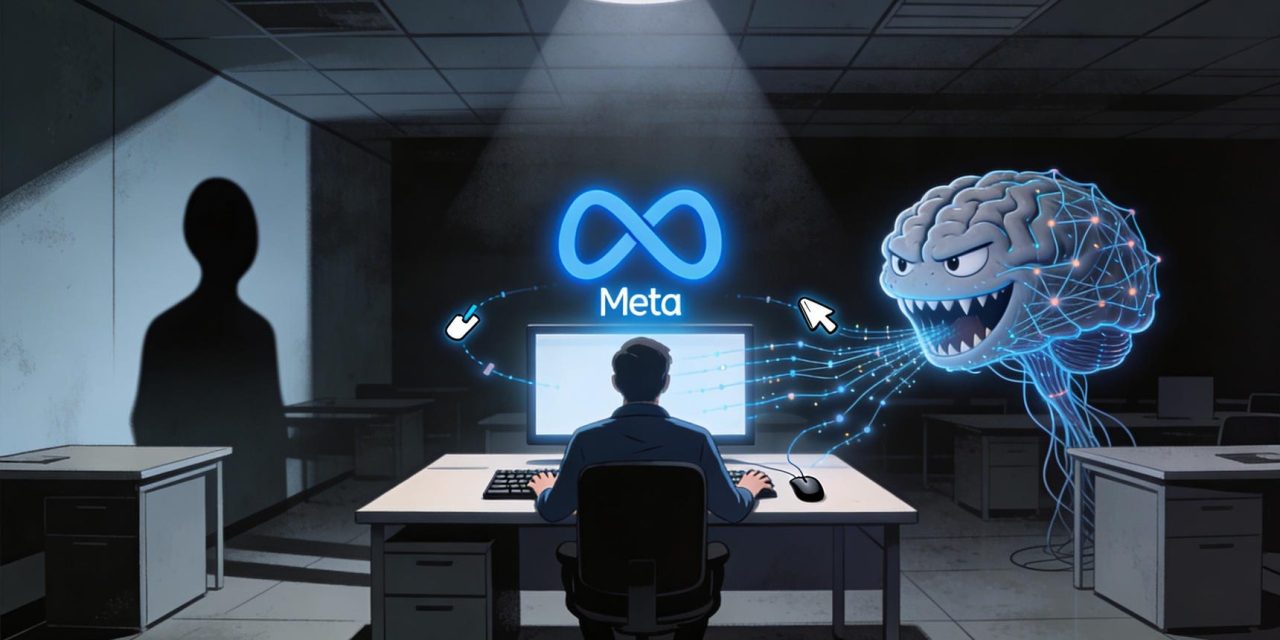
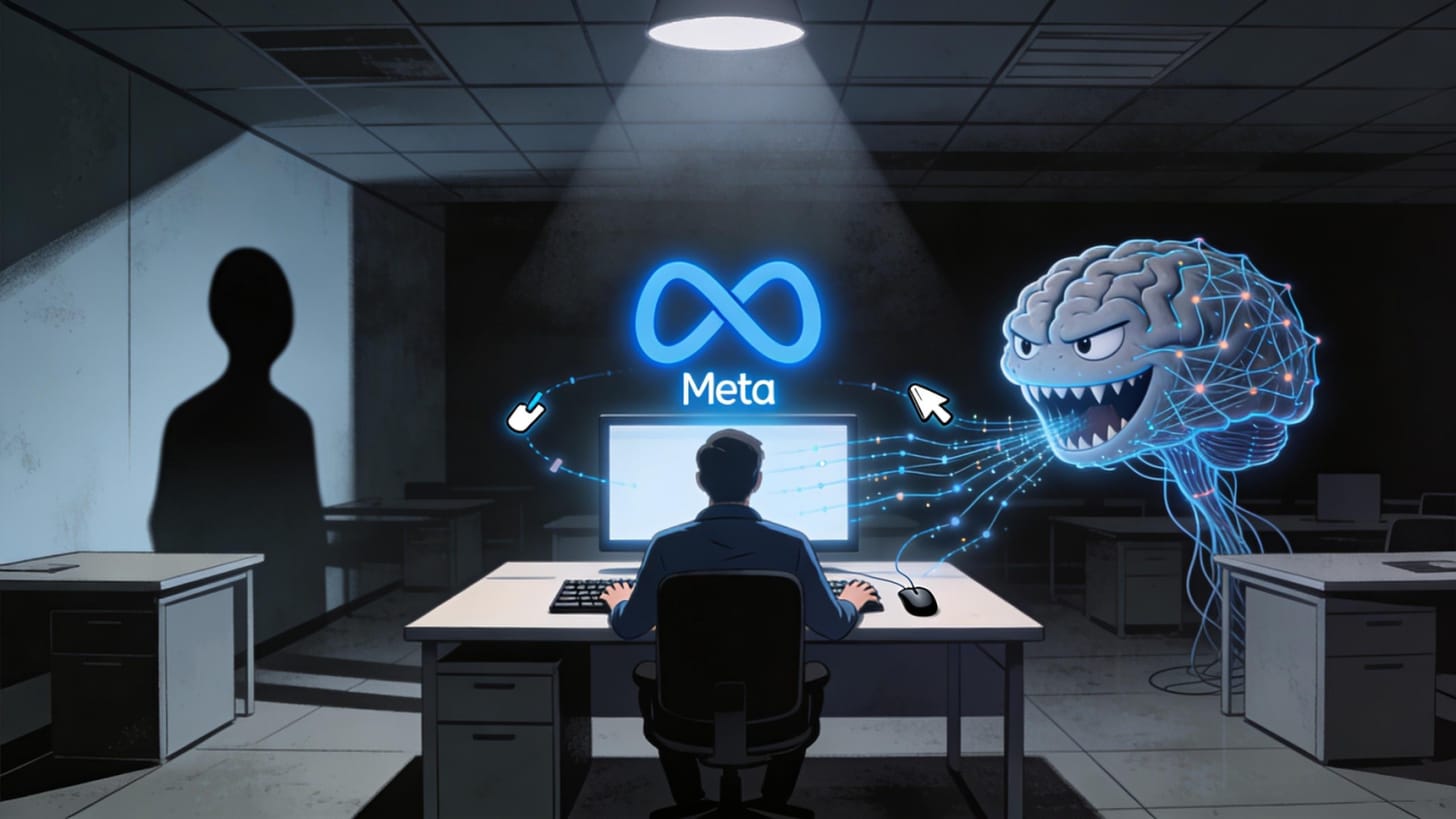
Meta also plans to track employees mouse movements, keystrokes, clicks, and screenshots rolling out a tool called the Model Capability Initiative. The world’s leading Advertiser has plans of how to harvest quality data (presumably to help build autonomous agents better). The software runs on a designated list of work apps and websites and captures how employees physically interact with their computers in real time.

New Levels of Employee Surveillance in Age of AI
The MCI software acts as a high-level “keylogger,” capturing mouse movements, clicks, keyboard shortcuts, and menu navigation patterns. The tool periodically takes screenshots to provide visual context, helping models understand how to interact with a compute like a human does. Enjoy your last years at Meta, while you train the system that will replace you.
While companies are letting go of employees they are also using the other employees to train the next system to automate their jobs seemingly.
In a memo to employees Meta Superintelligence Labs told employees they could “do their part to help by just doing their daily work.”😱
DeepSeek-V4
-
DeepSeek-V4-Preview (released today, April 24, 2026) represents a massive leap in Mixture-of-Experts (MoE) architecture.
-
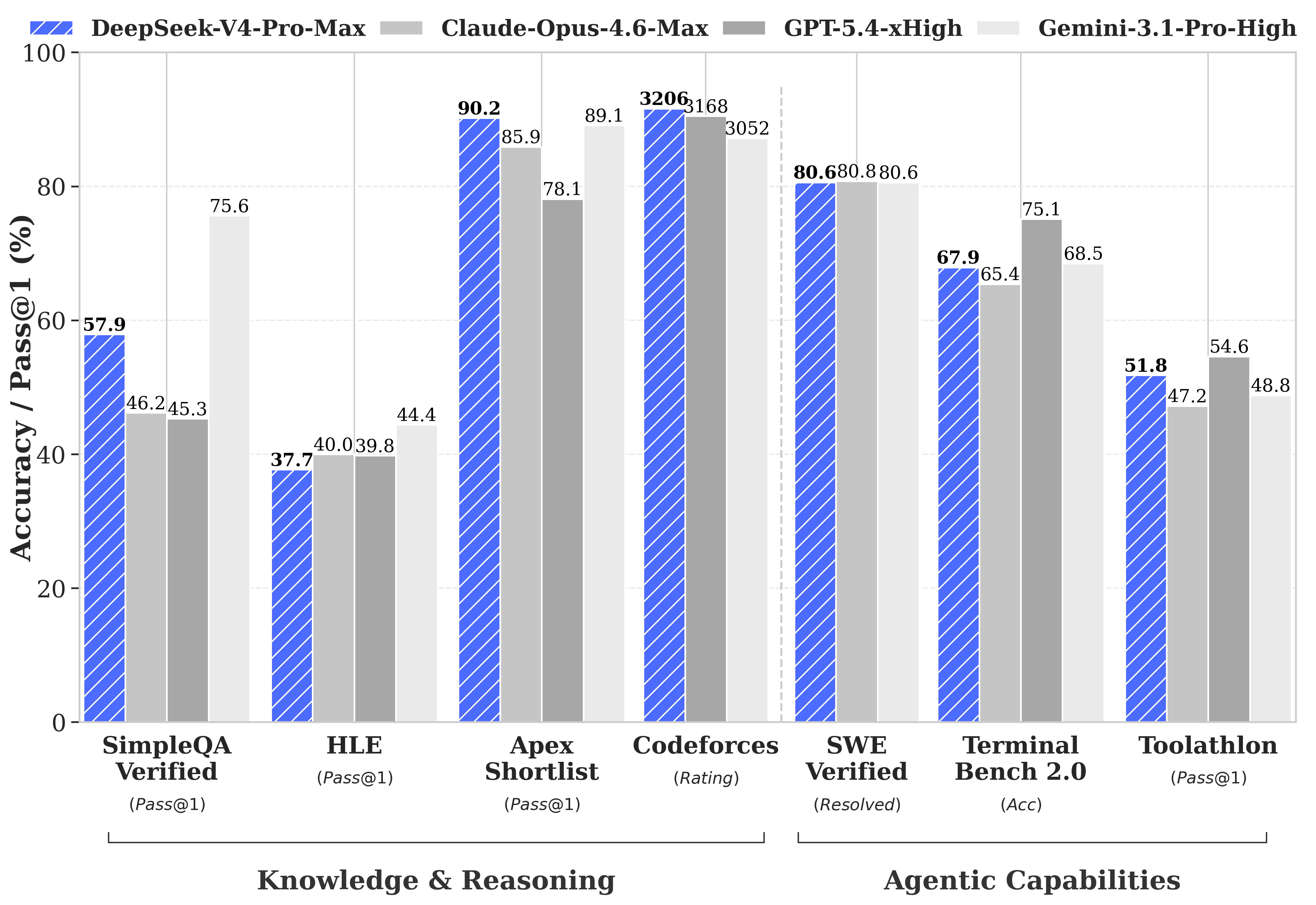
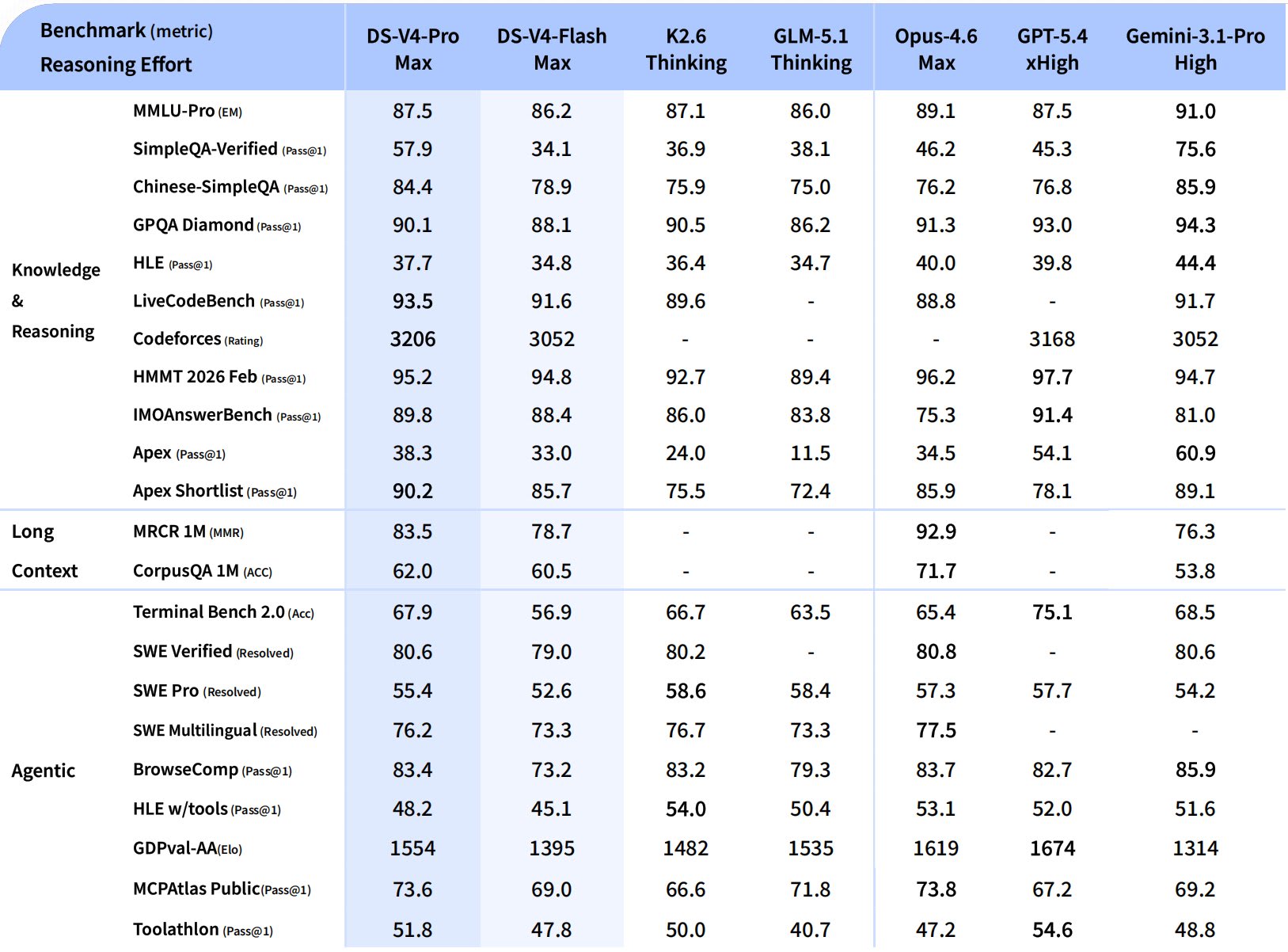
DeepSeek-V4-Pro is currently trading blows with Claude 4.6 Opus and GPT-5.4 Codex on the SWE-bench. GPT-5.5 is not considered SOTA in AI coding.
Includes Thinking and Non-Thinking Modes
Is DeepSeek SOTA in Open-source models again?
DeepSeek, that is trying to raise funds at a $20 Bn. valuation says V4 is world-class at reasoning: Beats all current open models in Math/STEM/Coding, rivaling top closed-source models.
The Hangzhou-based company remains a bit of an anomaly in the AI industry, pioneering China’s Open-source AI Supremacy, and yet maintaining a rather low profile.
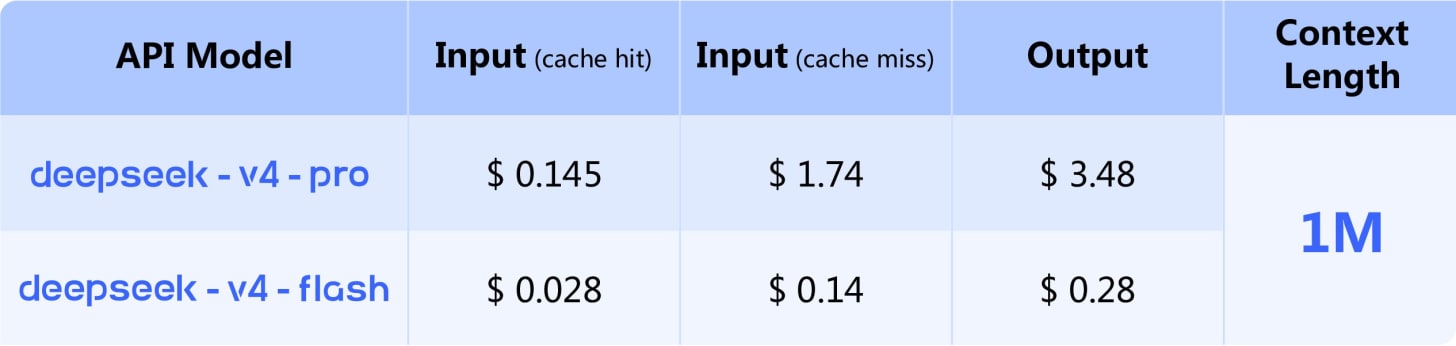
DeepSeek-V4 Pro and Flash
-
Internal benchmarks suggest it excels at “repository-scale” changes because of its new Engram memory architecture, which separates static pattern retrieval from dynamic reasoning.
OpenAI’s Exodus of Talent Continues
Key people left OpenAI in 2026 already: Kevin Weil, Jerry Tworek, Bill Peebles, Kate Rouch, Andrea Vallone, Liam Fedus. Srinivas Narayanan, Caitlin Kalinowski, Peter Hoeschele, Anuj Saharan, Shamez Hemani, Fidji Simo (“medical leave”), Brad Lightcap (no longer COO, half way out the door), etc…
Anthropic worth more than 1 Trillion on Secondary Markets
On Forge Global, a private share marketplace, Anthropic is valued at about $1 trillion while OpenAI trades at $880 billion. This even as Anthropic receives backlash for deceptive practices following capacity issues of huge spiker in new users and traffic.
As we wait the three biggest AI IPOs in history, a shortage of available shares for Anthropic has given buyers little leverage, with intense competition among would-be investors pushing secondary prices steadily upward. Anthropic’s revenue explosion, Mythos hype, and OpenAI losing market share rapidly has would-be investors scrambling.
DeepSeek on the Hunt for External Funding
In a surprise it only happened now moment, after years of being self-funded by founder Liang Wenfeng’s quantitative hedge fund, High-Flyer Asset Management, DeepSeek is finally is now seeking outside capital. They are seeking to raise at least $300 million on a $20 Bn. valuation.
Suddenly new rivals Zhipu AI and MiniMax are both valued at over $30 Bn as Chinese AI labs accelerate further in 2026. In recent times, Chinese AI, robotics and AI chip companies have all gone public.
While DeepSeek is famous for its efficiency, training frontier models is getting exponentially more expensive. Estimates for their next-generation training runs exceed $500 million.
Layoffs by any Other Name
Microsoft is conducting a stealth campaign whereby it’s planning its first-ever “voluntary employee buyout” for up to 7% of U.S. workforce. Morale is already low at the company due to their mishandling of their AI and troubled relationship with OpenAI. The one-time retirement program, announced in a memo on Thursday, will be available to U.S. workers at the senior director level and below whose years of employment and age add up to 70 or higher.
Meta’s Stunning Layoffs
Meta is laying off about 8,000 workers, or about 10% of its workforce, the company said Thursday. Another thing of importance to note, Meta will also leave about 6,000 open jobs unfilled. It’s not just the layoffs the Tech sector that are notable but the stark lack of hiring, especially among entry level ranks.
GPT-5.5
Read the GPT-5.5 system card. The model with with the worst AI name in history, “Spud”. designed specifically to reclaim the performance lead from Anthropic’s Claude 4.7 and Google’s Gemini 3.1. It notably fails to achieve SOTA in AI Coding. It’s yet another model that seems skewed to “computer use” and agentic workflows. For instance, GPT-5.5 excels at multi-step tasks where it has to use a browser, a terminal, or a spreadsheet independently.
It’s also super costly. GPT-5.5 is twice as expensive as GPT-5.4. If you use the “Pro” version (which uses parallel test-time compute), the price jumps significantly to $30/$180 per million tokens. There is a lot of mockery regarding the internal codename “Spud.” Skeptics are using it to call the release a “dud”. While I think that’s going a bit far, Qwen and DeepSeek models as open-source seems more compelling to me as being actually useful in the real world and to more developers.
On April 22nd, 2026 Alibaba (Qwen) announced their Qwen3.6-27B, their latest dense, open-source model, with flagship-level coding power. Given Anthropic’s urgent capacity situation, Opus 4.7 is not getting great reviews.
In Case You Missed It
-
The U.S. Labor Market and its AI problem
-
Run Language Models on Your Computer with LM-Studio
-
Summary of the AI Index Report 2026, Part I
-
How to Use Perplexity Computer as a Second Brain
-
AI Adoption tells Two separate Stories
AI and Cybersecurity
OpenAI and Anthropic both suffered recent breaches involving unreleased models, raising concerns about whether frontier AI can be contained. After both warning that frontier models can find Cybersecurity vulnerabilities that are zero day exploits. Mythos (specifically the Claude Mythos Preview by Anthropic) is currently considered the frontier for AI in cybersecurity. Mythos is designed and capable autonomously finding vulnerabilities, chain exploits and weaponize code. Amid reports of rogue access from a Discord channel.
Bloomberg said a “handful” of users in a private online forum gained access to Mythos on the same day Anthropic said it was being released to a small number of companies including Apple and Goldman Sachs for testing purposes. The U.S. doesn’t seem very careful about AI regulation or serious about taking real precautions.
But have we crossed into uncharted territories? In tests on Firefox, Mythos successfully weaponized 181 vulnerabilities into usable attacks, compared to only two successful weaponizations by previous flagship models.
Thanks for reading! What stood out to you this week?
Read More in AI Supremacy