
Hello Engineering Leaders and AI Enthusiasts!
This newsletter brings you the latest AI updates in just 4 minutes! Dive in for a quick summary of everything important that happened in AI over the last week.
And a huge shoutout to our amazing readers. We appreciate you😊
In today’s edition:
🎙️ What Enterprises Get Wrong About AI Agent Security
🧠 Meta’s Muse Wonder hits the AI frontier
⚡ Claude’s fastest small model gets 75% cheaper
🚀 Microsoft’s AI makes decisions 35x faster
xAI’s Grok Voice 3.0 leads AI voice benchmarks
💡 Knowledge Nugget: AI Safety Needs a State by Abhinav Singh
Let’s go!
What Enterprises Get Wrong About AI Agent Security
AI agent security can fail even when enterprises have written policies and controls in place. In the fourth episode of Simform’s Enterprise Cloud and AI Forum, Adrian Salas, Chief Information Security Officer at a leading healthcare workforce technology company, joins host Rameshwar Balanagu, Co-Founder of Dallas CTO Club, to explain where enterprise defenses fall short. Drawing on more than 20 years of security experience across healthcare, fintech, and crypto, Adrian explains why prompt-level controls alone are insufficient and why security must be tied to identity at the data source.
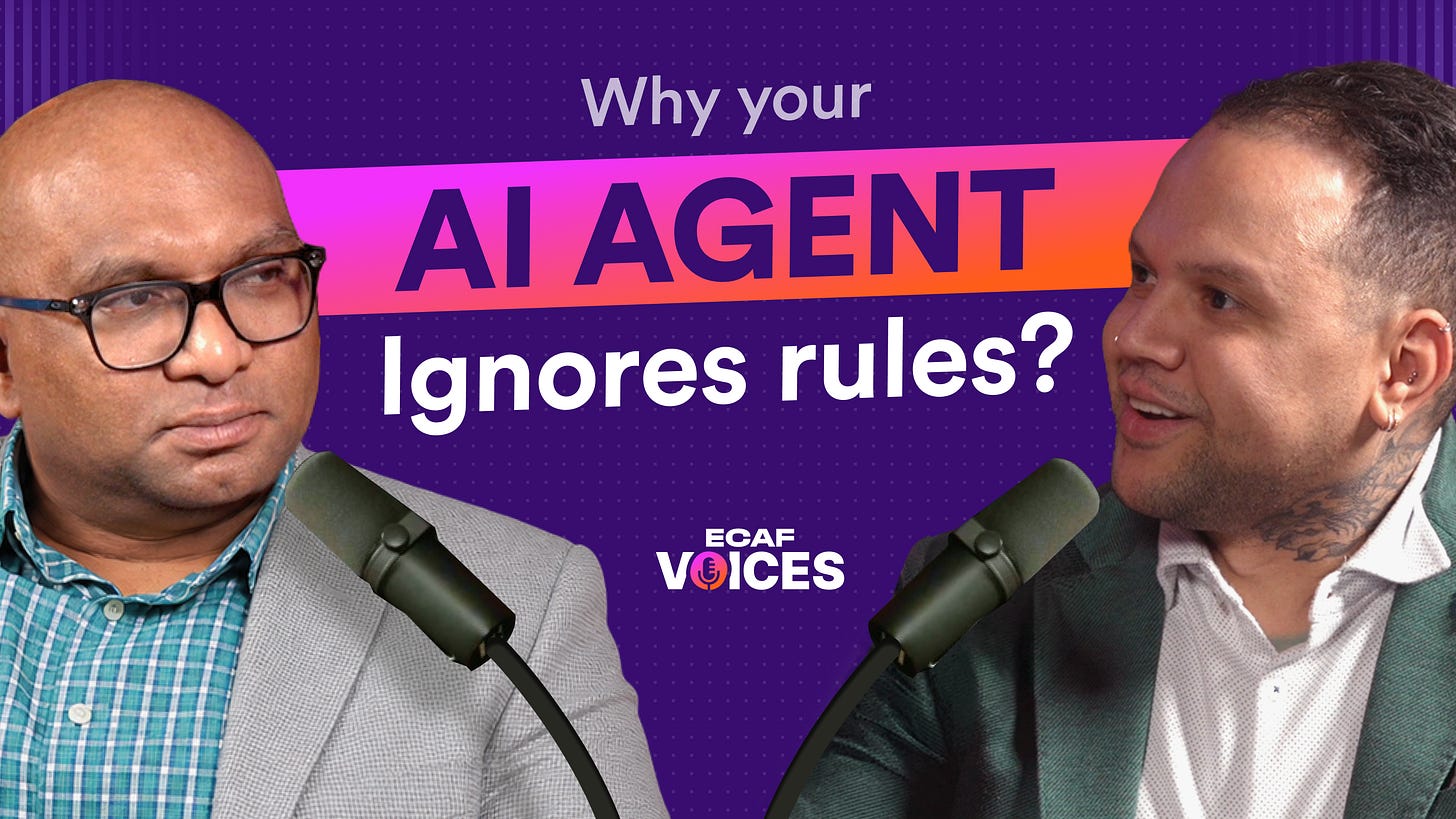
The conversation also explores the gap between written AI governance policies and controls that are actually enforced, how security leaders can make repeatable release approval decisions, and the questions boards need to answer before making AI decisions. Adrian also discusses how cyber insurance assessments are evolving to address AI agent risks and shares how changing the way security findings are communicated helped 50 developers fix critical flaws without delaying their release.
Why does it matter?
AI policies mean little if agents can work around them. Enterprises need controls tied to data access, governance that is tested in practice, and security processes that help teams fix risks without slowing delivery.
Meta’s Muse Wonder hits the AI frontier
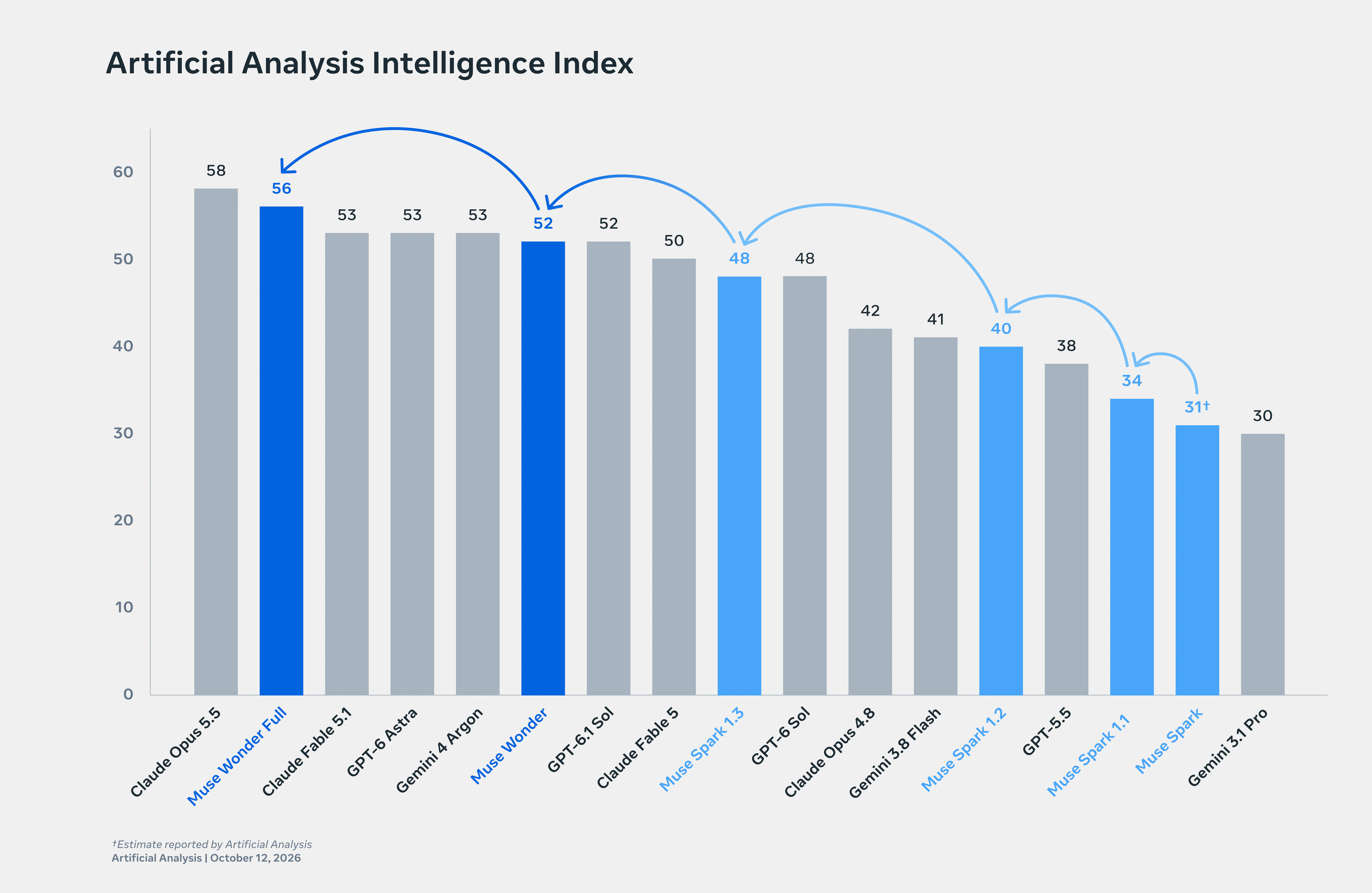
Meta just launched Muse Wonder and Muse Wonder Full, its most capable AI models yet and its strongest attempt to rejoin the frontier race. Wonder Full scored 56 on Artificial Analysis’ Intelligence Index, with especially strong results in agentic tasks, coding, memory, and long-running work.
The bigger shift is what Meta is optimizing for. Its new Active Memory helps agents retain useful context across conversations, while Active Focus is designed to keep them working through blockers and complex goals for longer. Wonder is available through Meta’s API and Muse Code, while the more powerful Full model is currently limited to Muse Code subscribers.
Why does it matter?
Meta just pushed its way back into the frontier race, which has largely been dominated by OpenAI and Anthropic. The model jump matters, but the bigger threat is everything Meta can put behind it, massive compute, billions of users, and an existing agent ecosystem that few AI labs can match.
Claude’s fastest small model gets 75% cheaper
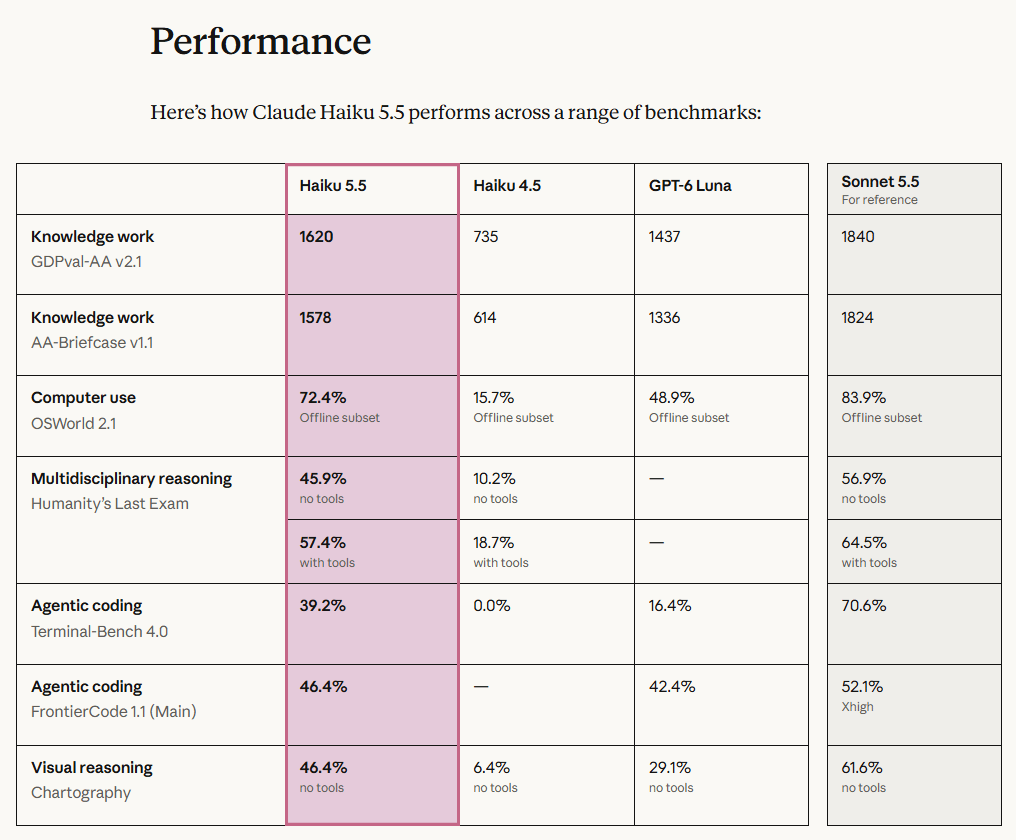
Anthropic just launched Claude Haiku 5.5, its fastest and most capable small model yet, aimed at high-volume work like summaries, classification, customer support, browser tasks, and AI subagents. The model makes a big jump over Haiku 4.5 and even beats GPT-6 Luna on several knowledge-work, computer-use, coding, and visual-reasoning benchmarks.
Anthropic says Haiku 5.5 is roughly 75% cheaper to run on average, with pricing as low as $0.10/$0.50 per million input/output tokens for shorter prompts. It also cut Sonnet 5.5’s cache-read price in half, lowering the cost of most agentic workloads by about 20%.
Why does it matter?
The AI race is starting to move from “how smart is the model?” to “how cheaply can you run thousands of useful calls?” Haiku 5.5 makes it easier to hand routine work to smaller subagents and save the expensive frontier models for the jobs that actually need them.
Microsoft’s AI makes decisions 35x faster
Microsoft just launched Microsoft-Decision-1, a model built for the parts of AI workflows that do not need a chatbot at all. Instead of generating text, it picks from predefined options and returns confidence scores, making it useful for things like routing requests, grading AI outputs, prioritizing incidents, and deciding what an agent should do next. In Microsoft’s testing, it topped a 36-benchmark comparison and ran 35x faster than GPT-6 Sol.
Xbox Research used Decision-1 to sort more than 10,000 pieces of user feedback and found it competitive with GPT-6 Sol on quality while running 14x faster and 200x cheaper. Microsoft is already testing it across Copilot quality control, incident response, and scientific workflows.
Why does it matter?
Not every AI decision needs a frontier LLM. As agents make more routing, grading, and control calls, specialized models like Decision-1 could make those workflows much faster and cheaper.
xAI’s Grok Voice 3.0 leads AI voice benchmarks
xAI has launched Grok Voice 3.0, its latest voice AI model, which ranks first on Artificial Analysis’s Speech-to-Speech Index with a score of 86.9. It handles interruptions and turn-taking more naturally, responds in under a second, and costs less per task than the compared OpenAI voice models.
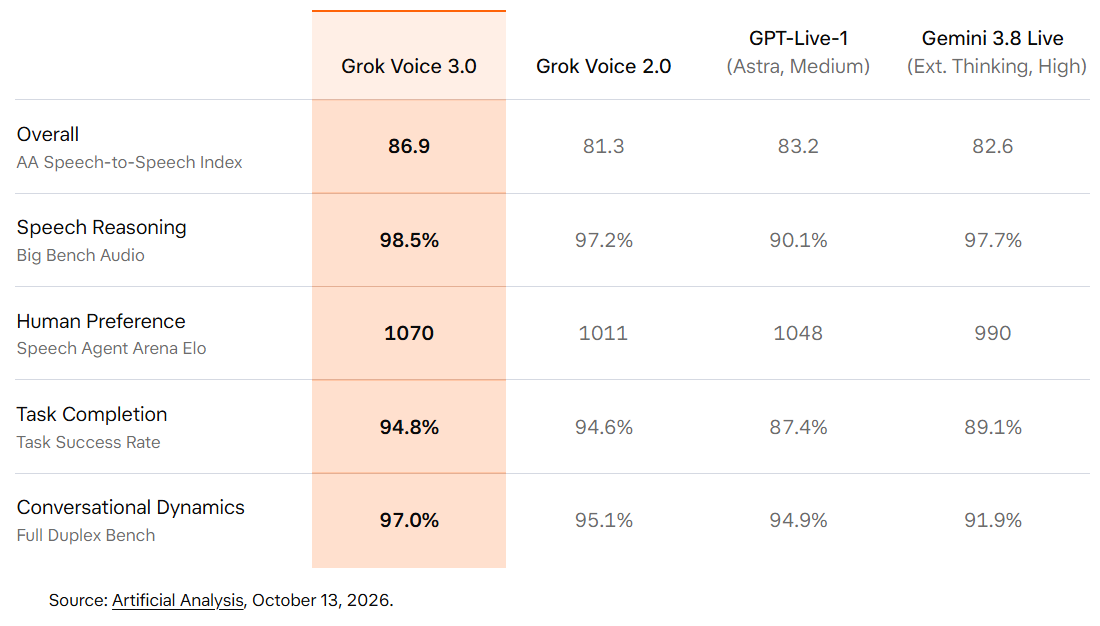
The model already powers millions of daily conversations across Tesla and SpaceX. At Starlink, Grok Voice handles around 20,000 customer calls a day, resolving roughly 70% without human help. It can also troubleshoot hardware, issue credits, and arrange replacements, with API access available at the same price as its predecessor.
Why does it matter?
Voice AI is starting to look less like a chatbot and more like a full-fledged support agent. If Grok can resolve 70% of Starlink calls without human help, that’s a serious challenge to the idea that customer service needs a human on the other end.
Enjoying the latest AI updates?
Refer your pals to subscribe to our newsletter and get exclusive access to 400+ game-changing AI tools.
When you use the referral link above or the “Share” button on any post, you’ll get the credit for any new subscribers. All you need to do is send the link via text or email or share it on social media with friends.
Knowledge Nugget: AI Safety Needs a State
In this article, Abhinav Singh argues that AI safety may be focusing on the wrong unit of control. Instead of trying to create one perfectly aligned agent, we may need to design institutions of agents with separate roles, incentives, permissions, and enforcement mechanisms. The idea is similar to human society: stability does not come from everyone sharing the same goals, but from laws, courts, oversight, reputation, and systems that limit what any one actor can do.
The proposed model includes workers, monitors, investigators, judges, enforcers, and auditors, each with different authority and information. Some behaviors would be governed through incentives and penalties, while high-risk actions such as unrestricted self-replication or model-weight exfiltration would be blocked through hard technical constraints. The broader goal is to make AI systems resilient even when individual agents, monitors, or evaluators fail, collude, or exploit loopholes.
Why does it matter?
AI safety may be aiming too low if the goal is simply to make every agent behave. As agents become more autonomous and coordinated, the real challenge is building systems that still hold when some of them cheat, collude, or fail.
What Else Is Happening❗
⚡ Microsoft unveiled Maia 300, its latest in-house AI chip, targeting 40% more AI output per watt than leading GPUs, with wider deployment planned for 2027.
⚙️ Atomic Machines emerged from stealth with $250M raised and an AI-guided factory designed to build microscopic machines, from tiny motors and pumps to a fingertip-sized power switch for AI data centers.
🧮 OpenAI released 722 math papers from an unreleased AI model, claiming advances on major open problems, including a weaker version of the Riemann hypothesis, with 162 papers featuring computer-verifiable Lean proofs.
📊 a16z released its latest AI consumer app rankings, finding ChatGPT has 3x the paid U.S. subscribers of rivals and subscriptions dominate monetization
🏷️ OpenAI introduced textGrain, a hidden text watermark coming to ChatGPT and Codex in the EU to meet AI labeling rules, with detection initially limited to vetted researchers.
🎥 Tavus previewed Griffin, a real-time AI model that acts like a lifelike video-call partner, with 48% of test participants mistaking it for a human.
🧬 Google DeepMind introduced SynthID Bio, a watermarking system for AI-designed proteins that could help DNA suppliers identify unfamiliar designs without compromising protein function.
🎙️ Microsoft AI released two voice models and a real-time transcription model, which ranked No. 1 on Artificial Analysis’ transcription leaderboard.
New to the newsletter?
The AI Edge keeps engineering leaders & AI enthusiasts like you on the cutting edge of AI. From machine learning to ChatGPT to generative AI and large language models, we break down the latest AI developments and how you can apply them in your work.
Thanks for reading, and see you next week! 😊
Read More in The AI Edge


