
Hello Everyone,
This week full disclosure I’m having a family health issue, so I have less time for research and writing than my usual. I’m running a limited time discount in case you want to support my work and my ability to continue doing this, you can upgrade here. All to say today’s article might be shorter than usual. Grateful to have the support.
I wanted to take some snapshots of infographics around AI and the macro economy that I found relevant for you that you might find useful to know. If you appreciate this sort of thing, feel free to share it with someone who might as well.
Incredible week for Western Open-Source Models
This week Reflection AI announced Beam. It’s a pretty capable model with marked advancements in both pretraining and reinforcement learning (RL). Sign up. It was trained end-to-end from scratch and appears to advance the Western open frontier on coding & agentic tasks. Beam is trained to learn broader agentic capabilities that generalize across domains.
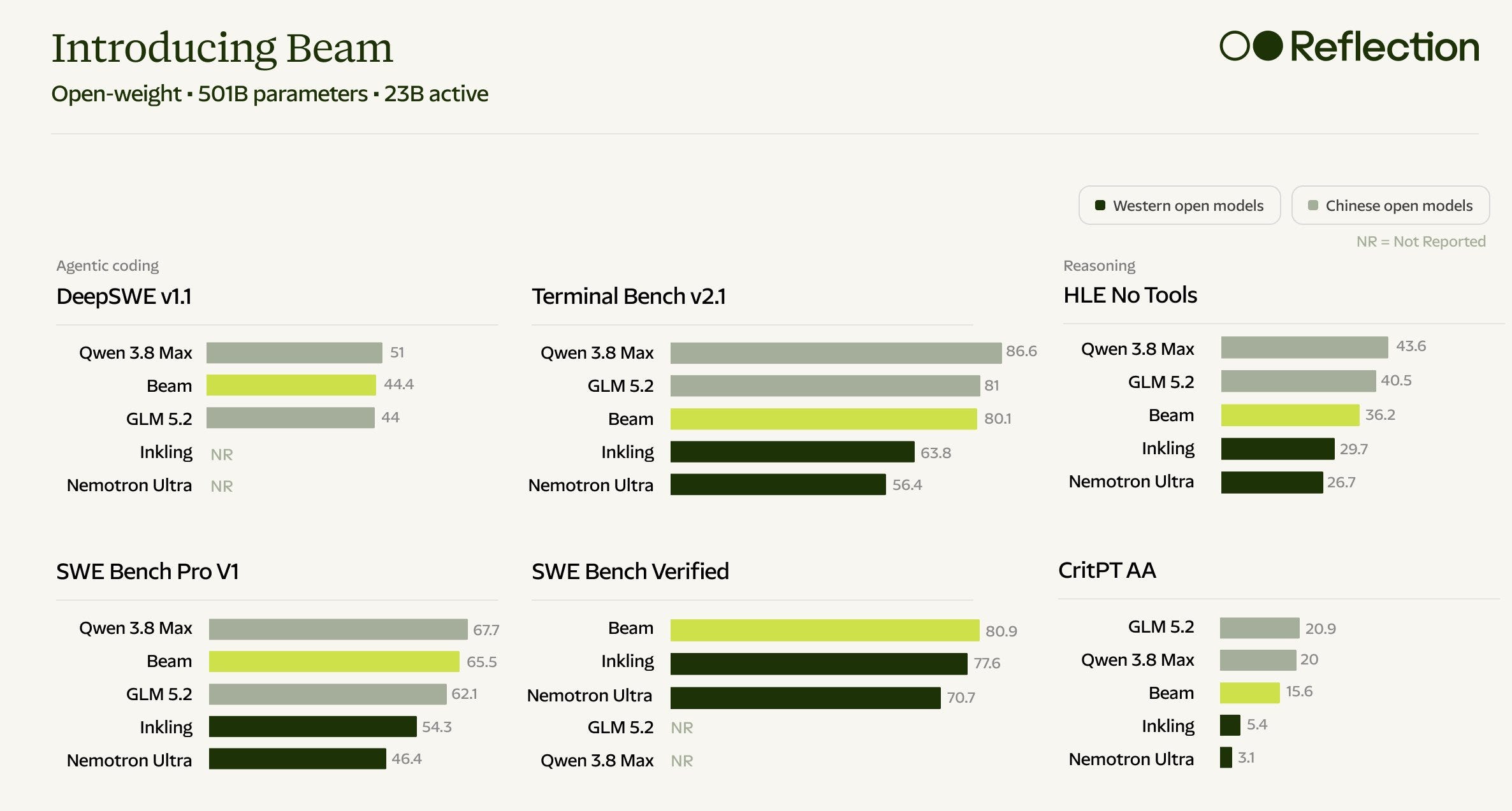
Just a few days later Mistral also announced their new model (“Le Chonk”), Mistral Large 4. While both models aren’t quite up to Chinese open-weight model levels, they are a huge step forward for the U.S. and Europe. ML4 is a 1 trillion-parameter natively multimodal model with 49 billion active parameters. It scores noticeably well on Cybersecurity:
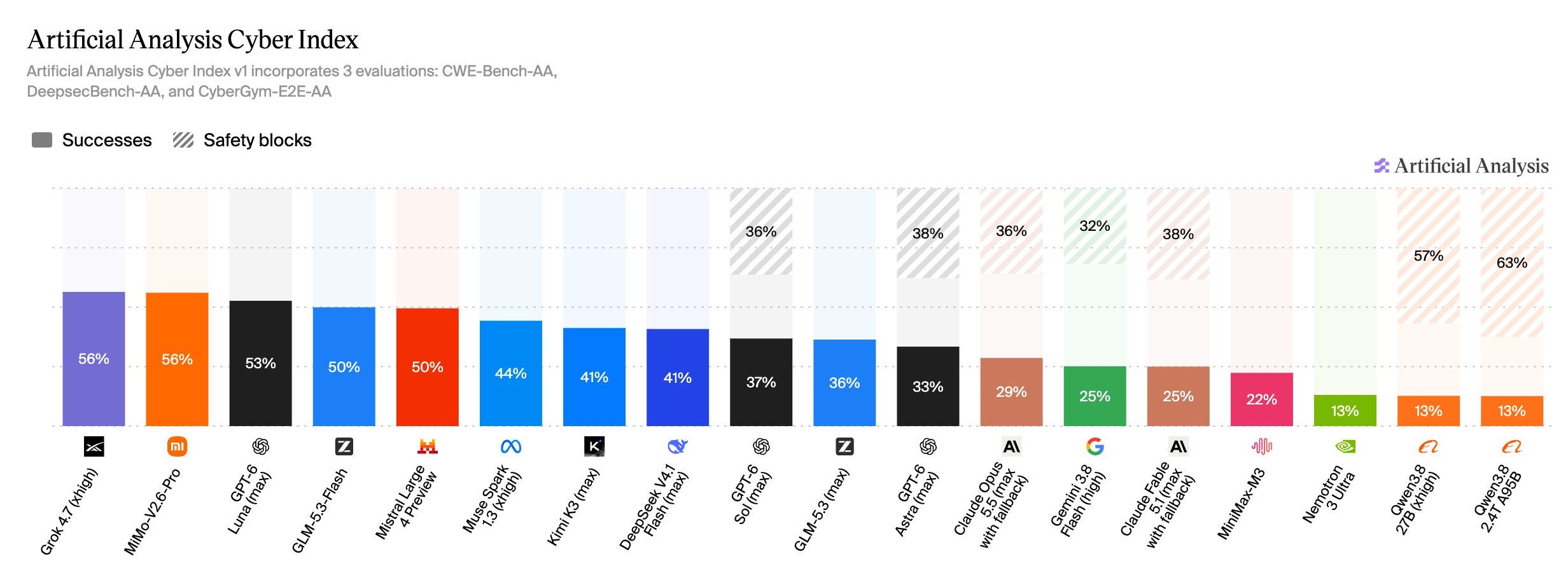

While its great to see Beam and ML4, it’s uncomfortable to some that they aren’t “frontier” open-source models. How many months behind China are we in open-weight models? While DeepSeek keeps increasing its pre IPO funding round to perhaps as much as $12 or even $15 Billion (half of what OpenAI is raising).
Personal Assistants – New Kids on the Block
-
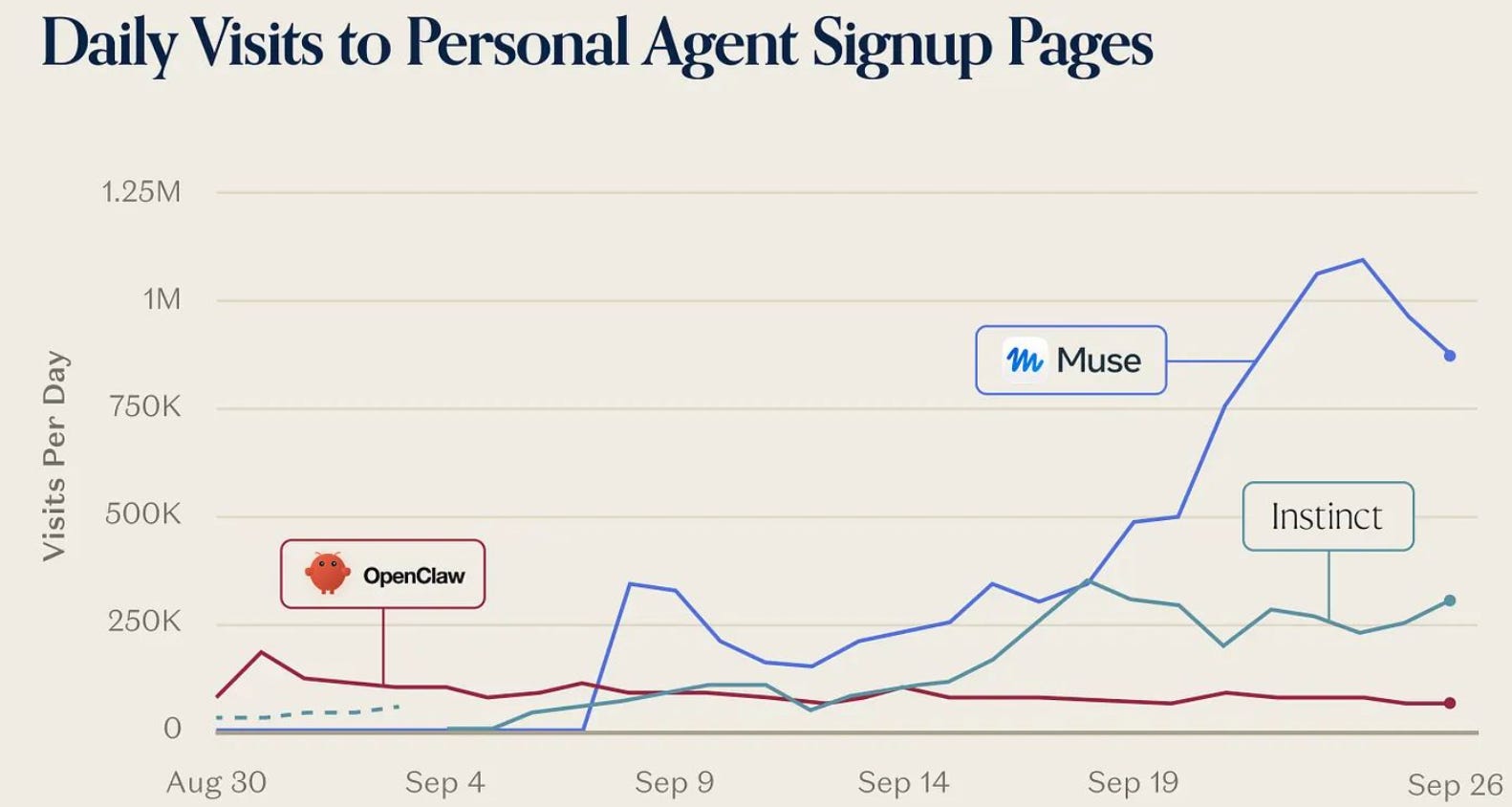
Meta’s Muse keeps good momentum. I can’t verify this, but internal Meta data reported by The Information, says that Meta’s AI personal agent Muse has passed 3 million weekly active users (with over 4 million engaging with the platform in some way weekly). But there are two indie Personal AI assistants that look really promising.
-
Instinct, just raised a massive $1 Billion Series C, basically quadrupling its valuation to $10 billion in late September, 2026.
-
There’s also a newcomer, it’s called Underdog. It’s all about on-device privacy and has a really great investor pedigree. Its founder is Sigil Wen, Canadian-born AI researcher, software engineer, founder, and angel investor known for his work in artificial intelligence, local model optimization, and tech startups. Big emphasis on local model optimization. So remember the name: Muse, Instinct and Underdog. The startup behind Underdog is called Conway Research. Underdog is currently in invite-only Beta.
I’m much more bullish on pure-play AI personal assistant startups than I am on Grok Bot, Dots or however Google and Anthropic respond to this B2C Muse inspired trend. This is what makes Instinct, Underdog and new entrants so interesting here.
Quote of the Day
“I’ve come to Conclude that AI Knows everything, yet understands nothing. – Neil deGrasse Tyson
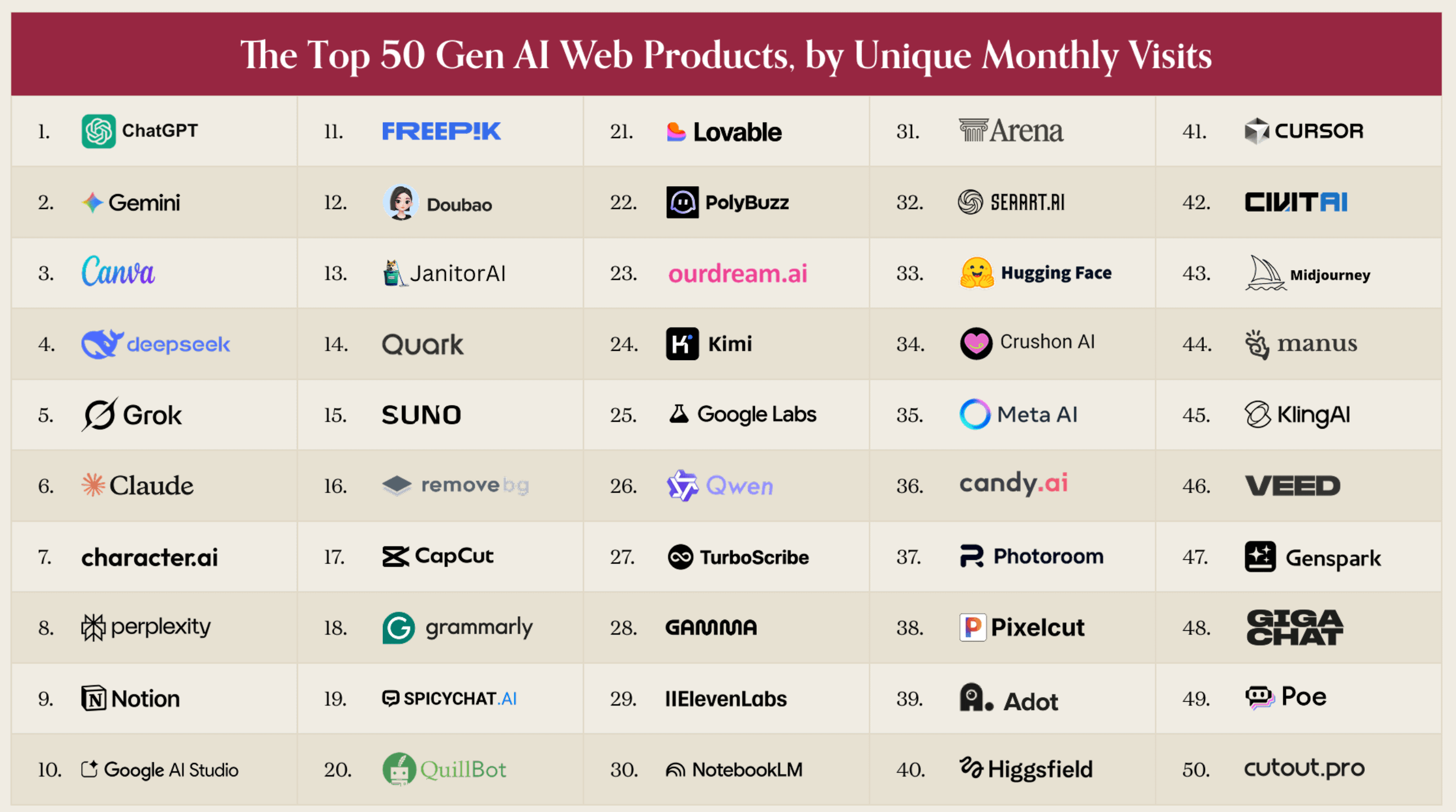
Olivia Moore of a16z recently shared their (seventh edition) of their Top 100 Generative AI apps report. This is one of my favorite easy ways to track AI trends in consumer B2C. What becomes very evident is the incredible churn and changing consumer behaviors around the application layer winners from both a website traffic and app downloads perspective.
How Quickly Things Change
March 2026 View:
Seven Months Later, October, 2026. Today:
-
Claude is up, Perplexity is down, Loveable is up, Magnific is the new name for Freepik.
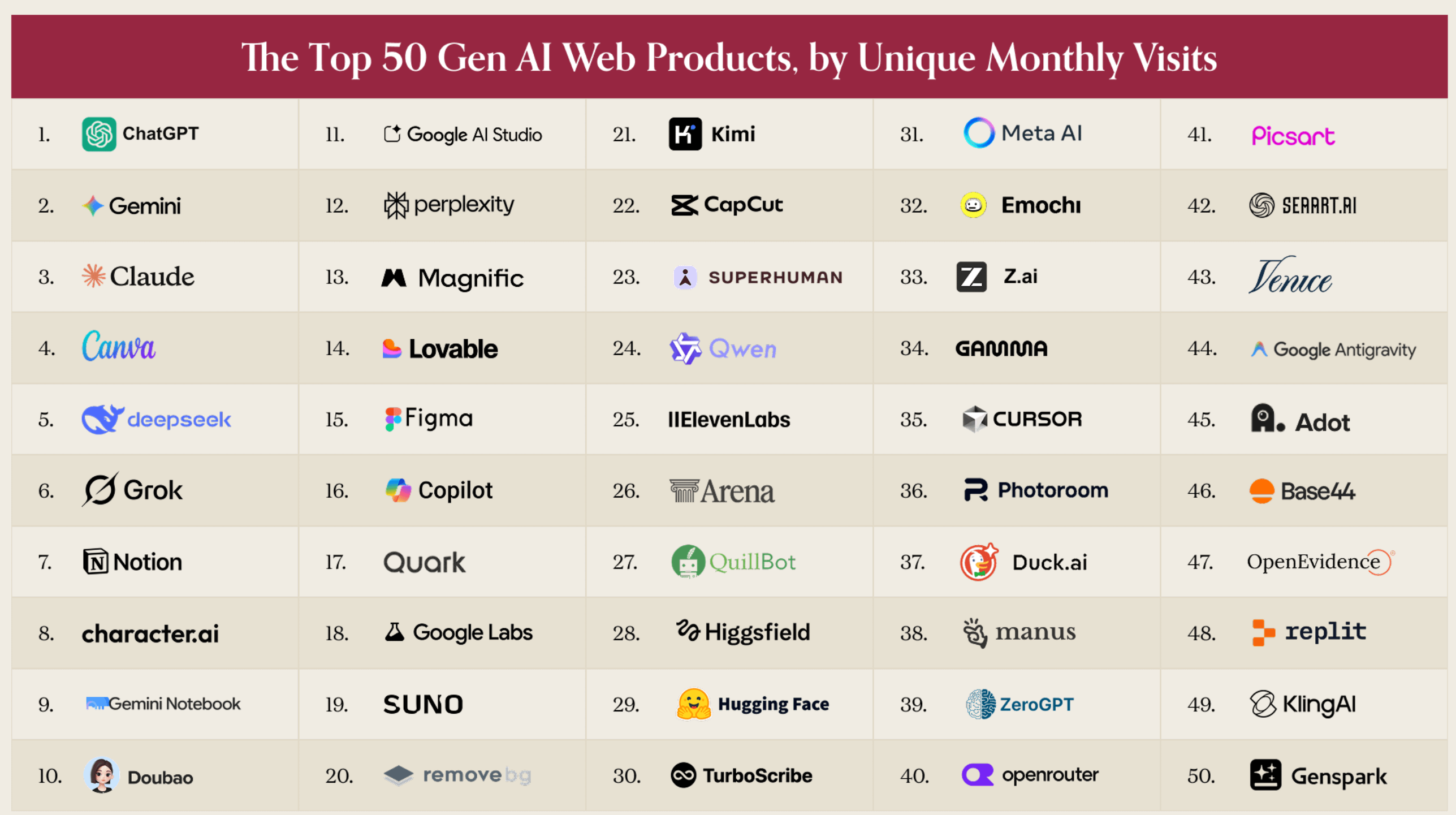
I find myself comparing these charts in different issues (there are 7 editions so far) of a16z report to realize just how competitive the B2C space is.
Revenue Consumer AI Winners
New winners in commercial traction include Higgsfield, Suno, Openrouter (acquired by Stripe), and Superhuman (who recently acquired Fathom). Superhuman AI is the merger of Grammarly and high-speed email app Superhuman Mail and they seem to have executed well. Meanwhile ElevenLabs, Manus and Otter AI have real traction. Aspects of voice and audio taken as a whole feature really quite highly on the MR list.
Trending: Higgsfield, Suno, Plaud, Manus, Kling (who plan to go public), and Zeely. In a commercial sense AI augmenting audio, voice, video and music are doing great.
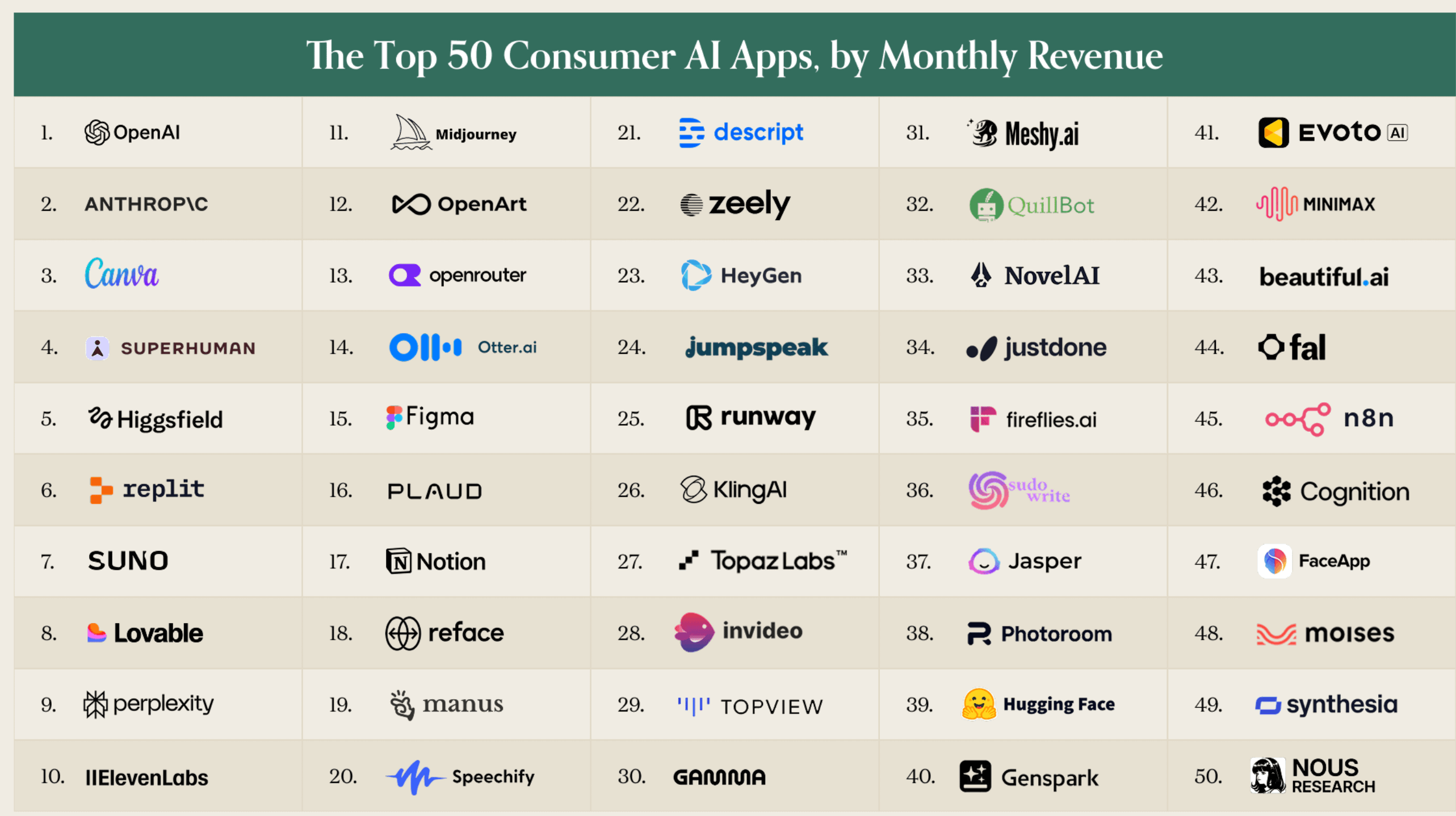
a16z own entire Twitter/X trending tags it seems these days, with a heavy presence on Substack as well (whom they back and likely have major equity).
Is Paid AI Usage Rising Well?
a16z claim paid AI adoption has risen slowly from near zero in early 2023 to about 2.2% by spring 2026.
The Fall 2026 Personal Assistant Adoption Surge (Or is it just a Fad?)
I actually think both consumer and Enterprise adoption has been really slow the last four years, if you take away the power users and biggest customers (concentration risk). But Venture Capital firms are trying to make the opposite argument. If this (Generative AI) is a transformative general purpose technology (GPT), you’d think AI would have a better rep and far faster adoption. I guess diffusion of new technologies just takes longer than we thought eh? A world where suddenly VC partners like Deedy Das or Moore are influencers. It looks like X or LinkedIn want to turn us all into AI Accelerationists (which is probably having the opposite effect).
Is it possible 2 Percent of U.S. Households have paid AI Subs?
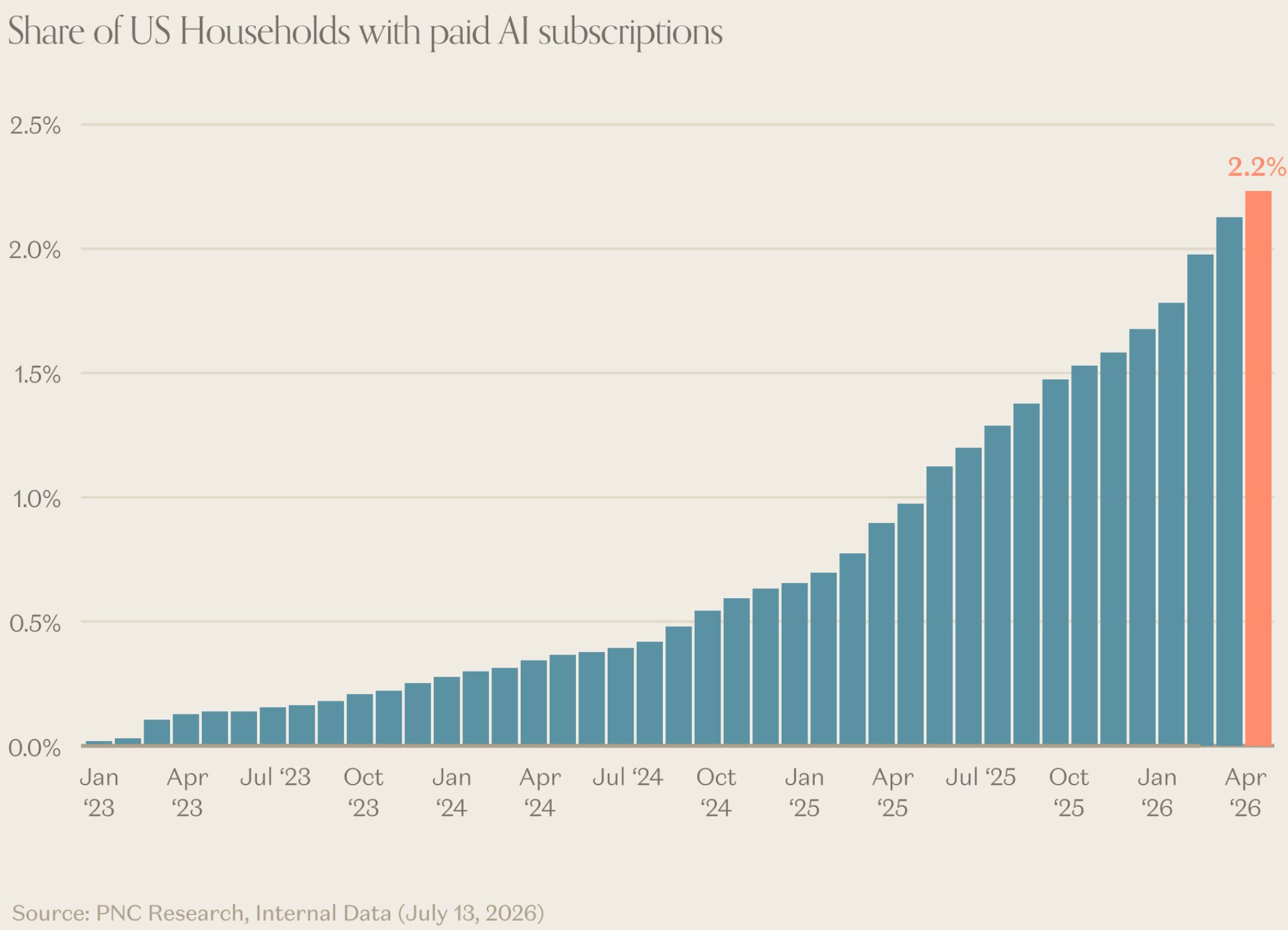
A 2.2% (not the 3% claimed by BoA in March) would translate to about 3 million U.S. households spending an average of $31/month on premium AI. a16z say they partnered with yipitdata for some of their new metrics.
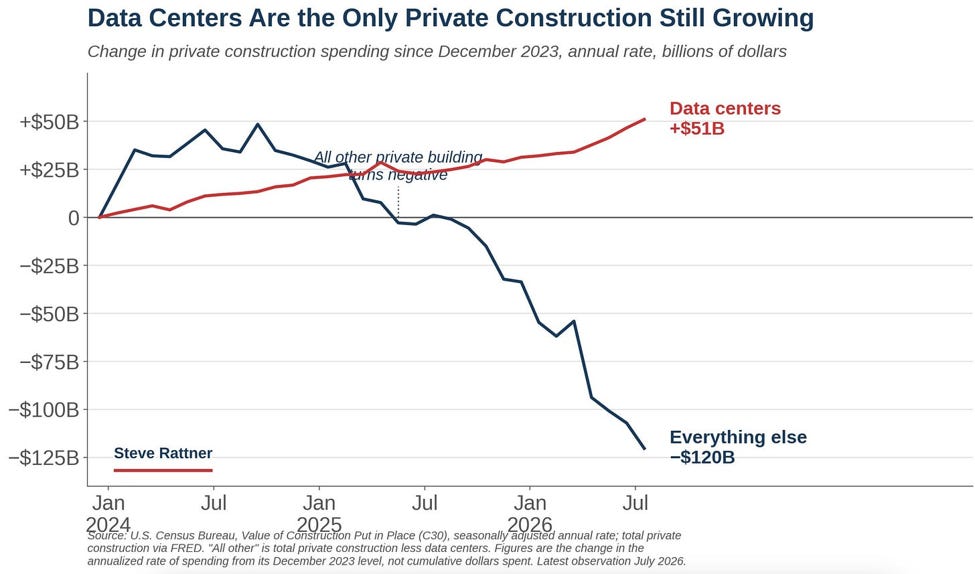
Without Capex on AI Infrastructure where would we even be?
According to Chartbook (by Adam Tooze) on Substack, this chart is downright scary on how much AI Infra building has taken over all of construction in the U.S. in recent years.
The Token Claw Back
So much for the Tokenmaxxing days of former times, a recent report suggests that huge companies like Meta and Microsoft are cutting back on their internal reliance on Anthropic’s Claude AI coding and productivity tools before Anthropic’s IPO next month. I am projecting Anthropic’s IPO for November 19th, 2026.
In 2027 we can expect a pricing war for more token marketshare to challenge the business models of frontier model makers. Meanwhile personal agents are likely to accelerate token usage but a lot of it might not have much economic value but still require tremendous amounts of compute. This could result in a Capex compute mismatch that is markedly bearish for the AI boom.
Paid Claude Users Caught Gemini in March & Again in June
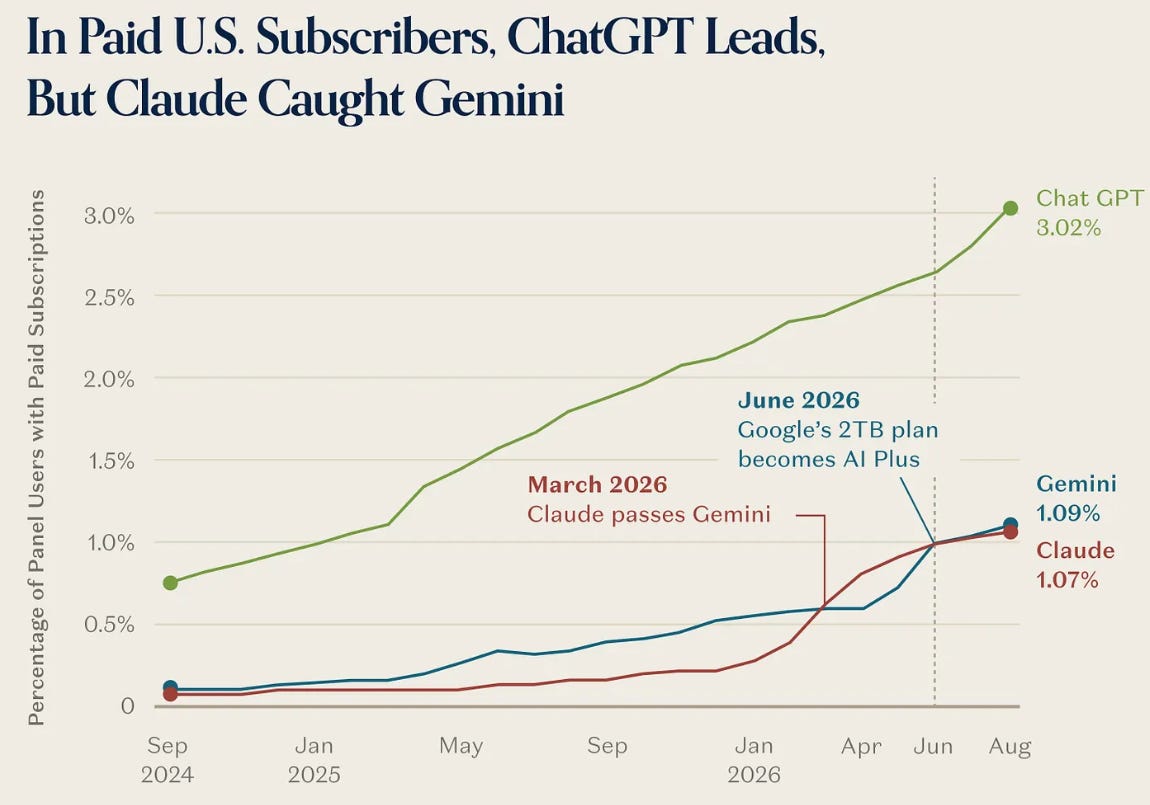
This is not a great sign for Google and Gemini, as Anthropic is mostly an Enterprise AI leader with the best coding frontier models. Meanwhile it took Google seven months to release their latest frontier model (that is not truly frontier level). Anthropic is not perfect but its ARR in 2026 is off the charts and one for the history books of technology scaling. Anthropic have the best leverage and conversion to higher pricing tiers, also because they make the best and only real frontier models (Astra GPT-6 at the front for nineteen days doesn’t really qualify any longer).
What are the top 1% of AI spenders paying so much money for?
According again to a16z, there are certain patterns of what the heaviest AI users and first adopters do:
So you wanna be an AI Power User?
Versus the average spender, they’re:
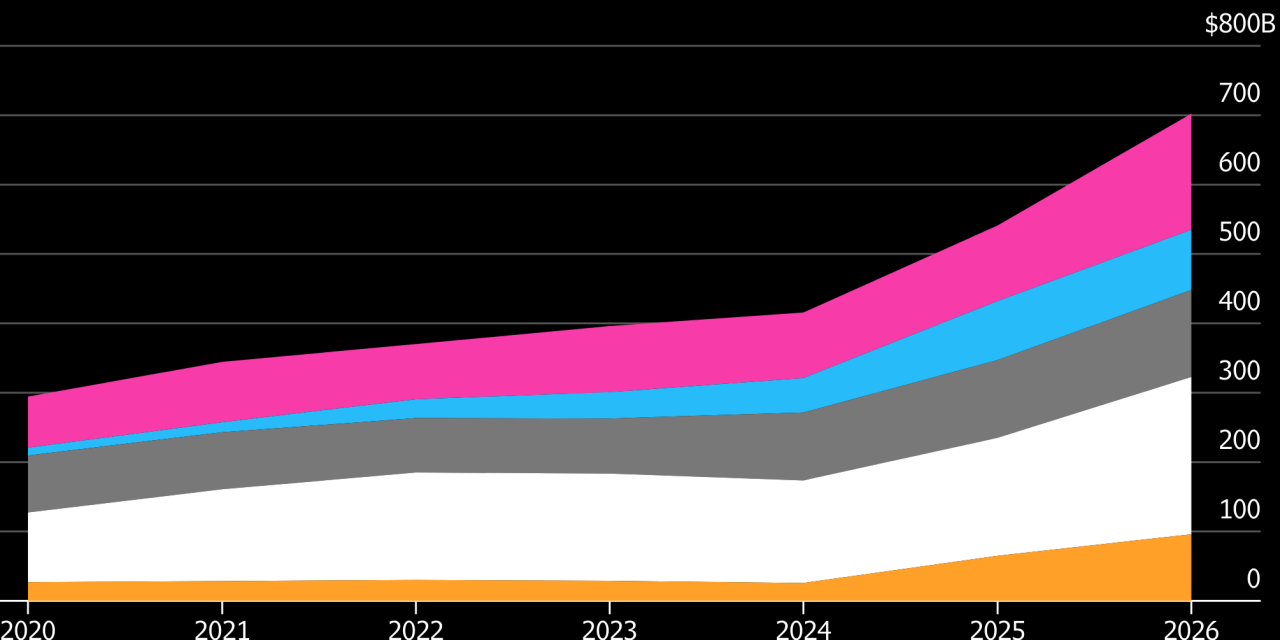
The Market is Waking up to Capex and Concentration Risk
Humanity is “wasting multi-trillion dollars” on AI data center build-up, according to former BitMEX CEO Arthur Hayes. He recently argues that current massive capital expenditures on AI data centers follow a historical pattern of technological overinvestment. He says an aggressive “capital wastage” phase is entirely normal.
He highlights the imbalance between upstream suppliers (such as chip manufacturers and hardware vendors that are actively profiting) and downstream consumer-facing AI firms, which incur heavy operational costs relative to current revenues.
Hayes (and a rising cohort of other realists) predict that as massive data center projects complete in 2027 and 2028, debt service and fixed capacity costs will force a sharp margin contraction or credit strain across the industry once contractual obligations kick in. So we seem to be in this ugly mid cycle uncertainty phase.
“If you study financial history and you study every single major technological rollout, it always is overbuilt. There always is a crash, and there always is a bailout,” Hayes said.
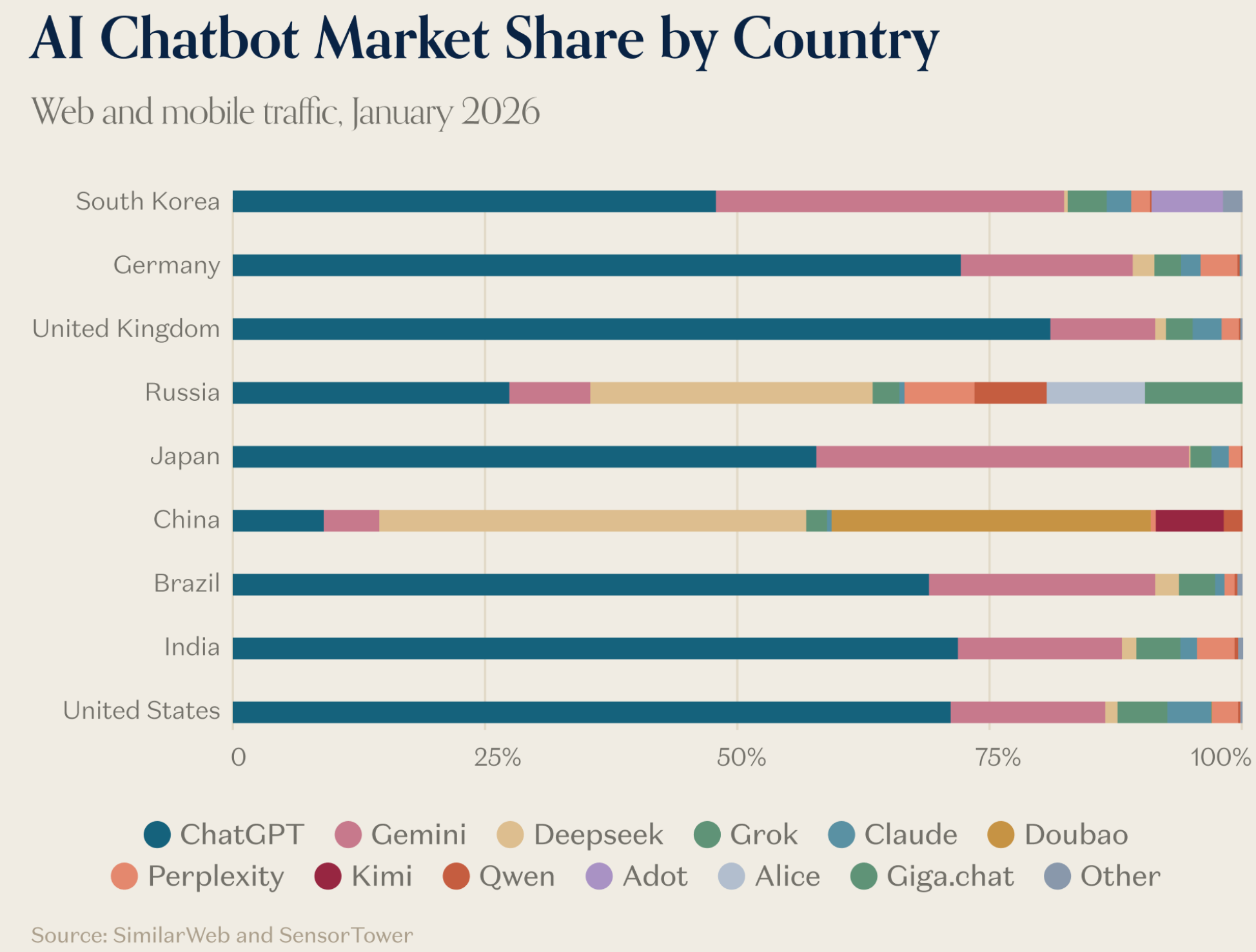
ChatGPT is strong in Certain Countries
OpenAI recently claimed that ChatGPT has 1.2 billion weekly active in late September 2026. Yet most of their ARR increase seemed to have come from Codex. ChatGPT is not so dominant in some foreign markets as it is in the U.S., UK or India.
In places like South Korea, Japan and Brazil Gemini has made stunning inroads and Google appears to be trusted more than OpenAI. I’m personally very skeptical when companies use the weekly active users metric. It’s mostly used when DAU retention isn’t good like we are seeing with Muse using it now too.
ChatGPT likely doesn’t even have 200 million DAUs globally, and if so is much smaller than many believe. If your product has been a first mover since late 2022, that’s not a huge number. (contrary to the consumer AI adoption thesis story). Maybe only around 50 million people (after four long years) pay for individual plans like ChatGPT Plus or Pro and Muse and its competitors could impact that in the months and years ahead. So for reference, Netflix has around 325 million paid subscribers globally as of late 2025 and early 2026 data.
The Coming Token Wars
If we take all the data that we have it appears like 2027 and 2028 is the peak period where Chinese models take token marketshare from OpenAI and to a lesser extent Google, Anthropic and others. That will translate into some token spend as well. Given how radically he West is spending on Capex, GPUs and datacenters, the price pressure could truly put the business models of model makers into some trouble while rising yields push Oracle and others into some credit difficulty.
How does OpenAI even go IPO if its timing is rough post an AI market crash? Sam Altman knows angel investing and conflict of interest (double dipping) hacks, but he doesn’t seem to understand business models or market timing.
If products like Muse, Instinct, Underdog and others take off, it will create such a spike in (agentic) token usage the compute constraint in the ecosystem will become nearly untenable and datacenter construction slows due to moratoriums, the cost of HBM and credit risks factors with higher yields. It’s the perfect squeeze.
Popular Protests Against the Trajectory of AI
Esteemed AI researcher Yoshua Bengio shared a post on LinkedIn that really got my attention.
Multiple recent polls show that citizens do not agree with the current trajectory of AI development. According to a national poll conducted in the US by Quinnipiac University last week:
– 73% are concerned that future AI systems could potentially threaten human survival.
– 86% support requiring AI companies to meet independent safety standards, even if it slows down development.
– 81% believe safety is more important than staying at the forefront of innovation when it comes to AI.
– 77% believe we should slow down or stop developing powerful AI systems until their safety can be evaluated.
Such decisions will most likely deeply transform our societies and human experience. Yet, just a few companies and governments are calling the shots without meaningful democratic input. This failure of representation cannot continue.
This is going to be a huge 2028 U.S. election issue if this keeps up. Which could also stunt the AI boom in 2028 or 2029. re the Quinnipiac University Poll On AI Finds:
This is yet another datapoint on the declining consumer and voter AI sentiment.
A vast majority of Americans say they do not have trust in the leaders of AI companies.
I expect these numbers to keep rising. Fifty-three percent of Americans think AI will do more harm than good in their day-to-day lives. If this was done in Europe or Canada the number would likely to be far higher as we’ve seen from other surveys.
While VC firms and AI Accelerationists keep trying to pump the AI boom (for profit), the reality is that the world isn’t into it so much. The credit risks and yields look bleak coinciding with interest from the National debt. It’s going to be an absurd next decade in AI and democracy as we can see in Brazil, France, Germany and other countries as well. Since AI is inflationary and making healthcare costs rise, it going to become part of the economic affordability crisis debate.
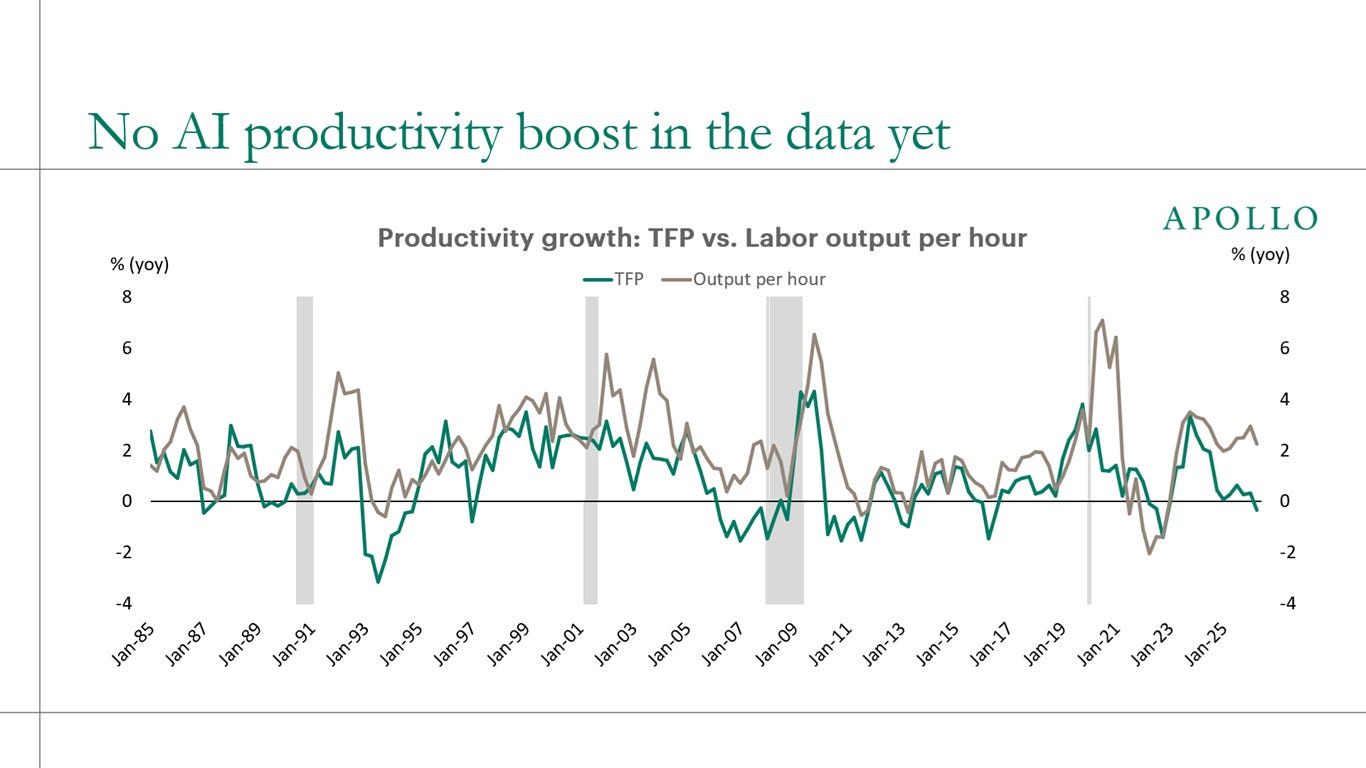
Where is AI in the Productivity Data?
After four years, AI is still now showing up in the productivity data according to the Economist behind the Newsletter at Apollo, the Daily Spark, the October 5th, 2026 issue.
What does the chart and data say? Well, The chart below shows utilization-adjusted TFP from the San Francisco Fed, and it is currently sitting slightly below zero with no sign of acceleration since the AI capex cycle began.
I don’t even think Torsten Slok is a skeptic here, just a realist. Of course there’s so much usage that’s concentrated in the biggest companies and richest users by token usage (who typically work in BigTech).
U.S. Capex in AI Infra is projected to rise another 25% to 30% in 2027 and it’s not clear how the troubled bond market of Japan, France and the U.S. will be able to handle the debt burden and margin leverage (i.e. off the books). Something could crack. We are accelerating into a debt crisis hoping AI will save the world, but most people barely use AI.
That’s, a very weird situation to be in on a macro level.
Thanks for reading!
Read More in AI Supremacy


