👋 Hey there, I’m Mike. Each week I share AI articles at the intersection of tech, business, society and the future. If you want to support the channel or gain full-access to my work, go here. Read Archives | See Substack Notes | Visit our community Chat | Visit Homepage. I’ve been doing this for five years and before ChatGPT came along.
How will AI become more accessible? Are older workers who are laid off in a tough spot due to AI? I didn’t think I’d have to write about OpenAI again. But some events are like the echoes of history.
Is AI increasing Ageism in the workplace? 🧐
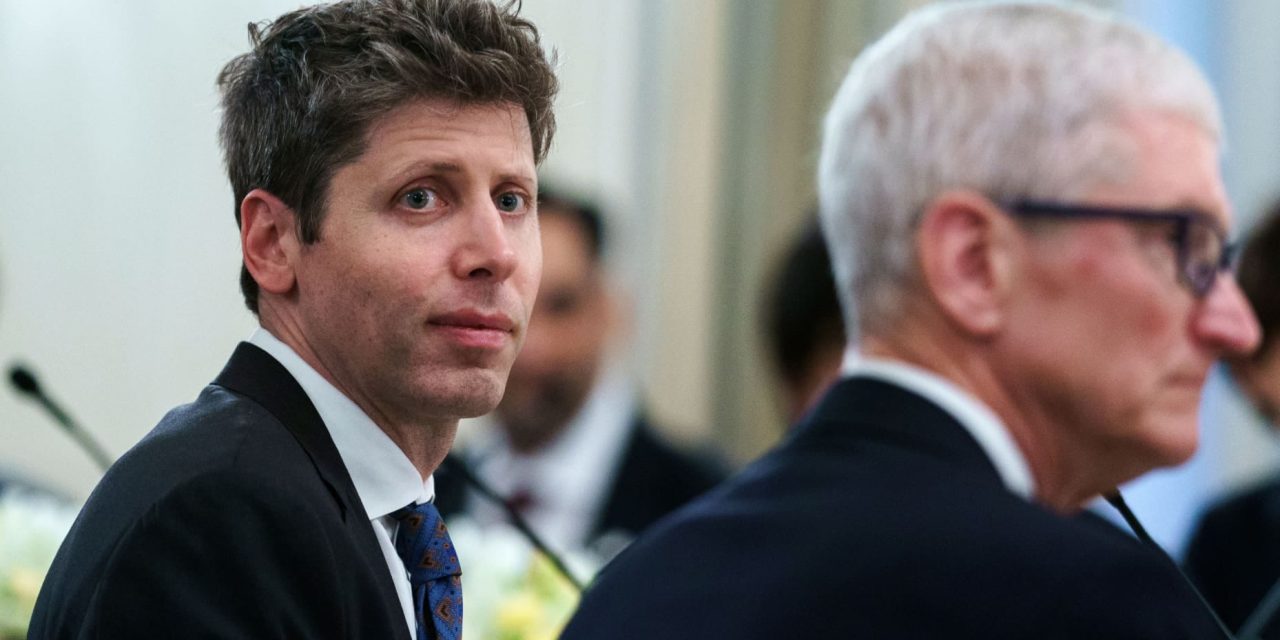
At a time when there’s going to be a Physical AI and AI wearables race in the consumer AI economy kicking off in 2027, OpenAI’s plans to even compete in the AI device race might be under serious threat, with increased scrutiny and even legal delays. The weekend news is an Apple lawsuit which looks very damaging to OpenAI’s already badly eroded brand and ability to secure meaningful partnerships and business relationships. I’m not sure what kind of Enterprise customer would want to do business with them at this point in 2026. But how about ChatGPT users?
OpenAI’s last 24 hours: (Saturday 11th, of July)
> Top Exec unexpectedly departs (claims health)
> Shuts down browser tool after 9 months (Atlas, another failed product)
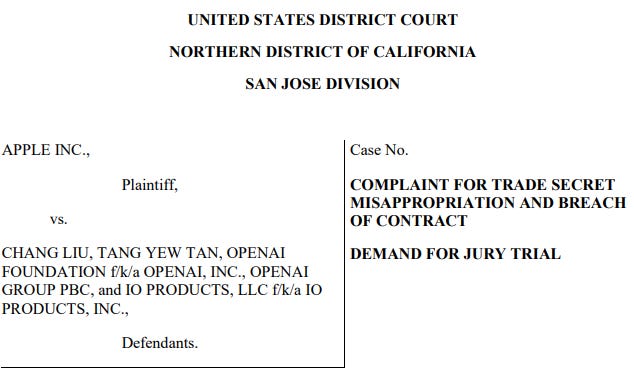
> Sued for trade theft by Apple
> Caught selling product to China against sanctions and lastly:
>OpenAI’s head of safety systems, Johannes Heidecke, is leaving the company.
The complaint accuses OpenAI of orchestrating a broad effort to systematically acquire and exploit Apple’s confidential information and trade secrets is very serious. The evidence looks daming.
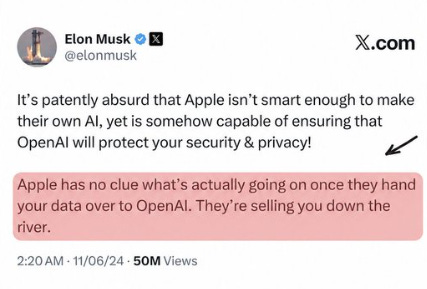
How do you even recover from this? I expect Microsoft to also bring a lawsuit to them in the coming months in relation to their betrayal in favor of Amazon that was against Microsoft’s terms.
Apple is seeking (Ed Ludlow explains):
-
A jury trial.
-
An order requiring OpenAI to stop the alleged misuse of Apple’s trade secrets.
-
Destruction of any Apple proprietary materials in OpenAI’s possession.
-
Redesign of upcoming OpenAI hardware products so they do not incorporate Apple’s technology.
Chronology of Events
To make a 41-page legal filing short:
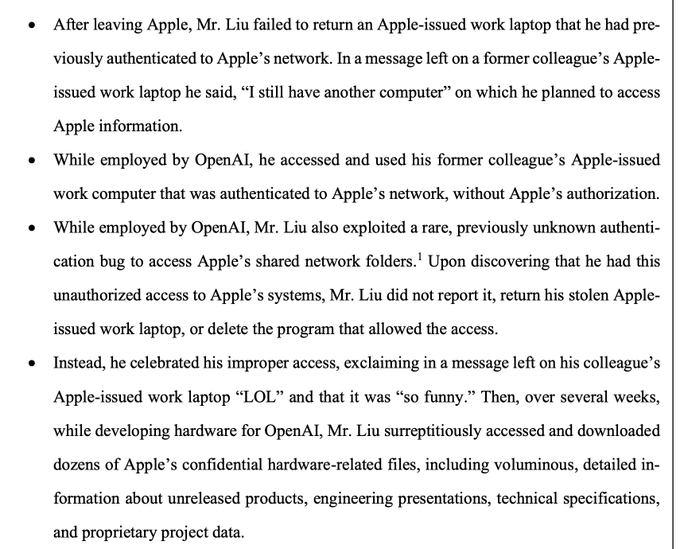
>be Chang Liu
>senior system electrical engineer at Apple
>8 years working on iphone
>january 2026: leave Apple to join OpenAI
>apple asks for laptop back
>ignore them
>lmao it’s my laptop now
>within HOURS of leaving
>message Yu-Ting “Alyssa” Peng, friend at Apple:
Liu: “I still have another computer”
>uses it to access Apple secret info
>within weeks, use HER Apple work laptop
>february 9: try Apple’s network storage
>cloud repo of confidential engineering files
>authentication bug. still works!
>message Peng: “LOL, I found out I can access the [network storage], so funny”
Peng: “I’m ready”
>while developing hardware for OpenAI
>download DOZENS of confidential files
>including a thousand-plus-page compilation of technical files
>including MLB (main logic board) manufacturing + testing presentations
>send Peng links to Apple’s proprietary folders
>point her to specific project data
>coach her how to copy files “to avoid trouble with the security team”
>tell her which confidential Apple materials to study before her OpenAI interview
>warn her another guy “fumbled” Tang Tan’s questions about a secret Apple project
>“download some info” for her to review
>tell her: switch to LINE Messenger so nobody sees this
>she gets the OpenAI offer, leaves Apple April 16
>meanwhile every message was left on APPLE-ISSUED WORK LAPTOPS
>july 10: Apple Inc. v. Chang Liu
>named first. before OpenAI. before Tang Tan
What’s at Stake
OpenAI is really failing at keeping up with Anthropic and a lot of its M.O. is coming out into the open. Mounting failed products, delays in projects, legal woes, strategic missteps and failed partnerships mean additional risks to OpenAI as it gears up for what’s expected to be with SpaceX and next Anthropic, a monumental IPO some time next year at time when the company’s momentum is stagnating or even in decline relative to its competitors like Meta, Google, Anthropic, SpaceXAI, Alibaba, ByteDance and others. This completely overshadows GPT-5.6 from an optics perspective.
Even if you are an OpenAI bear (like I am), it’s painful to watch. Since the United States funded mostly OpenAI and Anthropic above everyone (and everything) else to be their AI leaders of the future. But these aren’t strategic blunders, this AI device thing is one of OpenAI’s major moonshots being dismantled by anti-competitive misconduct. Like, they did this to themselves! They might not even get a chance to compete, because cheating was an option on their table. There have been signs OpenAI’s internal culture wasn’t exactly honest. But this legal battle is hard to deny.
What happens Next
OpenAI will likely have to re-design their wearables and AI devices costing them a lot of time and money. All the while AI glasses by their rivals go live in 2027 and other devices including by Apple who have an aggressive lineup.
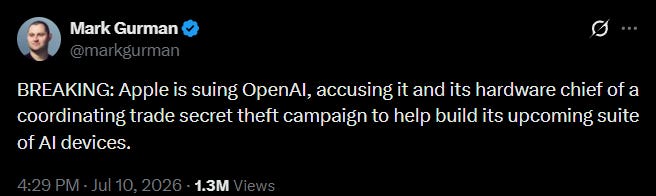
Apple sued OpenAI for trade secret theft, accusing the artificial intelligence startup and its hardware chief of engaging in a coordinated campaign to steal information about upcoming products.
In May 2025, OpenAI announced its acquisition of io for $6.5 Bn. But their secret hardware has been delayed and now with the lawsuit it could miss that critical 2027 window when all of these cool AI wearables and devices will be launching including several AI glasses products.
Tang Tan (a 25 year Apple bet)— also mentioned in the complaint — is a former Apple executive who worked on iPhone and Apple Watch and now serves as OpenAI’s chief hardware officer who also co-founded io. The optics look very bad for OpenAI ethics and leadership. This is not the first lawsuit that Tan has faced. A little-known tech startup iyO Inc. to sue Ive and OpenAI CEO Sam Altman for trademark infringement due to the similar-sounding name and the firms’ past interactions. The startup also sued one of its own former employees for allegedly leaking a confidential drawing of iyO’s unreleased product, and it later added trade secret theft claims against Tan to the lawsuit.
Apple is seeking damages, injunctions, and an order to force OpenAI to stop using its trade secrets. While OpenAI seems directionless in product and has lawsuits coming for it from every side. OpenAI keeps releasing features and products of existing features that most companies at this point ignore.
OpenAI is in Chaos
This lawsuit really opens up the door to incumbents winning the AI wearables and device race. Did OpenAI ever have much chance against Apple and others in the first place?
OpenAI’s internal dramas know no limits
History
Before OpenAI acquired io, OpenAI Startup Fund had already anchored an initial foothold by taking a 23% stake in the company for $1.5 billion in late 2024. At that point OpenAI Startup Fund was just an alias for Sam Altman’s own personal investing. So the AI wearables project of OpenAI really is a reflection of Sam Altman’s trying to go up against the likes of Apple. Not a bet that I’d want to take. OpenAI acquired io for over $6 billion that brought 55 hardware and manufacturing experts into OpenAI. OpenAI has approximately 400 former Apple employees.
OpenAI tarnishing their two key partnerships with Microsoft and Apple really are serious for the go-future of the company. If you churn through this many executives, features, products and partnerships – it points to structural issues inside of your company.
The Rumored Product
OpenAI’s flagship AI wearable devices is their “Sweetpea” AI Earbuds. Sweetpea is designed to offer a screen-free, ambient interface for interacting with ChatGPT and now presumably their unified app with Codex. According to supposed leaks, unlike traditional in-ear headphones like Apple AirPods, Sweetpea features a unique behind-the-ear form factor.
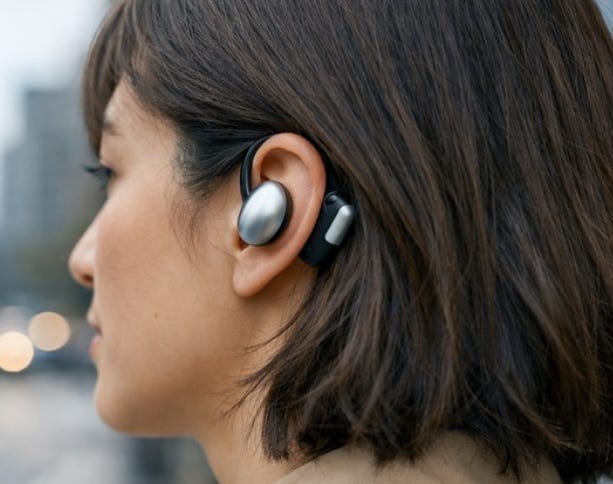
As for the design, and I’m not sure this is correct, the device reportedly consists of a metal, egg-shaped charging case housing two pill-shaped modules that sit comfortably behind the ear, resembling high-end modern hearing aids or open-ear sportswear.
Given the popularity of Meta’s AI glasses, and with Apple’s own AI wearables and devices coming, it would have been difficult for OpenAI to compete in hardware. It took Meta itself many years to build any kind of hardware that just works. OpenAI is traditionally a LLM research lab and has not been successful launching products, apps and browsers thus far. Products that for the record are far easier than hardware. Nevermind AI hardware. Nevermind a suite of multiple distinct AI devices. Their ambitions were clearly not realistic.
Leaked supply chain reports show that OpenAI has tasked manufacturing partner Foxconn with preparing a pipeline of up to 5 distinct AI devices through late 2028. We are talking at least a $10 Billion investment. By the time the products are for sale, even the most ardent fans of ChatGPT are likely to no longer be using it as much. Now who knows when they will ever go live, legal issues permitting.
So What?
Jony Ive, Apple’s former chief design officer who began collaborating with OpenAI in 2023. It’s now nearly four years later and there’s no sign of when the products will even be announced, and will probably have to be totally redesigned. But 2027 is the critical timeline to compete against Apple, Meta, Google and others in AI devices and wearables. For an unprofitable company like OpenAI that is burning huge amounts of cash each quarter, time is money. Trust and your credibility is future sales.
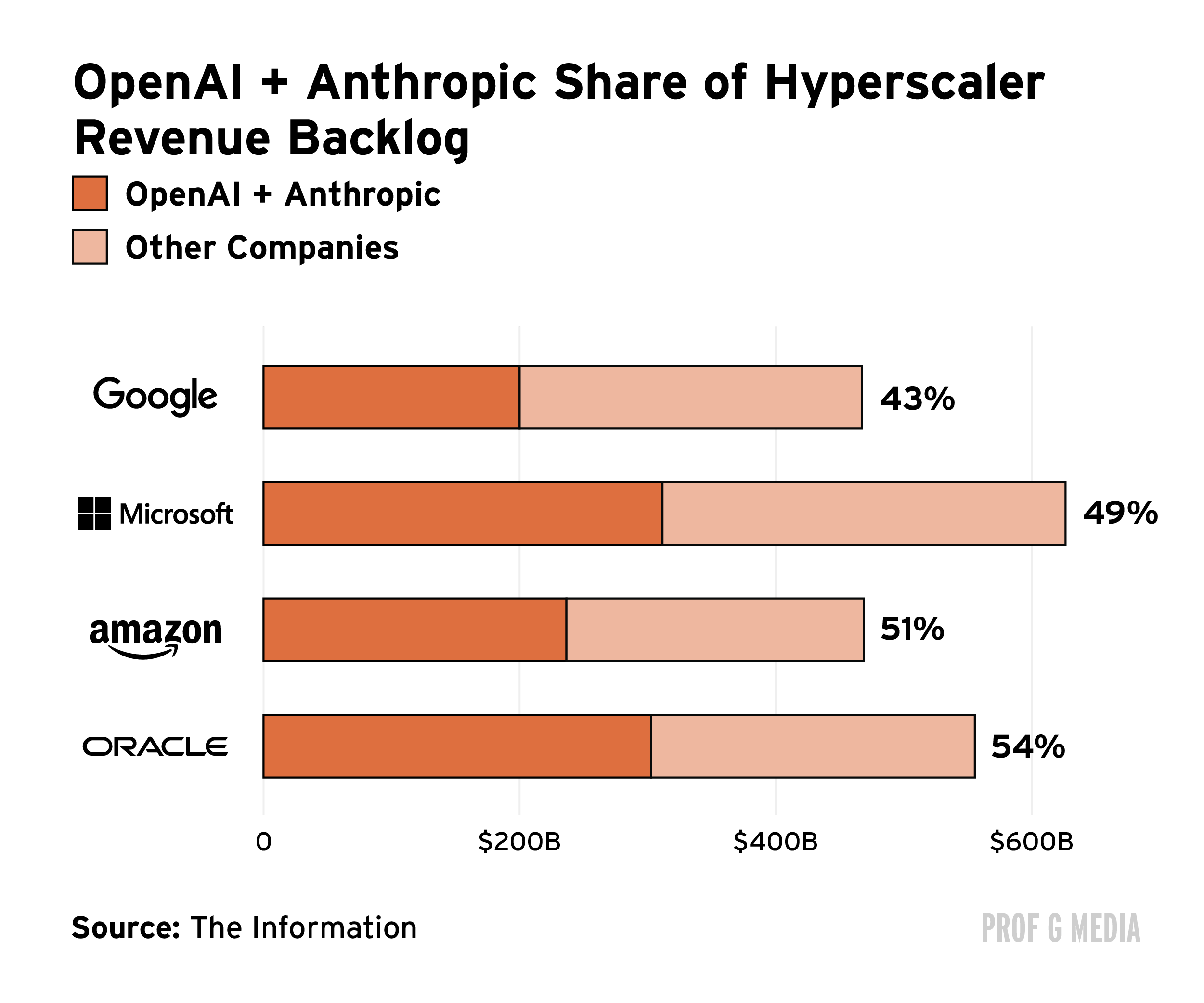
Majority of Hyperscaler Backlog is Anthropic + OpenAI
If OpenAI has trouble competing and is not really worth nearly $1 Trillion, it eventually hurts all the hyperscalers. The way Google, Meta and others are going, consolidation is likely going to continue to hurt OpenAI. Anthropic will have around $1 Bn. in operating profits when they IPO in October and could have well over $100 Bn. in ARR by 2027.
OpenAI’s path to profitability and survival in such an ecosystem is looking less strong and more uncertain every quarter.
OpenAI’s Pattern of Misconduct Keeps Growing
If OpenAI wants to go IPO, it needs to do so without Sam Altman. Nothing else can save the company. When Meta poached (quite successfully in June/July, 2025) from OpenAI, OpenAI was fairly brutal with Apple’s AI team. But it seems like these practices continued to the present.
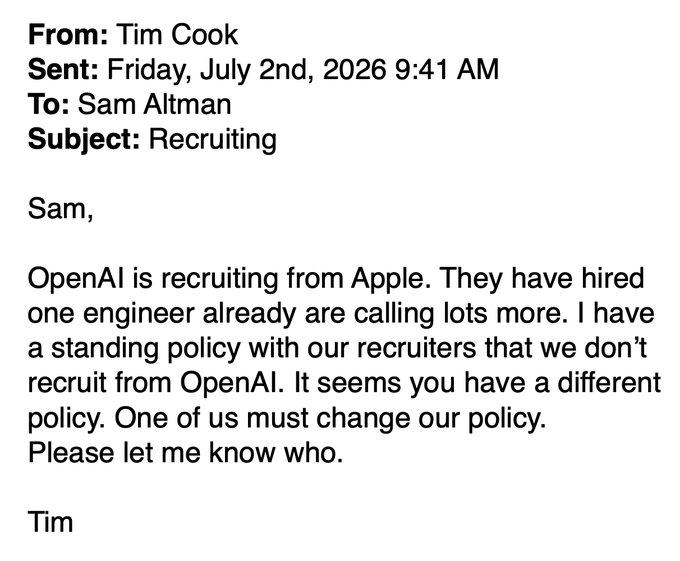
OpenAI’s credibility and the arrival of its consumer hardware moonshot, seem to be in grave jeopardy.
The LOL Moment of OpenAI’s 2026:

OpenAI and ChatGPT May not have a Bright Future
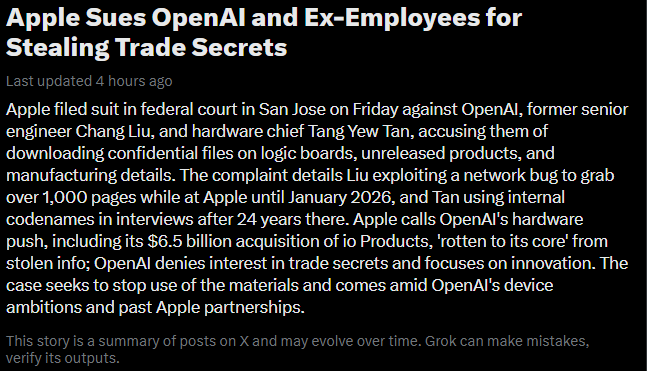
According to the lawsuit, it appears io has a pattern of trademark and IP theft. Apple’s a fairly secretive company for a reason and OpenAI’s disregard for that is likely going to be clear to any human jury within reason.
What did Alex Know?
How many times can we make allowances for Mr. Sam Altman. Did Palantir know about the lawsuit? Palantir CEO Alex Karp said last week that the foundation model companies are stealing your IP which is why you need data sovereignty. If Apple’s allegations are right, OpenAI stole trade secrets from a $4T company….you could understand why enterprises might be a bit hesitant to give them their data. You can understand why OpenAI is not making much headway in Enterprise AI or B2B. ChatGPT has a reputation for being an addictive product. With Meta’s new models and ChatGPT forced to do Advertizing you have to imagine OpenAI’s direct competition isn’t Anthropic, but rather Meta, SpaceX and to a lesser extent Google.
My characterization of Sam Altman as the Sam Bankman-Fried of AI is starting to becoming a little more accurate. The problem is so much of the ecosystem needs OpenAI to do well to prosper. OpenAI proposing to hand the Trump Administration 5% equity is obviously a poor sign for its long-term competitive sustainability and integrity. But when so much of this AI bubble is based on circular financing, it makes OpenAI a big part of the mafia dynamics at play.
Typically companies like these with a “loser mentality” don’t last the “consolidation phase” of a new technology wave that we are quickly approaching. Judging by how popular outspoken OpenAI critics like Ed Zitron have become, it’s not a good sign for OpenAI’s financials. It makes all of this the more disturbing. But let’s be honest, if there was rule of law in America, this company wouldn’t even be allowed to have the opportunity to go public. But too much capital has already been spent on them with Cloud hyperscalers such as Azure and AWS too dependent on their business. Meanwhile no matter what they do, they are going to lose more marketshare to the likes of Google and Anthropic in 2026 dramatically slowing down their ARR, and likely even worse in 2027.
Between idle promises of AGI and the collapse of so much talent to newer startups, this too is the history of AI. One lawsuit after another. The failure of Sora was embarrassing enough, but by the time the browser Atlas got pulled, most people didn’t even notice and forgot what it was for. Every month for the past eighteen, Google has taken more B2C marketshare and Anthropic more B2B marketshare from OpenAI. When Musespark 1.1 by Meta got more attention than the launch of GPT-5.6, you knew OpenAI was becoming like a relic from the past of 2022. Back when, you actually felt you had to listen to what Sam Altman said or that ChatGPT was a real and actual product. A few years later, we now know better.
AI Is Pushing Older Employees Straight Out of the Workforce
We’ve heard a lot in the past 1.5 years of AI’s impact on new college graduates, entry level positions, career ladders in a tighter labor market. But how about on the other end of the spectrum?
Generative AI might be accelerating ageism in the workplace, and I’m not sure it’s been covered enough in the media.

-
Labor attorneys are noting a rise in companies using “lack of AI adaptability” as a neutral-sounding proxy to downsize older staff.
-
There’s increasing amounts of data showing a relatively higher increase in older workers leaving employment, particularly transitioning to unemployment.
-
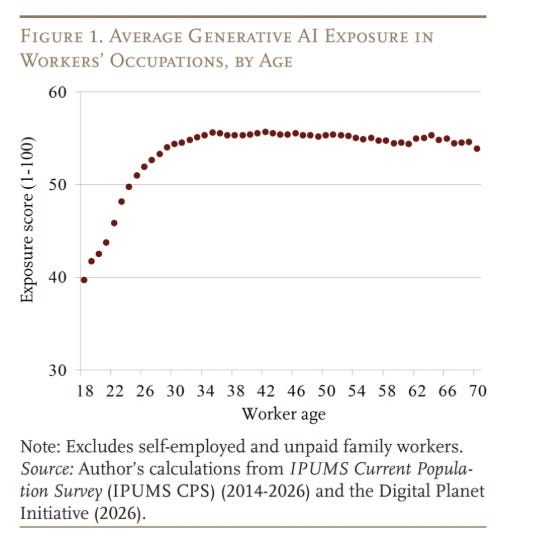
(via Futurism) In a recent study by the Center for Retirement Research at Boston College, economics professor Geoffrey Sanzenbacher took a hard look at labor data in order to map AI’s impact on older workers in the United States.
-
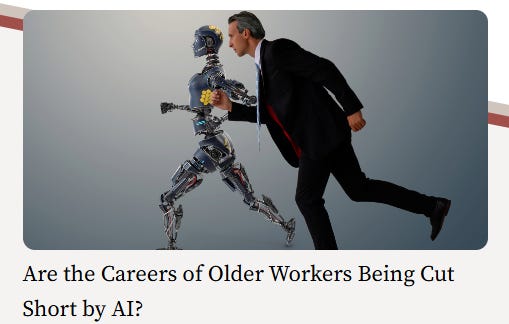
The June 2026 issue brief titled “Are the Careers of Older Workers Being Cut Short by AI?“ by Geoffrey T. Sanzenbacher for the Center for Retirement Research at Boston College explores whether the rise of artificial intelligence is impacting the employment longevity of late-career workers.
-
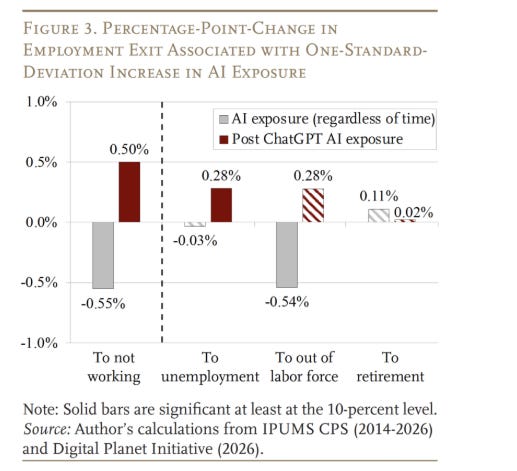
They conclude that in general, older workers in jobs with greater exposure to AI have seen relatively large increases in job exit since the launch of ChatGPT.
-
The significant increase in exit from work threatens older workers in exposed jobs with shorter careers if they cannot find new work.
I’m afraid Generative AI is starting to squeeze the labor market from both ends: reduced entry-level hiring for young graduates + faster exits for near-retirement professionals. This could erode capitalism and exasperate the K-shaped American economy where a significant affordability crisis is taking place.
-
Sanzenbacher observes that after the release of ChatGPT, the share of workers 55 and up leaving white collar work is surging.
-
Said another way, growing numbers of older white collar workers are being let go or forced into early retirement.
-
AI could be having a much more detrimental impact on older workers that is being admitted in the mainstream media.
Generative AI is compressing, merging and changing tech roles, while the rapid advancement and increasing complexity of AI in recent years has prompted education and training providers and employers to rethink workplace roles and consider what it means to be job-ready. But also, what it means to leave the labor market, when to retire how the cost-efficiency to pay for adoption of AI is reducing opportunities for workers in the last quarter of their careers.
I don’t like the implications of where this might be heading: this late-career AI pressure is fairly artificial.
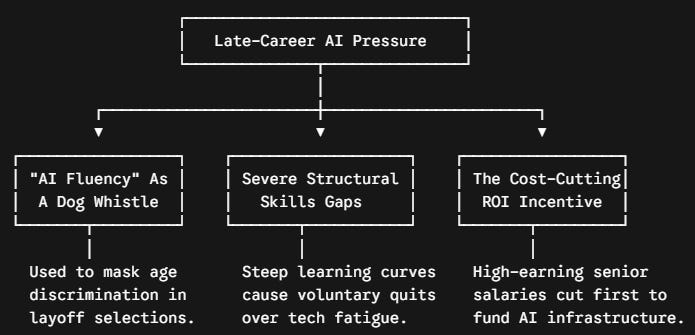
As you can imagine, some challenges AI poses for older workers include negative stereotypes about their willingness to learn new skills and comfort with technology, limited access to employer-provided or relevant training, and a lack of digital access and foundational digital skills—basic abilities to utilize technology like navigating a web browser, like the Center for Retirement Research suggests.
A labor market squeezed on both sides just to be able to afford AI Infrastructure and rapid agentic agentic AI doesn’t sound like a great thing for society or the health of the consumer and worker in the U.S.
-
Like similar patterns observed around entry-level labor, this appears to be specifically impacting older white collar workers.
-
Workers ages 55+ are just as exposed to generative AI in their occupations as mid-career workers. It’s only normal there’s an adoption gap where older workers tend to use AI less than younger ones, and some view it more as a threat.
There appears to be a critical gap in the research of how Generative AI is impacting older workers.
The Great Squeeze: the dual dilemma of over-hyping an immature technology on demographics.

I think Geoff is right, his bottom line: as many policy experts urge longer worklives, AI could be pushing some older workers in the opposite direction. If this tool is real we need to make sure it’s promoting our well-being and financial health, not the opposite. As a lot of talent leaves the workforce and as some white collar workers take early retirement packages, while Gen AI deskills the rest of us, there’s going to be a real talent cost here in some fairly critical industries.
Historically, workers in high-exposure jobs (which are typically white-collar and less physically demanding) had much lower exit rates and longer career longevity than workers in low-exposure, physical jobs. There’s more reason to believe that narrative has been flipped on its head. Of course we are just 3.5 years in this Generative AI experiment in a much tighter U.S. labor market, there’s a lot of factors to think about.
Given the uncertain ROI from Generative AI, token usages and even agents, it’s a shame to see many young people and older workers struggling in a less meritocratic labor market bending to some of the unsavory side of monopolistic capitalism. This huge datacenter roll-out and these AI companies going public may not actually be in America’s best interests. That argument is starting to become more salient, where the impact on real people is showing troubling signs.
Is a K-shaped AI labor force the future? Sounds profoundly ageist.
“If entry-level hiring has slowed to a crawl, and retirement-aged professionals are leaving in droves, how is the average worker supposed to navigate a labor market being squeezed from both ends?” – Futurism.
Addendum
These are some random observations and stories I’ve been watching.
Is an AI Sovereign Wealth Fund in Reach?
-
A June survey of 1,690 U.S. adults found Sixty-nine percent of Americans now support “forcing” AI firms to transfer 50% of their stock to a public sovereign wealth fund, according to a survey by research firm Verasight as tech-sector layoffs surpass 140,000 this year and AI is cited as the leading cause of job cuts.
Of course this relates to Bernie Sanders. Senator Bernie Sanders introduced the American AI Sovereign Wealth Fund Act in June. The legislative proposal explicitly mandates that the largest U.S. AI firms cede a 50% ownership stake to the public. Sanders framed the bill as a safeguard against wealth concentration, arguing that the economic upside of artificial intelligence must not be confined to Silicon Valley boardrooms.
OpenAI offering 5% equity to the Trump Administration, doesn’t seem like an appropriate response to this debate.
Is Europe and the UK Dead in Tech and AI?
Not quite. The Venture Capital boom the U.S. has seen in recent years around AI has spread to Europe and the UK as well.
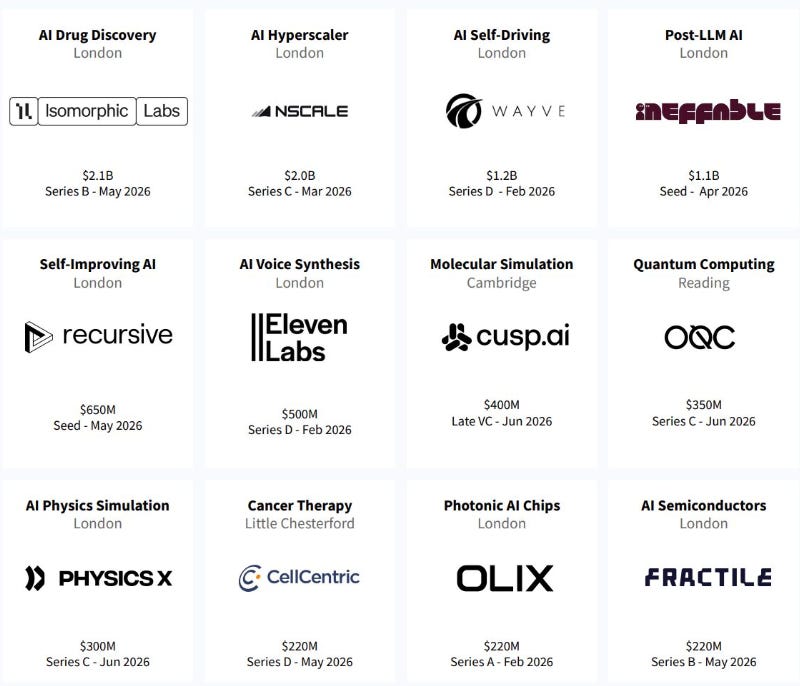
UK startups have raised $17bn so far in 2026.
These are the biggest rounds to date:
-
Isomorphic Labs – $2.1bn
-
Nscale – $2.0bn
-
Wayve – $1.2bn
-
Ineffable Intelligence – $1.1bn
-
Recursive – $650m
-
ElevenLabs – $500m
-
CuspAI – $400m
-
Oxford Quantum Circuits (OQC) – $350m
-
PhysicsX – $300m
-
CellCentric – $220m
-
OLIX – $220m
-
Fractile – $220m
While Europe doesn’t have many winners in AI yet, it has some interesting startups for sure.
-
Mistral (mostly a Meta spin-out)
-
Isomorphic Labs (a Google spin-out)
-
NEURA Robotics (Germany)
-
Nscale (London, UK a Neo Cloud, on par with Crusoe, Nebius, etc…)
-
Helsing (Germany, just raised $1.8 Billion).
OpenAI Centralizes power under Brockman
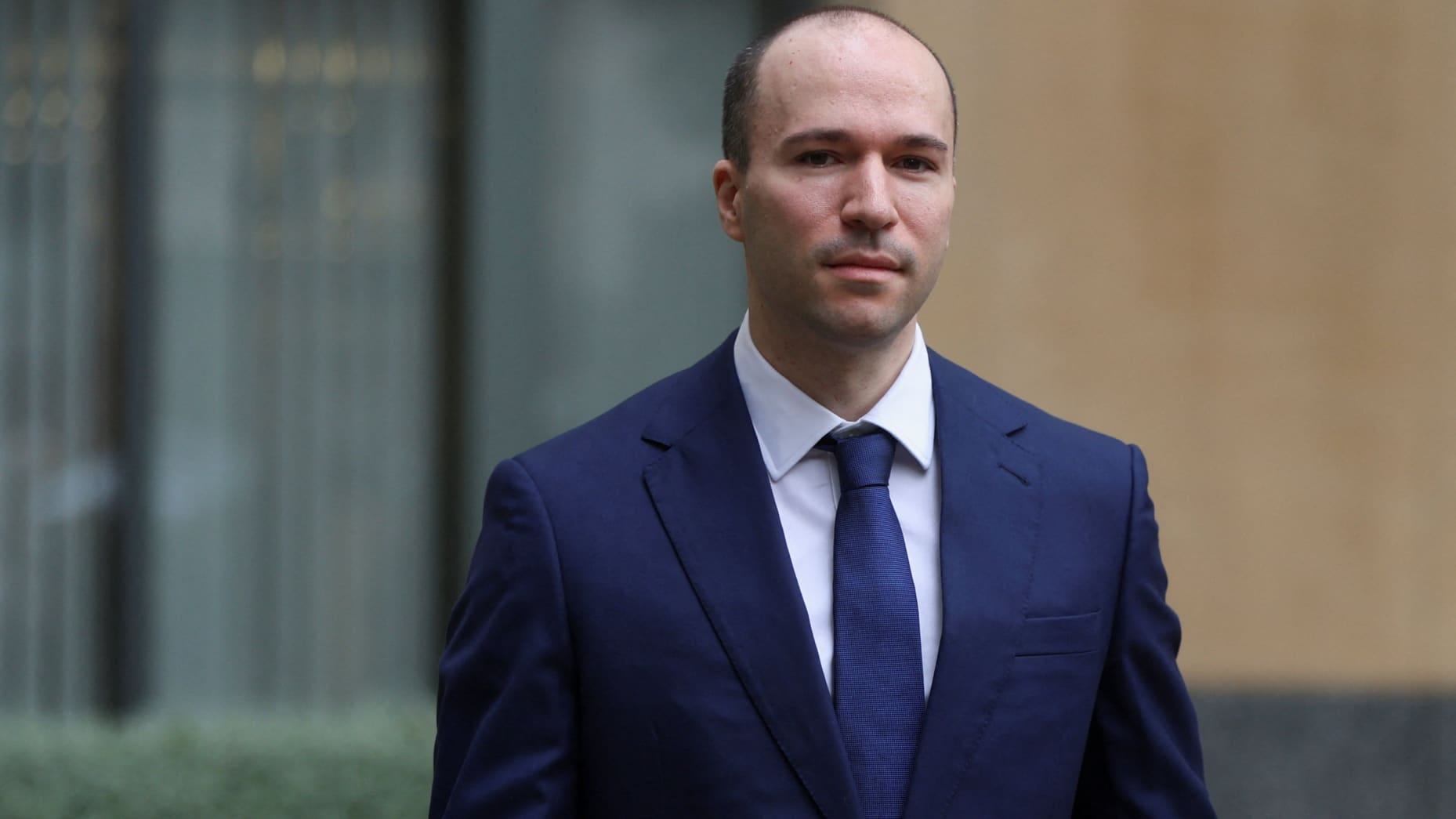
Brockman has very unusual financial ties to Sam Altman. OpenAI President Greg Brockman will continue to oversee the company’s products after Fidji Simo officially stepped down from her role.
Brockman will oversee OpenAI’s
-
ChatGPT product business
-
Go-to-market teams
-
Enterprise teams and
-
Compute initiatives
That’s a lot of power for one person to have. Evidence presented in court revealed that back in 2017, Sam Altman quietly gave Brockman a percentage ownership stake in Altman’s personal family office (worth roughly $10 million at the time). Now worth a lot more than that.
Brockman disclosed that he holds personal stakes in several major startups heavily backed by Altman, including the fusion energy company Helion Energy and the AI chipmaker Cerebras.
The disclosure regarding Cerebras raised eyebrows because Brockman held shares in the chipmaker during the exact periods OpenAI was negotiating multi-billion dollar contracts to purchase its hardware.
Additionally Brockman’s equity stake in OpenAI’s commercial arm is now valued at nearly $30 billion, form the core of the argument that Brockman was financially incentivized to support Altman’s structural pivot away from OpenAI’s original non-profit charter. These and other financial incentives mean Brockman is essentially binded to Sam Altman’s leadership and approach to business (circular financing and side deals). OpenAI’s core operations basically are front-loaded with conflicts of interest.
Oracle at Major Risk due to OpenAI
S&P Global Ratings downgraded Oracle’s long-term credit rating from BBB to BBB- (one notch above junk status), citing OpenAI as a key credit risk. The stock is down just 28 so far in 2026.
One more cut and Oracle becomes a JUNK rated company for the first time in its history. S&P named OpenAI as a “key credit risk” inside the report.
OpenAI accounts for roughly HALF of Oracle’s remaining performance obligations. That’s the famous $638 billion backlog. This is extremely precarious for Oracle: since unlike hyperscalers like Microsoft, AWS, or Google, Oracle lacks massive first-party internal AI workloads or broad consumer platforms to absorb excess infrastructure capacity. If OpenAI slows its consumption, pivots away, or faces financial distress, Oracle is highly exposed.
OpenAI is a private company. It carries no credit rating and has never been profitable. It may never be profitable or only in 2029 or later. And a ratings agency just took the risk of that company failing and wrote it directly onto the credit file of a public company held inside pension funds and bond funds all over the world. This is no longer speculative.
But what was the actual driver of the downgrade? The downgrade was triggered by Oracle upwardly revising its fiscal 2027 capital expenditures from a projected $60 billion to a staggering $90 billion–$95 billion, widening its free cash flow deficit to an estimated negative $42 billion.
Oracle and Softbank are in a tough place if OpenAI doesn’t continue to grow or even grows more slowly.
Oracle’s data center leases run 15 to 19 years. Its cloud customer contracts run about 5 years. Oracle disclosed both figures in its own annual report.
So Oracle is signing 19 year obligations to serve 5 year promises made by a customer that has never earned a dollar of profit. It’s pretty sketchy. OpenAI’s cash-burn profile is echoing through other institutional pipelines. All of the lawsuits do not help. All of the other skirting of rule of law and conflicts of interests do not help.
In reality if OpenAI cannot pay, Oracle gets left holding data center leases it may not be able to exit, and may have to re-lease to somebody else on worse terms. By then the demand for compute and dynamics may have shifted. Oracle and Softbank have taken absurd risk levels to support OpenAI. Oracle spent roughly $55.7 billion on capital projects in fiscal 2026 and posted negative $23.7 billion in free cash flow.
S&P now expects the fiscal 2027 cash flow deficit to widen to around negative $42 billion.
If anything in this post is share worthy here is the button.
So in this article we have explored Apple’s legal filing against OpenAI, how AI might be pushing older workers for the exit of early retirement or unemployment and the major risk Oracle faces with OpenAI exposure. I hope you enjoyed the read.
Read More in AI Supremacy