[[{“value”:”
Good Morning,
With Google’s Gemini 3 release they have improved their AI coding capabilities and agentic possibilities for developers and for Enterprise on the Cloud. Google Antigravity is an ‘agent-first’ coding tool and it’s clear Google is going all-in on Agentic AI.
But what are we talking about here exactly, what does it do and what is the full scope?
The Gemini 3 launch has gotten its fair share of critical acclaim not just for its benchmarks and performance but for its multimodal architecture and vision for what the future of AI is going to be like.
I asked for a guide to this elusive Antigravity agentic IDE product.
The AI Augmented Engineer

-
What does a next-generation IDE look like?
-
How to use it and what can it do?
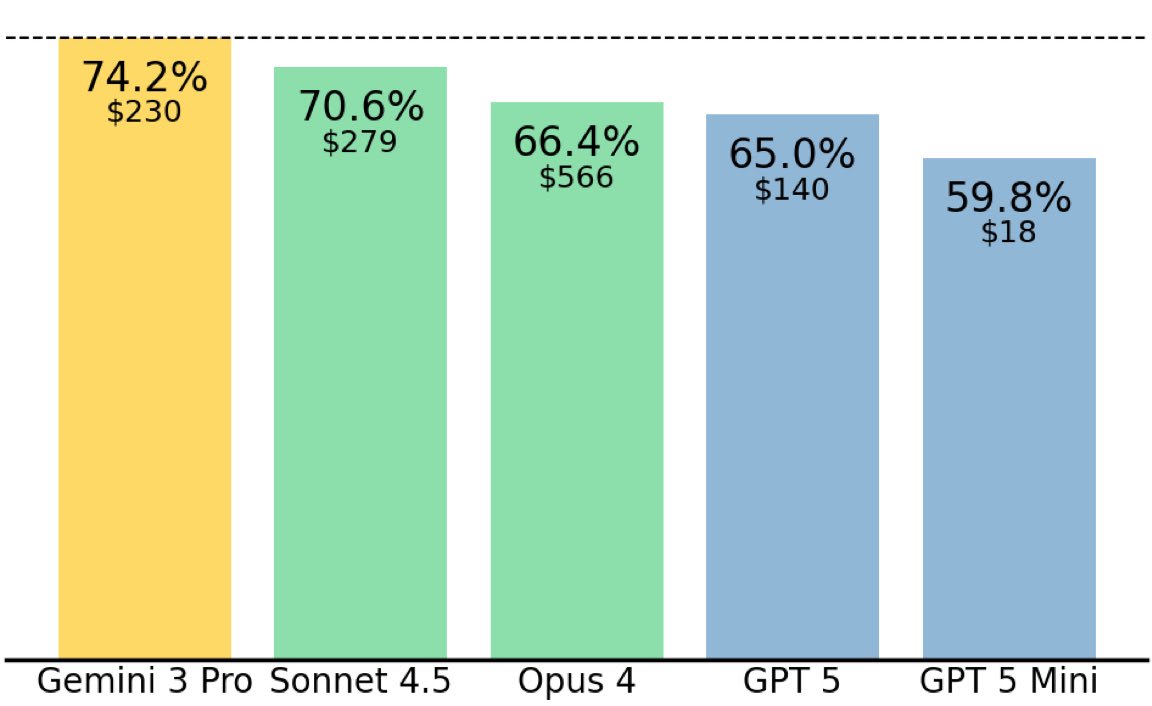
Gemini 3 is SOTA on SWE Bench Verified with a standard agent harness (all models using the same independently created harness).
Building the Foundations for the Agentic Future
What’s obvious about Gemini 3 is that it has been carefully optimized also for vibe coding and as an agentic coding model. Google says that Antigravity, which supports multiple agents and gives them direct access to the editor, terminal, and browser, is designed for an “agent-first future.”
It’s clear Google is going after Cursor, Github Copilot and Claude Code with Antigravity. It does bring a few new features along with it. Antigravity will be available for free in public preview for Mac, Windows and Linux as of November 18th, 2025, with what Google calls “generous rate limits” for Gemini 3 Pro usage.
Join over 2 million developers building on Google’s AI Studio
How to think like an AI augmented engineer?
In a nutshell: tl;dr
Here Google is pushing how the future IDE might operate with a few subtle but powerful tweaks:
-
Agentic Platform: Google Antigravity is an experimental, free AI-powered development tool that evolves IDEs into an “agent-first” experience, using AI agents for autonomous coding tasks powered by Gemini 3.
-
Asynchronous Workflow: Unlike traditional IDEs focused on synchronous editing, it enables AI agents to run tasks in the background, like debugging or testing, without blocking user input.
-
Multi-Model Integration: Supports Gemini 3, Claude Sonnet, and GPT-OSS models natively, offering more flexible AI assistance than single-model IDEs like Cursor.
-
Browser Control: Features deep browser integration for agents to interact with web apps directly during development, a capability absent in most IDEs.
-
Agent Dashboard: Includes a dedicated manager for overseeing multiple AI agents, contrasting with the editor-centric interfaces of tools like VS Code.
-
Natural Language Commands: Provides tab autocompletion and voice-like code generation via natural language, streamlining workflows beyond autocomplete in standard IDEs.
“At its core, Antigravity is still a fully-featured AI IDE, but the Agent Manager provides a new mission control surface for background agents to tackle backlog tasks, perform codebase research, and reduce context switching.” Get started.
But let’s rewind a bit in a more guide-like reading of this new tool by Google. What about for non-technical users? This is our established how-to-guide intro to Google Antigravity. It will live in our guide section. Also check out Jeff’s own guide section here. If you are impressed with his fluency and teaching style consider supporting his work:
Your guide to building apps with Google Antigravity
By , Mid November, 2025.
“}]] Read More in AI Supremacy