
Hello Engineering Leaders and AI Enthusiasts!
This newsletter brings you the latest AI updates in just 4 minutes! Dive in for a quick summary of everything important that happened in AI over the last week.
And a huge shoutout to our amazing readers. We appreciate you😊
In today’s edition:
🤖 Viral AI agent Moltbot raises alarms
💰 OpenAI brings ads to ChatGPT
📉 Gallup finds AI use stalling at work
🎬 Runway research: 90% fail to spot AI generated video
📊 Anthropic’s first AI economic index of 2026
💡Knowledge Nugget: AI and jobs: The decline started before ChatGPT by Marcel Salathé
Let’s go!
Viral AI agent Moltbot raises alarms
An open-source AI assistant called Moltbot (formerly Clawdbot) is going viral for acting like a true always-on agent. Running locally and operating through Telegram or WhatsApp, Moltbot can take actions on a user’s behalf and proactively message once tasks are done. Viral demos show it negotiating a car purchase, booking reservations, and even calling restaurants via voice tools when apps fail.
Moltbot was renamed after Anthropic raised trademark concerns, and security experts are flagging the risks of giving an AI assistant deep system access.
Why does it matter?
Moltbot shows how far agentic AI has come. But that utility comes with risk; broad permissions across apps and devices mean misconfigurations or prompt injections could expose personal data or trigger unintended actions as agents evolve faster than their guardrails.
OpenAI brings ads to ChatGPT
OpenAI is beginning to test targeted ads inside ChatGPT for free and Go-tier users in the U.S., marking a major shift in how the company plans to monetize its flagship product ahead of a potential 2026 IPO. Ads will appear as “Sponsored Recommendations” below responses and will be targeted based on conversation context.
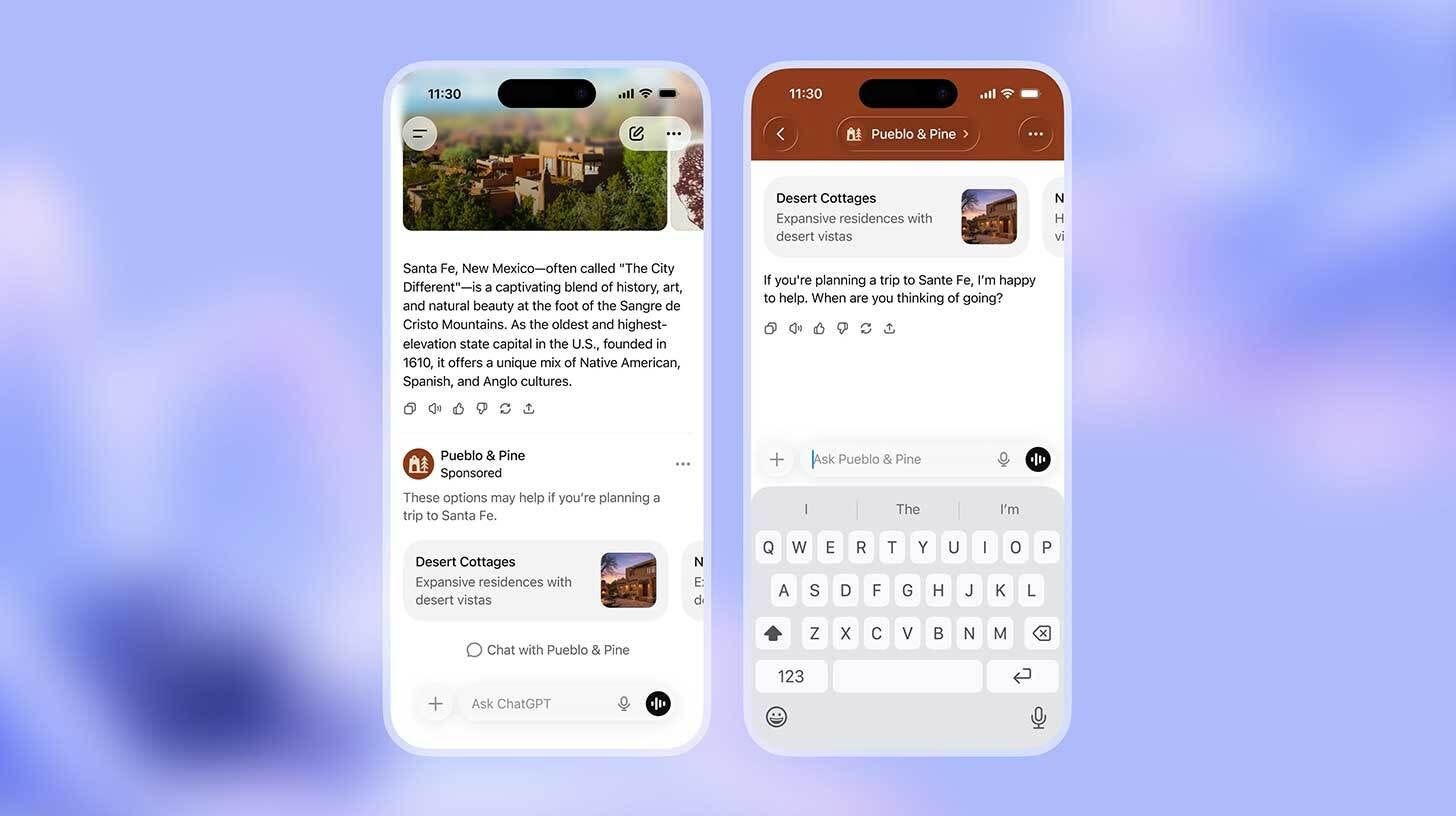
OpenAI says there are clear guardrails. Ads won’t appear in health- or politics-related chats, won’t target underage users, and won’t influence ChatGPT’s answers. The move also coincides with the global rollout of the $8/month ChatGPT Go tier, which includes ads, while Plus, Pro, Business, and Enterprise plans remain ad-free.
Why does it matter?
OpenAI’s stance on ads has shifted over time, but recent leadership moves hinted that this moment was coming. Ads inside AI assistants are a delicate line to walk, and how OpenAI executes here could set expectations for monetization and trust across the broader AI industry.
Gallup finds AI use stalling at work
Gallup’s latest AI in the Workplace report shows U.S. workplace AI adoption may be hitting an early plateau. Nearly 50% of American workers say they never use AI tools, even as frequent users continue to deepen their reliance. Tech leads adoption, with 60% of tech workers using AI regularly, but growth has slowed after a rapid surge through 2024 and early 2025.
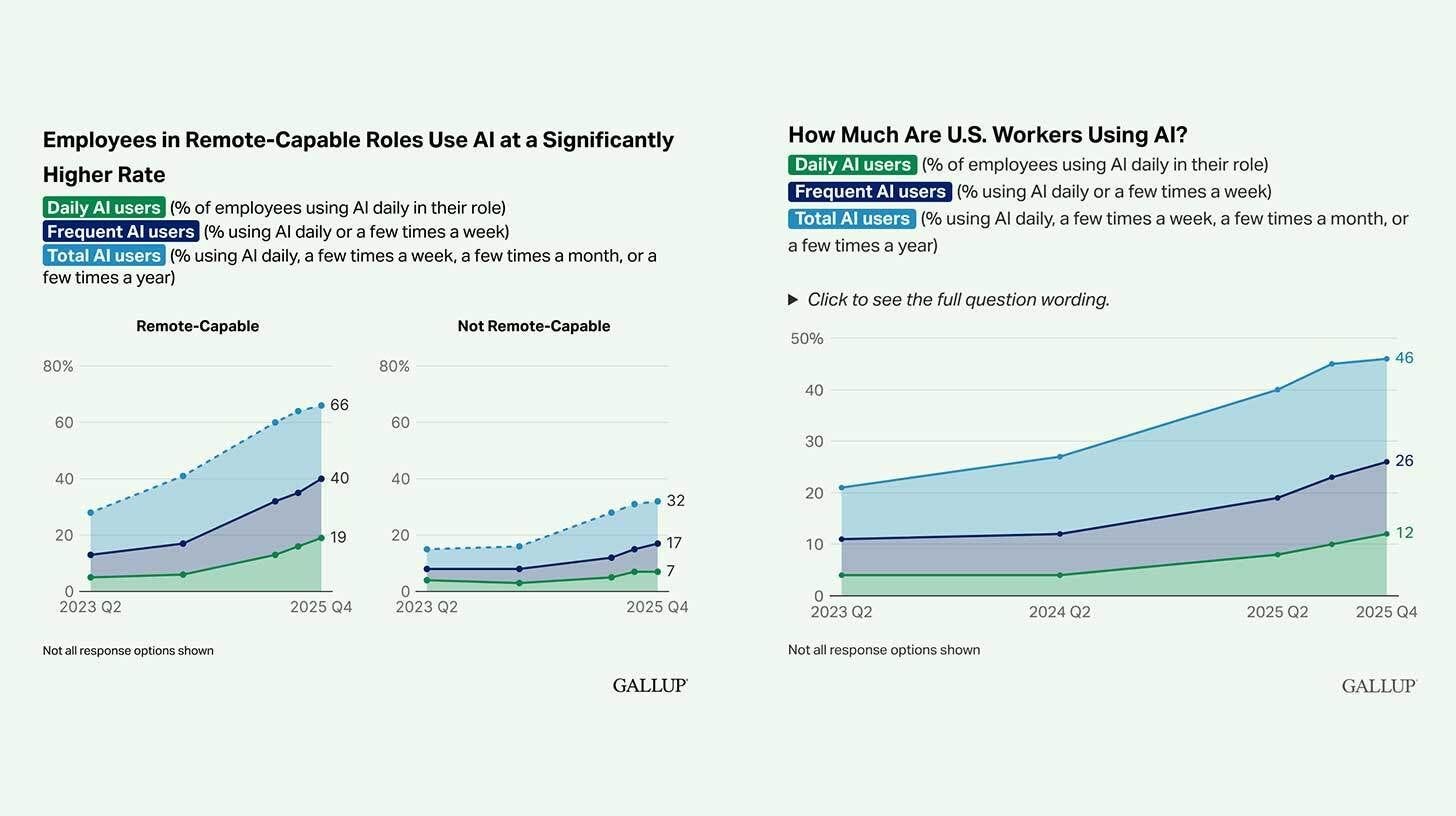
The divide across roles is stark. Remote-capable jobs show 66% AI adoption, with 40% frequent use, compared to just 32% adoption and 17% frequent use in roles requiring physical presence. Leaders are also far ahead of their teams, 69% of managers use AI, versus 40% of individual contributors.
Why does it matter?
AI is already changing how some roles work, but adoption remains uneven across industries and job types. As the gap widens, teams that figure out clear, practical uses for AI in lagging sectors will pull ahead fast, raising the competitive bar for everyone else.
Runway research: 90% fail to spot AI-generated video
Runway released new research testing how well people can distinguish real video from AI-generated clips created using its Gen-4.5 image-to-video model. In a study with more than 1,000 participants, over 90% of viewers struggled to reliably identify which five-second clips were real and which were generated.
The biggest challenge for viewers came from nature scenes and buildings, where AI-generated videos were often rated as equally or more convincing than real footage. Gen-4.5 currently ranks at the top of text-to-video benchmarks, as Runway begins rolling out its new image-to-video features.
Why does it matter?
Runway’s Gen-4.5 pushes realism to a point where spotting fakes is nearly impossible. Verification standards are emerging, but in a world where “seeing is believing” no longer holds, media, advertising, and content verification face a serious challenge.
Anthropic’s first AI economic index of 2026
Anthropic’s latest Economic Index, based on 2 million Claude chats, suggests AI is boosting human work far more than replacing it. In nearly half of all jobs studied, AI now handles about a quarter of tasks, but full job replacement remains rare, showing up in fewer than 10% of firms.
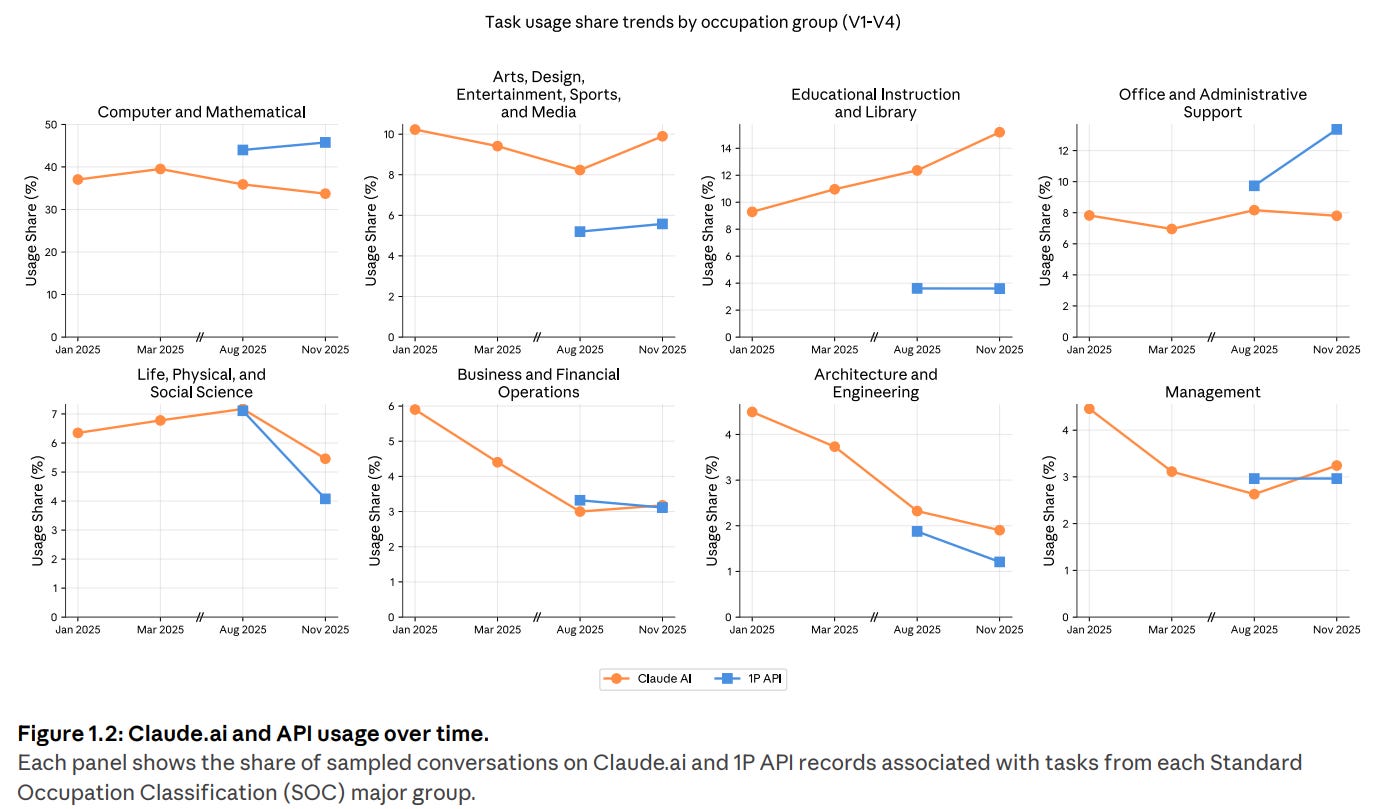
The biggest gains show up where work gets harder. Tasks requiring high-school skills run about 9× faster with AI, while college-level work sees up to 12× speedups. Claude is also getting better at long, complex workflows, successfully completing tasks lasting up to 19 hours about half the time. Coding still dominates usage, but collaboration, learning, iteration, and feedback now outweigh pure automation.
Why does it matter?
AI productivity is rising fast, but the idea that it’s already wiping out jobs doesn’t hold up (yet). The real pressure point is entry-level work; if AI absorbs the repetitive tasks that once trained junior talent, a whole generation may face a very different path to learning, experience, and career progression.
Enjoying the latest AI updates?
Refer your pals to subscribe to our newsletter and get exclusive access to 400+ game-changing AI tools.
When you use the referral link above or the “Share” button on any post, you’ll get the credit for any new subscribers. All you need to do is send the link via text or email or share it on social media with friends.
Knowledge Nugget: AI and jobs: The decline started before ChatGPT
In this article, Marcel Salathé highlights the idea that ChatGPT is already wiping out entry-level jobs, but the data tell a messier story. A new paper from economists at Google shows that hiring in AI-exposed roles started declining months before ChatGPT launched, aligning more closely with aggressive interest rate hikes than with AI adoption.
In fact, the most “AI-exposed” jobs behave like they always have: they’re highly cyclical. These roles fell faster during COVID, too, long before generative AI entered the picture. Even more telling, junior and senior positions declined in parallel, challenging the narrative that AI is selectively replacing entry-level work.
Why does it matter?
If we misdiagnose an economic slowdown as an AI-driven labor shock, we risk chasing the wrong solutions. AI will reshape jobs, but not every hiring dip is automation at work. Sometimes, a downturn is just a downturn, and policy (and panic) should reflect that reality.
What Else Is Happening❗
🌐 Google rolled out Gemini-powered upgrades to Chrome, adding agentic browsing, built-in image generation, and a persistent AI sidebar for cross-tab tasks.
🔬 OpenAI launched Prism, a free research writing tool embedding its top reasoning model to help scientists search papers, generate citations, and draft equations in one workflow.
🌕 Moonshot open-sourced Kimi K2.5, a 1T-parameter multimodal model rivaling GPT-5.2 and Claude Opus 4.5, alongside Kimi Code, a terminal-based coding agent.
🧩 Anthropic added interactive apps to Claude, letting users work with tools like Asana, Slack, and Canva directly inside chat with consent-based controls.
🧠 Microsoft unveiled Maia 200, its latest in-house AI chip, claiming stronger performance and efficiency than Amazon and Google while challenging Nvidia’s software dominance.
🎵 ElevenLabs released a full album co-created with its AI music model, featuring artists like Liza Minnelli and Simon Garfunkel as a showcase of human–AI collaboration.
🎧 Lightricks launched an Audio-to-Video AI feature that generates synced visuals from voice or music, enabling more natural and rhythm-aware video creation.
New to the newsletter?
The AI Edge keeps engineering leaders & AI enthusiasts like you on the cutting edge of AI. From machine learning to ChatGPT to generative AI and large language models, we break down the latest AI developments and how you can apply them in your work.
Thanks for reading, and see you next week! 😊
Read More in The AI Edge


