

OpenAI to test ads in ChatGPT as it burns through billions
Related:
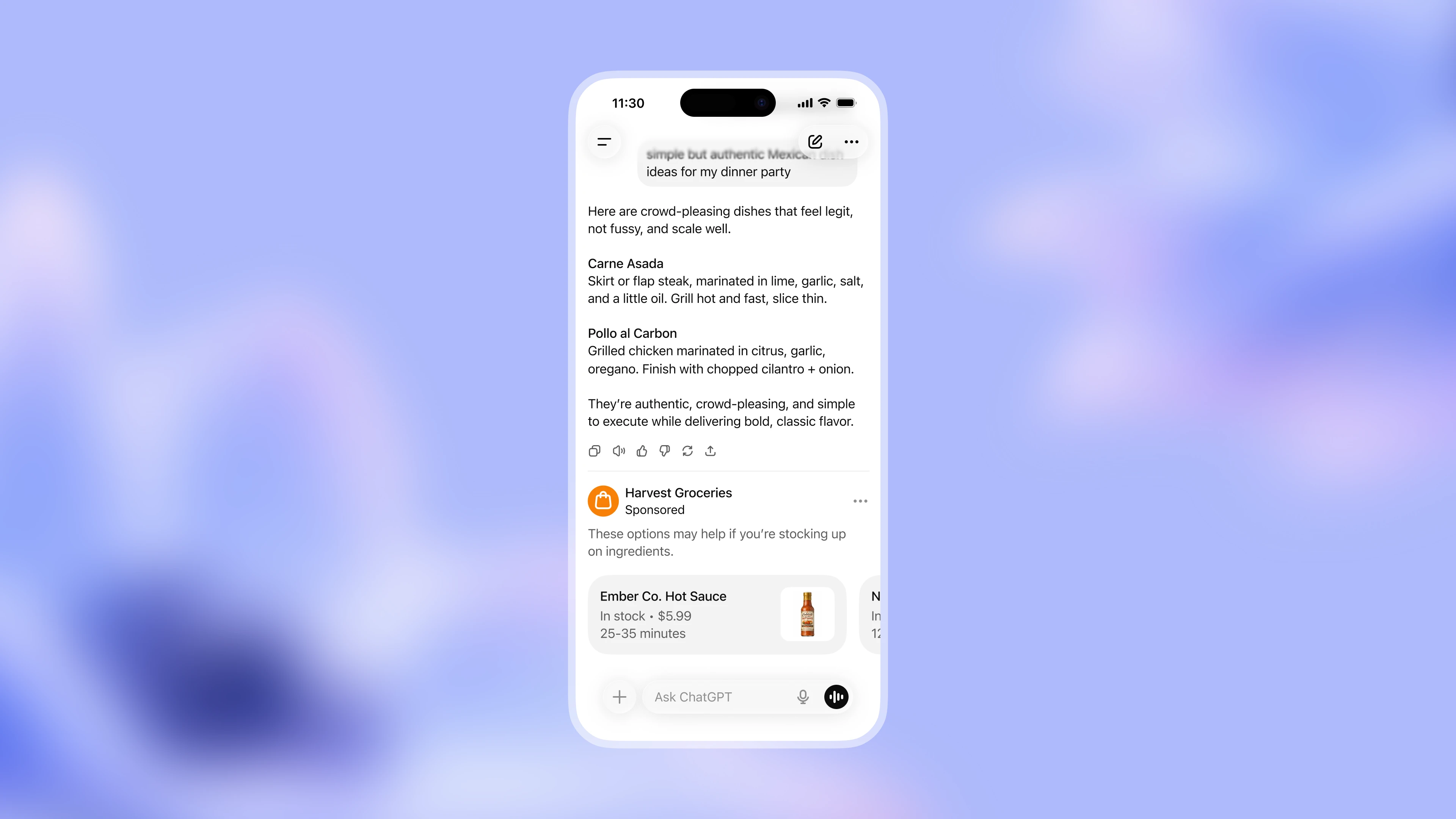
OpenAI will begin testing labeled banner ads in ChatGPT for logged‑in users on the free tier and the $8/month ChatGPT Go plan, rolling out in the U.S. and other markets in the coming weeks. Ads will appear as blocked-off sections at the bottom of answers when there’s a “relevant sponsored product or service,” such as travel ads after a destination query; Plus, Pro, Business, and Enterprise users will not see ads. OpenAI says ads won’t influence model outputs and will be clearly separated from answers, with sensitive categories like health, mental health, and politics excluded. The company is also expanding ChatGPT Go globally after initial availability in India, while emphasizing that enterprise and subscription revenue remains “strong.”
Privacy and transparency controls include not sharing user conversations with advertisers, providing only aggregated performance metrics (e.g., impressions, clicks), offering an explanation of “why this ad,” allowing users to dismiss ads, and enabling options to turn off personalization and clear data. Ads will not be served to users identified as minors or predicted under 18 by age‑prediction models.
The Drama at Thinking Machines, a New A.I. Start-Up, Is Riveting Silicon Valley
Related:
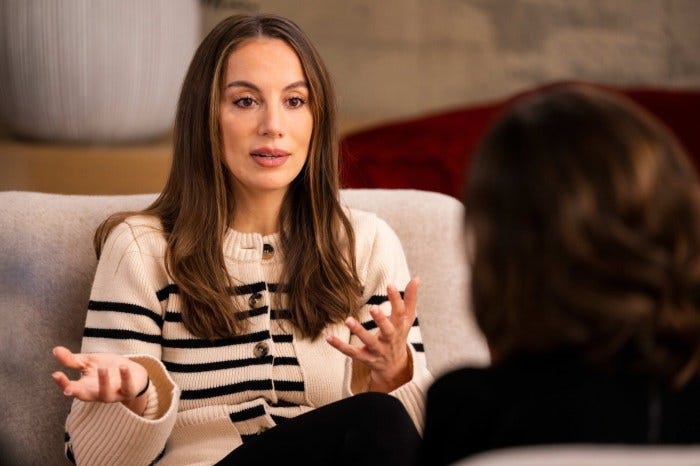
Thinking Machines Lab, a prominent AI start-up founded less than a year ago, is experiencing significant turmoil after CEO and co-founder Mira Murati fired chief technology officer Barret Zoph on January 14 following a contentious meeting. Zoph, along with fellow co-founders Luke Metz and Sam Schoenholz, had lobbied Murati to cede technical decision-making authority to Zoph and threatened to leave if changes were not made. OpenAI immediately rehired all three executives, and approximately nine additional Thinking Machines employees have since departed for OpenAI or received offers from Meta, which has reportedly offered hundreds of millions of dollars to recruit the start-up’s talent.
The defections come as Thinking Machines struggles to establish itself despite raising $2 billion in funding at a $12 billion valuation last July. The company has lagged competitors in releasing products and failed to secure additional funding at its sought-after $50 billion valuation. The co-founders had urged Murati to sell the company—Meta had expressed acquisition interest and Murati had developed closer ties with Anthropic CEO Dario Amodei—but Murati preferred to remain independent.
Zhipu AI breaks US chip reliance with first major model trained on Huawei stack

Zhipu AI announced that its new open-source image generation model, GLM-Image, was trained entirely on a domestic Huawei stack—marking a first for a “powerful” model developed without US chips. The full training pipeline, from data prep through final training, ran on Huawei Ascend Atlas 800T A2 servers with Ascend AI processors and the MindSpore ML framework. This demonstrates the feasibility of training state-of-the-art multimodal models on China’s local hardware and software amid US export controls. Zhipu positioned the work as a reference implementation for scaling domestic compute in AI development.
Under the hood, GLM-Image uses a hybrid architecture combining autoregressive and diffusion components, enabling native multimodal capabilities across text, voice, image, and video. The design echoes approaches like Google DeepMind’s Nano Banana Pro, jointly generating high-fidelity images and coherent text.
Sequoia to invest in Anthropic, breaking VC taboo on backing rivals: FT

Sequoia Capital is reportedly joining a massive new funding round for Anthropic, the maker of Claude, defying the traditional VC norm of not backing direct competitors in the same sector. Led by Singapore’s GIC and U.S. investor Coatue with $1.5 billion each, the round targets $25 billion or more at a $350 billion valuation—more than double Anthropic’s $170 billion figure from four months ago. Microsoft and Nvidia have committed up to $15 billion combined, with VCs and others expected to add $10 billion or more. This is notable because Sequoia already holds stakes in OpenAI and Elon Musk’s xAI, and follows prior reporting that OpenAI would restrict investor access to confidential info if they made “non-passive” investments in competitors—a policy Sam Altman described as industry standard.
Other News
Tools
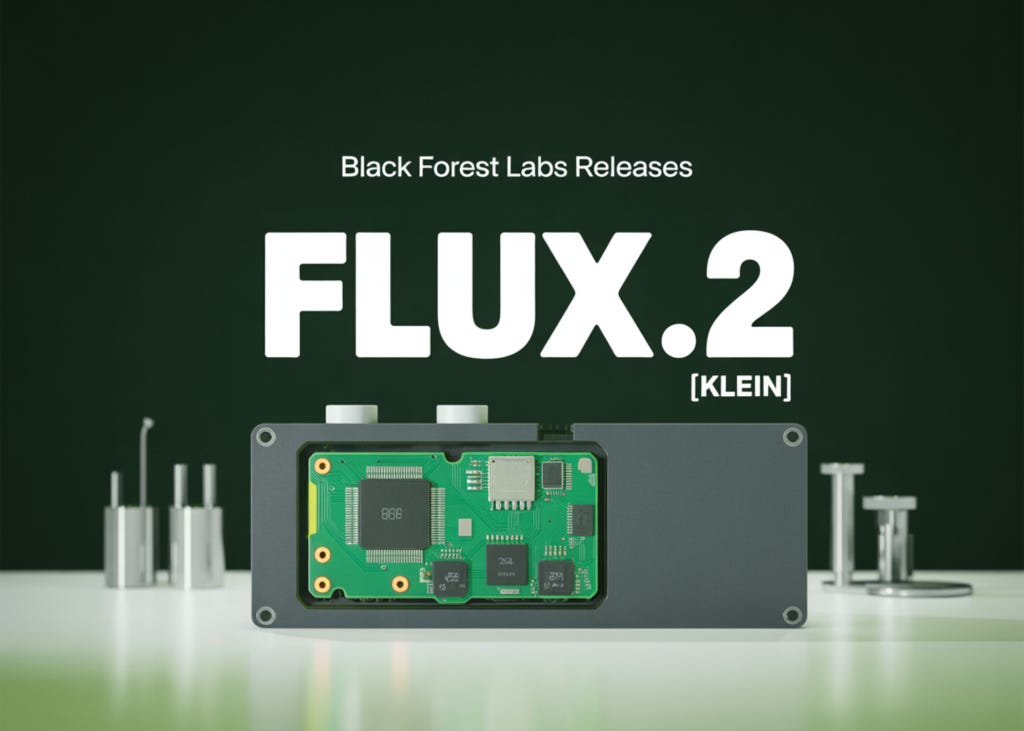
Black Forest Labs Releases FLUX.2 [klein]: Compact Flow Models for Interactive Visual Intelligence. The team compresses the FLUX.2 design into 4B and 9B rectified flow transformers distilled for 4-step generation and editing, delivering sub-second, multi-reference text-to-image and image-editing on consumer GPUs, with larger Base checkpoints and FP8/NVFP4 quantized builds for research and lower‑VRAM deployment.
Google now offers free SAT practice exams, powered by Gemini. Students can request a free practice SAT from Gemini, which generates tests, scores responses, explains mistakes, highlights strengths and weaknesses, and uses vetted questions from partners like the Princeton Review.
OpenAI is launching age prediction for ChatGPT accounts. A new system uses behavioral and account-level signals to estimate age and will require a selfie via Persona to correct mistaken underage classifications.
Molmo2: Open Weights and Data for Vision-Language Models with Video Understanding and Grounding. These models and datasets, released with open weights, demonstrate strong video-language and grounding performance using new training methods and benchmarks while avoiding reliance on proprietary pretrained models.
HeartMuLa: A Family of Open Sourced Music Foundation Models. The released models provide an open-source ecosystem—including an audio‑text alignment model, a lyric transcriber, a low-frame-rate high‑fidelity codec, and a multi‑condition song generator—enabling controllable long‑form music generation up to six minutes and reproducible research.
Business

Microsoft Spending on Anthropic Approaches $500 Million a Year. Microsoft plans to integrate and sell Anthropic’s AI models through Azure—counting those sales toward cloud sales quotas—after investing up to $5 billion, while keeping a smaller revenue share on Anthropic sales than on OpenAI offerings.
OpenAI CFO says annualized revenue crosses $20 billion in 2025. OpenAI Chief Financial Officer Sarah Friar said in a blog post on Sunday the company’s annualized revenue has surpassed $20 billion in 2025, up from $6 billion in 2024 with growth closely tracking an expansion in computing capacity.
Mark Zuckerberg says Meta is launching its own AI infrastructure initiative. Meta’s new initiative, Meta Compute, will expand datacenters, power, and supplier partnerships—aiming to add tens to hundreds of gigawatts of capacity this decade—and appoints three senior executives to oversee technical architecture, long-term capacity strategy, and government relations.
Wikimedia Foundation announces new AI partnerships with Amazon, Meta, Microsoft, Perplexity, and others. The deals make Wikimedia Enterprise a paid distribution channel for large tech companies to access Wikipedia and other Wikimedia content at scale, creating a new revenue stream as its material is used by AI systems and services.
Humans&, a ‘human-centric’ AI startup founded by Anthropic, xAI, Google alums, raised $480M seed round. Founded by ex-Anthropic, xAI, and Google staffers, the startup raised $480 million at a $4.48 billion valuation to build a human-centric messaging-style AI focused on collaboration, memory, and new training approaches.
AI video startup Higgsfield hits $1.3 billion valuation with latest funding. AI video generation startup Higgsfield raised $80 million in new funding, valuing the company at over $1.3 billion, it told Reuters, as investors rush to develop the sector amid booming demand for the new technology.
OpenAI invests in Sam Altman’s brain computer interface startup Merge Labs. The startup emerged from stealth with an $850 million valuation after a $250 million seed round led by OpenAI, and plans to develop noninvasive, molecule- and ultrasound-based brain-computer interfaces while collaborating with OpenAI on scientific foundation models.
Shareholders sue Oracle over misleading statements related to $300 billion OpenAI data center build-out. Bondholders allege Oracle concealed plans for a much larger follow-up debt offering, causing the initial bonds to lose value when a $38 billion issuance followed the $18 billion sale.
Research
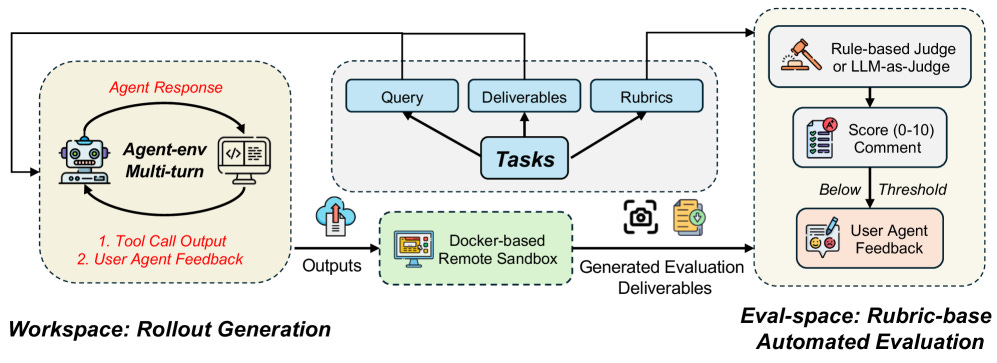
AgencyBench: Benchmarking the Frontiers of Autonomous Agents in 1M-Token Real-World Contexts. This benchmark evaluates 32 real-world scenarios comprising 138 long-horizon tasks (averaging ~1M tokens and ~90 tool calls each) to measure agents’ multi-turn, tool-using, and context-maintenance capabilities using an automated user-simulation and Docker sandbox pipeline.
Reasoning Models Generate Societies of Thought. The authors report improved problem-solving by producing multiple interacting agent-like reasoning streams that provide diverse perspectives and organized collaboration.
The Assistant Axis: Situating and Stabilizing the Default Persona of Language Models. The work identifies a dominant “Assistant Axis” in model activations that locates the default assistant persona, shows that shifts along this axis predict and enable persona drift during conversations, and demonstrates an activation-clamping method that reduces harmful or off-persona responses without hurting capability.
Building Production-Ready Probes For Gemini. The paper evaluates practical techniques to build cost-effective, long‑context‑robust activation probes for detecting cyber‑offensive prompts in Gemini 2.5 Flash, and reports deployment-ready recommendations and production results.
Memory Bank Compression for Continual Adaptation of Large Language Models. A method compresses and optimizes external memory banks with learned codebooks so LLMs can continually adapt to new data while preserving previously learned performance.
Concerns
AI’s Hacking Skills Are Approaching an ‘Inflection Point’. Researchers and startups warn that recent AI advances have made models significantly better at finding and exploiting complex software vulnerabilities, raising the risk that attackers could use them to discover zero-days faster than defenders.
Anthropic’s CEO stuns Davos with Nvidia criticism. He warned that U.S. approval of high-performance Nvidia and AMD AI chips for China poses serious national-security risks, likening the move to arming a future “country of geniuses,” and criticized both the administration and Nvidia despite the company’s recent investment in Anthropic.
Actors And Musicians Help Launch “Stealing Isn’t Innovation” Campaign To Protest Big Tech’s Use Of Copyrighted Works In AI Models. Backed by major industry groups and high-profile creators, the campaign urges courts and policymakers to require AI companies to obtain licenses for copyrighted works and stop using them without authorization.
Policy
Senate passes bill letting victims sue over Grok AI explicit images. The measure would create a federal civil right allowing people to sue for damages and restraining orders when AI tools generate sexually explicit images of them without consent.
Read More in Last Week in AI


